Category: Acne

  • LED Light Therapy – What Each Colour Really Does for Your Skin

    LED Light Therapy – What Each Colour Really Does for Your Skin

    LED Light Therapy: What Each Colour Really Does for Your Skin

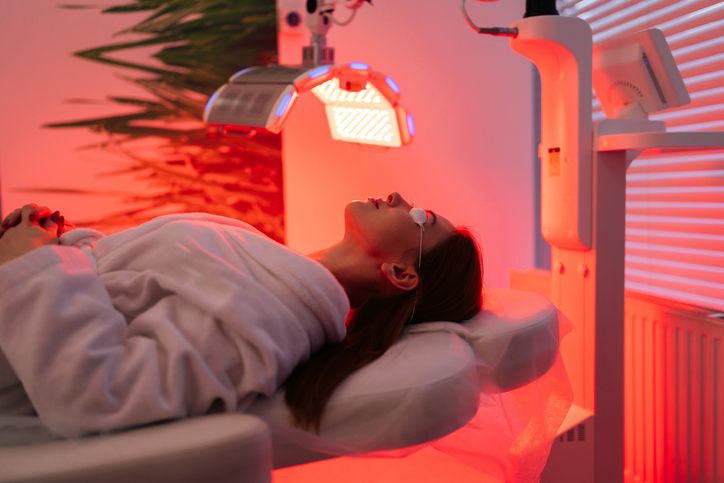
    LED light therapy is now a well-versed treatment in the skincare world  — and for good reason.  LED therapy is safe, painless, and effective. This non-invasive treatment uses different wavelengths (colours) of light to target specific skin concerns. But with all the colours out there, it can be confusing to know which one does what.

    Here’s a simple guide  — colour by colour — so you can choose the right one for your skin goals.

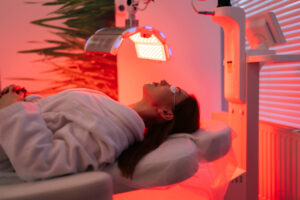
    ? Red Light (620–750 nm): Anti-Aging Hero

    What it does:
    Red light penetrates deep into the skin to stimulate the production of collagen and elastin. It helps reduce fine lines and wrinkles, improve skin elasticity, and speed up healing.

    Best for:

    • Fine lines & wrinkles
    • Loss of firmness
    • Redness and inflammation
    • Post-treatment healing

    Bonus: Red light therapy is great for sensitive skin — think rosacea or post-laser recovery.

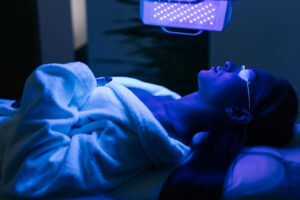
    ? Blue Light (405–470 nm): Acne Fighter

    What it does:
    Blue light targets acne-causing bacteria (Propionibacterium acnes) on the skin’s surface, helping to reduce breakouts and inflammation without drying the skin out.

    Best for:

    • Acne
    • Oily or congested skin
    • Enlarged pores

    Caution: Can be drying for sensitive skin if overused, so balance is key.

    ? Green Light (525–550 nm): Skin Tone Balancer

    What it does:
    Green light helps to reduce hyperpigmentation by calming overactive melanin-producing cells. It evens out skin tone and can reduce redness or blotchiness.

    Best for:

    • Hyperpigmentation
    • Age spots
    • Redness or uneven tone
    • Dark circles

    Pro tip: Combine with red light for anti-aging + brightening benefits.

    ? Yellow Light (570–590 nm): Skin Soother

    What it does:
    Yellow light penetrates deeper than green and works to reduce redness, soothe sensitive skin, and improve lymphatic flow.

    Best for:

    • Rosacea
    • Red or irritated skin
    • Post-treatment calming
    • Sensitive or allergy-prone skin

    Think of it as the “comfort light” for stressed skin.

    ? Purple (Red + Blue Combo): Dual Action Repair

    What it does:
    Combines the benefits of red and blue light — reducing inflammation and killing acne bacteria while also promoting skin healing and anti-aging.

    Best for:

    • Acne-prone mature skin
    • Breakouts with scarring
    • Combination skin types

    White Light (Full Spectrum ie: all colours ): Deep Skin Repair

    What it does:
    White light is a combination of all visible wavelengths and penetrates the deepest. It stimulates skin renewal and can assist with overall skin repair and tone.

    Best for:

    • Deep wrinkles
    • Skin laxity
    • Dull, tired-looking skin

    Many people ask – Do LED treatments really work?  Short answer, they do, but results come with consistency

    Professional-strength LED treatments are always the best option, and visiting a professional to understand what each colour does helps you treat the right concern at the right depth. Professional devices used in clinics deliver higher light intensities and often penetrate deeper into the skin, resulting in faster and more noticeable results.

    LED home devices can have some effect for maintaining skin health, but they are generally not as powerful or targeted as professional-grade treatments.  At-home devices, while convenient and more affordable, usually operate at lower energy levels to ensure safety for untrained users.

    At ENRICH DIV we can help. Many of our laser treatments include an LED treatment, or you can try the LED treatment on its own.

    Call us on  039500 9500 or book a consultation here.

    ✨ Healthy skin doesn’t have to be complicated — just well-lit.

  • Should You Pop Pimples? A Dermatologist Weighs In

    Should You Pop Pimples? A Dermatologist Weighs In

    We’ve all been there. You wake up with a giant pimple right before a big event, or you catch a glimpse of a whitehead in the mirror and can’t resist the urge to squeeze. It’s tempting – the instant gratification of popping a pimple can be oh-so-satisfying.

    But is popping pimples really a good idea? Or is it causing more harm than good? We asked our very own board-certified dermatologist, Dr. Rich, to weigh in and give us an expert opinion.

    Is it better to pop a pimple or not?

    In a word, no. While popping a pimple might seem like a quick fix, it’s usually a bad idea. Dr Rich explains that popping a pimple can worsen inflammation, potentially leading to longer healing times and more noticeable redness.

    Furthermore, the pressure from popping can rupture the pimple under the skin, forcing bacteria and pus deeper into the tissues. This can result in a more severe infection and increase the likelihood of acne scarring.

    And let’s not forget the bacteria on our hands. Popping a pimple with unwashed hands can introduce new bacteria into the broken skin, worsening the infection or even causing new breakouts.

    Where does the pus go if you don’t pop a pimple?

    If you leave a pimple alone, your body’s natural healing process takes over. White blood cells rush to the site of the infection to fight off the bacteria. These white blood cells, along with dead skin cells and sebum (oil), form the pus you see in a pimple.

    Over time, the inflammation subsides, and the pimple either comes to a head and drains on its own or is reabsorbed by the body. This process might take a few days or even weeks, depending on the severity of the pimple. While it might not be as satisfying as popping, allowing the pimple to heal naturally is ultimately the best way to minimise scarring and prevent further breakouts.

    Dr Rich reassures us that the body’s immune system will eventually eliminate the pus even without popping. 

    Effective pimple treatments

    We understand that waiting for the natural healing process can be frustrating, especially when dealing with a stubborn pimple or a full-blown breakout. If you can’t resist the urge to take action, Dr Rich recommends the following:

    Consultation with a dermatologist

    They can help you get to the root of your acne problem and prescribe the proper treatment based on your skin type and specific needs. This might include prescription medications, topical creams, or other therapies.

    Getting quick fixes

    If you’re looking for an over-the-counter solution, look for products containing ingredients like salicylic acid, retinol, or benzoyl peroxide. These can help reduce inflammation, unclog pores, and kill bacteria. Our ENRICH Glycolic Skin solution sprayed onto a cotton wool pad and dabbed on the pimple also works.

    Treatments for long-term acne issues

    Patience, lifestyle changes and a good skincare routine are foundations of clearer skin. But for persistent or recurring acne, some long-term treatment options are:

    Prescription medicine

    If you have moderate to severe acne, your dermatologist may prescribe medications based on your specific needs. Oral antibiotics can help reduce inflammation and kill acne-causing bacteria. Topical medications can unclog pores, regulate oil production, and prevent new breakouts.

    Regular skin peels

    Chemical peels, such as salicylic or glycolic acid peels, exfoliate the skin’s surface, remove dead skin cells, and unclog pores. This can help reduce the severity of acne breakouts, improve skin texture, and fade acne scars.

    Dedicated skin routine with products designed for acne treatment 

    Having a consistent skincare routine with products specifically formulated for acne-prone skin is crucial for managing and preventing breakouts. A dermatologist can prescribe specific products for you, but usually, these are cleansers containing salicylic acid or benzoyl peroxide, toners with witch hazel or tea tree oil, oil-free and non-comedogenic moisturisers, and spot treatments with sulphur or niacinamide.

    The Secret

    This procedure, also known as RF microneedling, combines the power of microneedling with radiofrequency energy to stimulate collagen production and rejuvenate the skin. 

    Microneedling creates controlled micro-injuries to trigger the body’s natural healing response. This promotes skin regeneration and reduces the appearance of acne scars, fine lines, and wrinkles. These wave-based therapies also kill bacteria and improve overall tone and texture.

    The Secret is not an acne treatment per se but for managing acne scarring. But it can be used along with acne prescription medicine for faster healing.

    Consult with ENRICH dermatologist today about your acne

    Acne treatment is highly individualised because the most effective approach varies depending on factors like your age and skin type.

    Adults with acne, for instance, often require different treatment plans than teenagers due to differences in skin structure and hormonal activity. 

    It’s best to consult with a dermatologist for personalised advice and a treatment plan.

    If you’re struggling with acne or have questions about how to care for your skin, book a consultation with us via email, phone or online.

  • Scar Wars: A Guide to Battling Blemishes and Marks

    Scar Wars: A Guide to Battling Blemishes and Marks

    Scars are the body’s natural way of healing wounds caused by injury, surgery, or skin conditions like acne. When the skin’s outermost layer, the epidermis, sustains damage, the body springs into action, generating collagen fibres to repair the wound. Unfortunately, these fibres contribute to the formation of new tissue, which, while functional, might look different from the surrounding skin, resulting in a scar.

    While all scars are a natural part of the healing process, some may be more visually unappealing than others, leading to a desire for their removal or improvement.

    Recognising the various types of scars is vital, as it guides your approach to their treatment and management. The most prevalent scar types include hypertrophic, keloid, atrophic, and contracture scars. Each type exhibits unique appearances, characteristics, and potential complications, making it essential to identify and accurately address them with tailored treatments.

    Atrophic scars
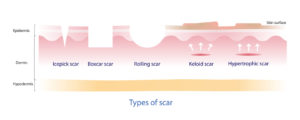
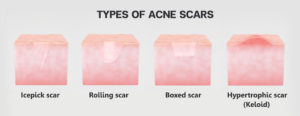
    Types of scar vector, icepick scar, boxcar scar, rolling scar, keloid scar and hypertrophic scar infographic

    Atrophic scars are characterised by their sunken, depressed appearance and are typically found on the face, most commonly resulting from acne or other inflammatory skin conditions such as chickenpox. 

    These scars form when the skin loses collagen during the healing process, causing the skin to sink below the surrounding, healthy tissue. 

    Atrophic scars can be further classified into three subtypes: ice pick scars, boxcar scars, and rolling scars. Each subtype’s unique appearance and depth may require different treatment approaches.

    Common treatments of atrophic scars

    Dermabrasion

    This treatment involves using a specialised device to exfoliate the skin’s surface, removing the top layer and stimulating the growth of new, healthy skin. This process can help improve the texture and appearance of atrophic scars.

    Laser treatment

    Various laser treatments, such as ablative and non-ablative lasers, can target damaged skin, promoting collagen production and the growth of healthy skin. But you may need multiple sessions to achieve optimal results.

    Punch techniques

    Punch excision, elevation and grafting are surgical techniques for treating deep atrophic scars. These methods involve removing the scarred tissue, repositioning it to the same level as the surrounding skin, or replacing it with a skin graft.

    Fat transplantation

    Also known as autologous fat transfer, this procedure involves extracting fat from one part of the body and injecting it into the atrophic scar to fill the depression and create a smoother, more even appearance. We do not do fat transfers at ENRICH Clinic. 

    Other tissue-augmenting agents

    Compunds made from biocompatible materials can be injected into atrophic scars to restore volume and improve their appearance temporarily. Depending on the filler used, the effects usually last several months to a year.

    Needling

    Skin needling, or collagen induction therapy, uses a device with tiny needles to create controlled micro-injuries in the skin. This process stimulates collagen production and can improve the appearance of atrophic scars over time.

    Subcision

    This minimally invasive surgical procedure involves using a needle or a specialised device to break the fibrous bands tethering the atrophic scar to the underlying tissue. By releasing these bands, subcision allows the scar to rise, improving its appearance and texture.

    Limitations of treatments

    Each procedure uniquely treats atrophic scars; some methods work better for specific scar types than others. In addition, atrophic scars can be quite diverse in type and depth, which means different treatments might be needed. 

    If you combine multiple procedures, you’re likely to see an improvement in many types of scars and even some fine textural irregularities that you wouldn’t get with just one method. 

    We recommend consulting with a qualified dermatologist or skin care professional to determine the most suitable treatment plan for your specific scar type and skin condition.

    Hypertrophic scars
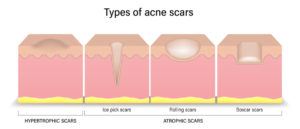
    Types of acne scars - Hypertrophic scars and Atrophic scars infographic

    Hypertrophic scars are characterised by their raised, thickened appearance, which can be red or pink. They typically form within the boundaries of the original wound and result from an overproduction of collagen during the healing process. 

    Hypertrophic scars can develop after various injuries, including burns, cuts, surgical incisions and piercings. These scars may be itchy or painful and can take several months to years to mature and become less noticeable.

    Common treatments

    Silicone sheets and gels

    These non-invasive treatments create a moist environment that helps soften and flatten hypertrophic scars. Silicone sheets can be cut to fit the scar’s size and should be worn for several hours each day, while silicone gels can be applied directly to the scar.

    Corticosteroid injections

    Injecting corticosteroids directly into the scar can help reduce inflammation, relieve pain and itchiness and improve the scar’s appearance by softening and flattening it. However, multiple injections may be required, depending on the severity of the scar.

    Cryotherapy

    This treatment involves freezing the scar tissue using liquid nitrogen, which helps reduce the scar’s thickness and size. A qualified healthcare professional should perform cryotherapy and may require multiple sessions.

    Laser therapy

    Various laser treatments can help improve the appearance of hypertrophic scars by targeting excess collagen, reducing redness and promoting the growth of healthy skin. Multiple sessions may be needed for optimal results.

    Surgery

    There are times when surgery might be needed to remove the scar or change how tension affects it. Generally, surgery is considered when other treatments haven’t worked out, mainly because surgery can also leave a scar behind. Surgery can be combined with other treatments to get the best results, giving you a more effective solution.

    Limitations of treatments

    How well these treatments work can depend on factors like your skin type, the scar’s severity, and your chosen treatment method. Also, you might need more than one treatment session to get your desired results. 

    It’s a good idea to chat with a qualified dermatologist or skin care professional who can help you figure out the best treatment plan for your specific scar and skin type.

    Keloid scars
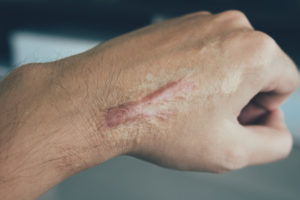
    keloid scar - raised scar on hand

    Keloid scars are a more severe form of raised scars extending beyond the original wound’s boundaries. These scars are firm, rubbery, and can be red or dark. They result from an overproduction of collagen and an abnormal healing response, which leads to excessive scar tissue growth. 

    Keloid scars can develop after various skin injuries, including burns, cuts, surgical incisions, piercings and even minor injuries like insect bites. 

    Genetics and skin type can predispose individuals to keloid formation. These scars may continue to grow over time and can cause discomfort, pain, or itchiness.

    Limitations and potential complications of treatments

    Treating keloids can be tricky, as there’s no one-size-fits-all solution. What works for one person might not work for someone else, and no treatment can guarantee that a keloid won’t return after it’s been treated.

    That’s why dermatologists are working hard to understand better what causes keloids and develop more effective treatments.

    If one of these new treatments might help you, your dermatologist may discuss it with you, especially if other treatments haven’t worked. How you care for your skin can make a difference, so be sure to follow any at-home care instructions your dermatologist provides. It’s also essential to stick to your treatment plan and get all the treatments your dermatologist recommends.

    Also, if you’ve had a keloid in the past, you might develop another one in the future.

    Contracture scars
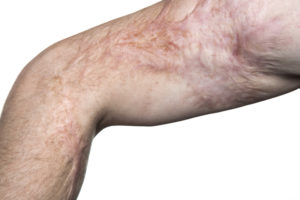
    Contracture scars - burn scar

    Contracture scars are characterised by their tight, constricted appearance, which forms due to the skin and underlying tissue contracting during the healing process. 

    These scars are commonly associated with burns or other injuries that cause significant skin loss. As the skin heals, it pulls together and may restrict movement, especially when the scar is located near a joint. 

    In some cases, contracture scars can also cause discomfort or pain due to the tension created by the tightened skin.

    Common treatments

    Physical therapy and massage

    Regular stretching exercises and massages can help improve the flexibility and mobility of the affected area. A physical therapist can recommend specific activities tailored to the scar’s location and severity.

    Pressure dressing

    Pressure garments or bandages can help reduce contracture scar formation by applying consistent pressure to the affected area. This treatment is most effective when initiated soon after the injury and worn continuously for several months.

    Surgical intervention

    In more severe cases, surgical procedures such as skin grafts, tissue expansion, or scar release may be necessary to improve the contracture scar’s range of motion and appearance. These procedures can involve transplanting healthy skin from another part of the body or using artificial skin substitutes.

    Treatment limitations

    In most cases, surgical intervention leads to significant improvement, but scar contractures can still happen even with the surgeon’s best efforts. Your doctor may suggest pressure and range-of-motion exercises for the best possible outcome for both function and appearance.

    Stretch marks
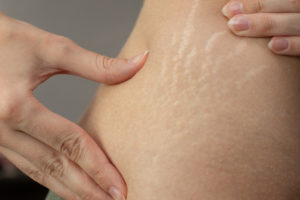
    stretch marks

    Stretch marks, or striae, are linear, narrow streaks or stripes that develop on the skin’s surface. They are usually pink, red, or purple when they first appear and may gradually fade to a silvery-white over time. 

    Stretch marks are caused by the rapid stretching of the skin, often due to growth spurts, pregnancy, rapid weight gain, or weightlifting. The stretching causes the dermis, the middle layer of skin, to tear, allowing the deeper layers of the skin to show through.

    Common treatments

    Retinoid cream

    Topical retinoid creams, derived from vitamin A, can help stimulate collagen production and promote the healing of stretch marks. They work best on newer stretch marks and should be applied consistently for several months to achieve noticeable results. 

    It’s essential to consult with a dermatologist before using retinoid creams, especially if you’re pregnant or nursing, as they may not be suitable in these situations.

    Light and laser therapies

    Light and laser therapies, such as pulsed dye laser (PDL), fractional laser, and intense pulsed light (IPL) treatments, target the stretch marks to stimulate collagen production and improve their appearance. 

    These treatments can be effective for both newer and older stretch marks, but multiple sessions may be required for optimal results. Having these procedures done by a qualified professional is essential to minimise the risk of side effects and ensure the best outcome.

    Microneedling

    Microneedling is a minimally invasive procedure that uses tiny needles to create micro-injuries in the skin, stimulating the body’s natural healing process and collagen production. This treatment can help improve the texture and appearance of stretch marks over time. Typically, multiple microneedling sessions are necessary to achieve the desired results, and a qualified skincare professional should perform the procedure.

    Limitations of treatments

    Though not a medical concern, stretch marks can be a cosmetic issue for some people. While they are harmless and tend to fade over time, it’s important to note that treatments can only help them fade and may not make them disappear completely.

    Several treatments are available to improve the appearance and texture of stretch marks, but no single treatment has been consistently more effective than others. 

    Remember that individual results may vary, and the effectiveness of each treatment can depend on factors like your skin type, the age of the stretch marks and the chosen treatment method. Therefore, it’s always a good idea to consult with a dermatologist or skincare professional to determine the most suitable treatment plan for your specific situation and to manage expectations regarding the outcome.

    Surgical scars
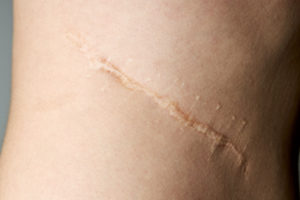
    surgical scar

    Surgical scars are a natural result of the body’s healing process after a surgical incision or procedure. They occur when the skin and underlying tissues are cut or disrupted, prompting the body to produce collagen to repair the damage. 

    The appearance, size and shape of a surgical scar depend on factors such as the size and depth of the incision, the surgeon’s technique, the patient’s skin type, and the individual’s healing process. Surgical scars may initially appear red, raised, and firm but generally fade and flatten over time.

    Common treatments

    Proper wound care

    Following the surgeon’s post-operative care instructions, including keeping the wound clean and dry, is crucial for minimising scar formation. It helps reduce the risk of infection and promotes optimal healing.

    Silicone sheets and gels

    Applying silicone sheets or gels to the surgical scar can help soften and flatten it while also reducing redness and itching. These treatments create a moist environment that aids in the healing process.

    Sun protection

    Protecting the surgical scar from sun exposure by using sunscreen or covering it with clothing is essential. UV rays can slow down the healing process and cause the scar to darken or become more noticeable.

    Topical treatments

    Over-the-counter or prescription creams, ointments, or gels containing ingredients like silicone, retinoids, or alpha hydroxy acids (AHAs) can help improve the appearance of surgical scars by promoting collagen production and skin cell turnover.

    Polyurethane dressing

    This can aid surgical scar healing by maintaining a moist environment, protecting the wound from infection, reducing friction and irritation, allowing gas exchange, and enabling easy monitoring due to their transparency. These factors improve healing, resulting in a better cosmetic outcome and less noticeable scars.

    Limitations of treatments

    Your active participation is crucial in achieving the best outcome in treating surgical scars. During postoperative visits, be attentive to signs of scar hypertrophy. These visits serve as an opportunity to learn and reinforce proper care practices. Remember, early intervention is key to managing hyperplastic responses.

    Scar treatment at Enrich

    The journey to scar treatment and management can be complex and overwhelming, with various factors influencing the success of treatments. Understanding these factors is vital in setting realistic expectations and finding the most effective approach to managing your scars.

    To ensure you’re on the right path, we encourage you to consult an expert dermatologist specialising in scar management. 

    *Please note that ENRICH Clinic does not necessarily perform all of these treatments listed in this blog. This blog is informational only and does not constitute advice. Please contact your GP as an initial gateway to advice and treatment for scarring.

  • The Truth About Acne: Is It Always Hormonal?

    The Truth About Acne: Is It Always Hormonal?

    Not sure if the bumps on your face are hormonal acne or not? You’ve come to the right place. You might have seen the terms cystic acne, nodular acne, hormonal acne or even adult acne being thrown around, so it’s normal to be confused.

    To clear up [no pun intended] any confusion, let’s start by defining acne.

    What is acne?

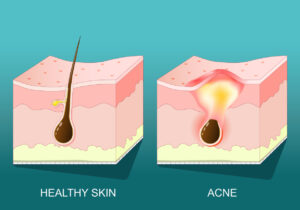
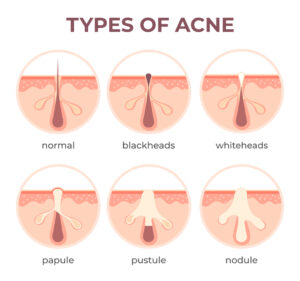
    Acne is a skin condition that occurs when tiny pores on the skin become clogged with dead skin cells, oil and bacteria, resulting in an overgrowth of bacteria that can cause inflammation and lesions. The lesions can range from whiteheads and blackheads to large, red cysts or nodules.

    It is a common skin condition that affects most of us at some point in our life. According to the Skin Health Institute, around 85% of adolescents and young adults aged between 15 and 24 are affected by acne. And it can persist until we’re in our 40s.

    Some terms you may encounter are adult acne, hormonal acne, common acne, etc. You’ll find our brief definitions of these below.

    How do I know if my breakouts are hormonal?

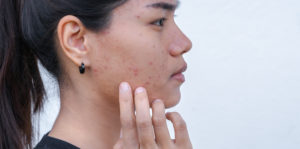
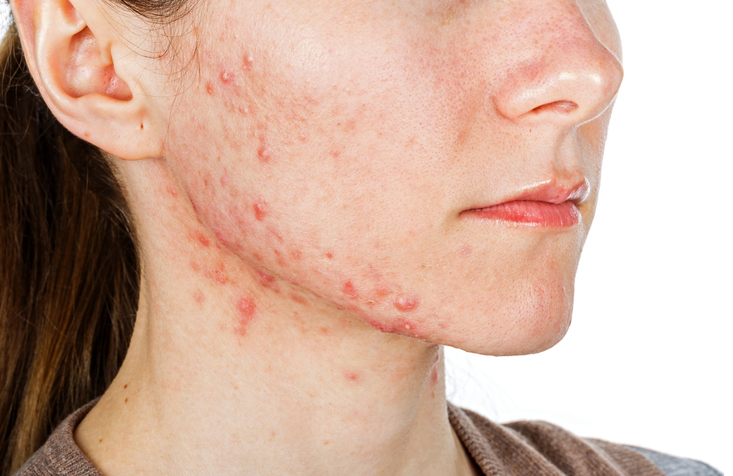
    Hormonal acne, often referred to as adult acne or adolescent acne, is caused by an imbalance of hormones, often due to puberty,adult woman with acne on cheeks and jawline hormonal changes during menstrual cycles, pregnancy, or menopause. In adults usually occurs more frequently around the chin and jawline area.

    Here’s the first trick in understanding acne–all acne is hormonal!

    The terms cystic acne and nodular acne are basically descriptions of the bumps you see on your face. 

    To know if it’s acne you are dealing , look for these signs:

    • frequent breakouts that occur in the same place, usually the jawline and chin area
    • acne that flares up at certain times of your cycle or monthly (more on this below)
    • bumps that are not itchy or burning

    Acne and cycles

    Females tend to have two acne phases: adolescent acne and late acne. Increased androgen hormones cause adolescent acne during puberty. At this period, the adrenal glands and ovaries begin to produce androgens, including dehydroepiandrosterone (DHEA) and testosterone. These hormones contribute to the growth of pubic and underarm hair and the development of breast tissue.

    Late acne (i.e. adult acne) is caused by a drop in estrogen levels at certain times of the month, such as ovulation and during pre-menstrual syndrome. So it is associated with hormonal changes due to the menstrual cycle, pregnancy or menopause. But at times, it can also persist beyond menopause.

    Does hormonal acne only happen during certain times of the month?

    Hormonal acne can be active at any time but usually worse during premenstrual and post-menopause. This is because hormonal changes–an overproduction of androgens or a drop in estrogen–during these times of the month can cause an increase in sebum production, leading to breakouts.

    Can hormonal acne just go away?

    Yes, but it can come back. Your bumps and pimples may go away for some time, but if the underlying hormonal imbalance is not treated, the acne will likely flare up again and cause permanent scarring.

    Can men experience hormonal acne?

    young man inspecting facial acne in a mirror

    Yes, men can suffer from hormonal acne too. In fact, 85% of men, who are primarily between 12 and 25, suffer from hormonal acne. This can be due to an imbalance of testosterone levels and other hormones such as cortisol. But, unlike in women, there’s no cyclic variation.

    What is the most effective treatment for hormonal acne?

    The best way to treat hormonal acne is by addressing and correcting the underlying hormonal imbalance. But because some treatment methods are unsuitable for certain people, we highly recommend consulting a dermatologist before trying any acne treatment. 

    Our doctors will also recommend lifestyle changes, such as getting more sleep, reducing stress and eating a healthy diet.

    Watch out for certain triggers like harsh skincare products and environmental pollutants. To avoid making things worse, try to stay away from thick moisturisers, as they can aggravate breakouts. Avoid smog and dust because they can also cause acne flare-ups. And, if you tend to sweat a lot, be mindful that this can clog your pores and provide a breeding ground for bacteria that leads to breakouts.

    dermatological treatment for acneIn cases where the acne is severe, our dermatologists will prescribe medications. Both oral contraceptives and spironolactone help regulate hormones. Contraceptives can help reduce testosterone levels and other hormones that cause acne. Spironolactone is a diuretic typically used to treat high blood pressure, but it can also help reduce sebum production and the formation of acne.
    Certain topical treatments can also reduce sebum production and help unclog pores, such as retinoids, benzoyl peroxide, salicylic acid, and tea tree oil. Other options are antibiotics and antibacterial cleansers to reduce inflammation. 

    For scarring, we recommend getting microdermabrasion, laser treatments or our scar treatment program again, all under the guidance of a dermatologist. 

    Begin your journey to healthier skin at Enrich Clinic

    Hormonal acne can be difficult to manage but not impossible. With proper care, treatment and guidance from a skin specialist, you can get your skin back to normal.

    The key is to take steps to address the underlying hormonal imbalance and keep breakouts under control. With the right treatment plan and lifestyle changes, you can return your skin to its best.

    Contact us today to book a consultation with one of our dermatologists and find out how we can help.

  • Adult Acne: The tales, the truth, the treatment

    Adult Acne: The tales, the truth, the treatment

    You’re having flare-ups, but you think you’re too old to have acne. Or are you?

    There are many myths surrounding adult acne. And it’s risky to self-diagnose and treat it without the help of a qualified dermatologist.

    So we’ll distinguish between the myths and the facts and explain adult acne in detail. We’ll also provide some useful tips on how to treat adult acne.

    The tales

    Myth 1: Only teenagers get acne

    Adult acne is quite common, especially among women. While the exact number is yet unknown, a study claimed adult acne affects about 85 per cent of women. Another said it’s from 43 to 69 per cent. Whatever the number is, adult acne is real, and you’re not alone in experiencing it.

    Acne occurs when the pores of your skin become blocked with oil, dead skin cells, or bacteria. When this happens, you may notice pimples or blackheads. It doesn’t matter how old you are — if your pores are blocked, you can get acne.

    Myth 2: You can treat adult acne with the same treatments that work for teenage acne

    Adult acne is different from teenage acne in several ways.

    For one thing, your skin is much more sensitive than when you were a teenager, when you age. This means adult acne treatments need to be gentler and less irritating.

    Myth 3: Vitamins and supplements are enough to cure acne

    Vitamins and supplements may help to improve your overall skin health. But they’re not a cure for acne, especially if you’ve had it for a long time. Don’t believe anyone who tells you they have a “miracle” acne cure or any hype you see on social media.

    Myth 4: Acne is caused by bad hygiene

    Adult acne is not caused by dirt, poor hygiene, or not washing your face enough. In fact, over-washing your face can actually make acne worse.

    girl holding chocolate with acne on her forehead

    It is caused by a combination of factors. You can do everything right in terms of hygiene and still get acne.

    Myth 5: Chocolates cause acne

    This is a myth that’s been around for a long time. But there’s no scientific evidence to support it.

    Acne is not caused by what you eat. However, certain foods can make acne worse. These include dairy products, processed foods, and sugar. If you have acne, you may want to avoid these foods to see if it makes a difference. Also, a type of diet can be a culprit but not the food per se.

    The truth: What really causes acne breakouts in adults?

    Hormones

    One of the most common causes of adult acne is hormonal imbalance. This includes changes in your body’s hormone levels and taking medications containing hormones.

    For example, acne is common in women during puberty, pregnancy, menopause, and perimenopause (the years leading up to menopause). This is because of the changes in hormone levels that these life stages bring.

    Acne is also common in women who are taking birth control pills, as well as men who are taking testosterone supplements. This is because these medications contain hormones that can trigger acne breakouts.

    Stress

    Another common cause of adult acne is stress. When you’re stressed, your body produces a hormone called cortisol. Cortisol can increase oil production in your skin, leading to clogged pores and acne breakouts.

    Also, a stressed skin barrier is more likely to become inflamed, which can make acne worse.

    Certain medications

    Certain medications can cause acne breakouts as a side effect. These include steroids, anti-seizure medications, and lithium (a medication used to treat bipolar disorder).

    Family history

    Acne is partly determined by your genes. HealthDirect says you’re more likely to develop acne if you have a family history of acne.

    Medical condition

    Some medical conditions that can cause acne are polycystic ovary syndrome (PCOS) and adrenal gland disorders. PCOS is a hormonal disorder that can cause irregular periods, excess hair growth, and acne. Adrenal gland disorders are rare conditions that affect how your body produces hormones.

    These conditions cause acne because of the changes they cause in your hormone levels.

    woman applying skin products to face

    Skincare products used incorrectly

    Acne can also be caused by how you care for your skin. For example, if you use products that are too harsh for your skin, they can strip away your skin’s natural oils. This can lead to dryness, irritation, and inflammation — all of which can worsen acne.

    In addition, If you don’t wash your face after exercising, the sweat and bacteria on your skin can clog your pores and lead to breakouts.

    The treatment: How do you fix adult acne?

    Acne can be a frustrating and embarrassing problem. But there are treatments available that can help.

    Change your diet

    One way to treat adult acne is to change your diet. High GI diets and insulin have been found to cause acne indirectly. These foods can cause inflammation and make acne worse.

    In addition, you should eat plenty of fruits, vegetables, and whole grains. These foods are packed with nutrients that can help fight inflammation and improve skin health.

    Manage stress

    Stress can make acne worse. So, it’s important to find ways to manage your stress. This might include exercise, yoga, meditation, and deep breathing.

    Use skincare products that are gentle on your skin

    When it comes to skincare, less is more. That’s because harsh skincare products can strip away your skin’s natural oils, leading to dryness, irritation, and inflammation.

    Instead, use gentle, non-abrasive cleansers and moisturizers. These products will help keep your skin healthy without causing irritation.

    See a dermatologist

    woman looking at her clear skin in a mirror with doctors behind her

    The best way to treat adult acne is to see a qualified dermatologist. If your acne is severe or doesn’t respond to home treatment, don’t hesitate to make an appointment with us. Self-treatment may only make your flare-ups worse!

    Our dermatologists can prescribe medications that can help clear up your acne. These might include oral contraceptives, antibiotics, and retinoids. In addition, they can provide expert advice on how to care for your skin.

    They can also recommend treatments such as microdermabrasion and laser therapy. Both of these are proven ways to help remove dead skin cells and rejuvenate your skin.

    If you have acne scarring, our doctors can also recommend treatments that can help reduce the appearance of scars.

    Adult Acne Treatment at Enrich Clinic

    Adult acne is common, but so are the misconceptions about it. For expert guidance, contact our specialist dermatologist.

  • How menopause affects your body

    How menopause affects your body

    Menopause is a process that will happen to all women at some point in their life. It is the time when you stop experiencing your monthly period, and it is most often the end of the reproductive lifecycle. Menopause symptoms are caused by a hormonal imbalance; these hormones being oestrogen and progesterone.

    No two women are the same, and they will experience menopause symptoms during the three main stages of menopause at different times and with different intensities. A key indicator that you are reaching menopause is when you have not had your period in 12 consecutive months.

    So, as anyone who has experienced menopause will attest to, the process is quite complicated, stressful, and can be very exhausting. There can be a number of health complications.

    face of woman of menopausal ageOn top of that, every woman’s experience of menopause is unique.

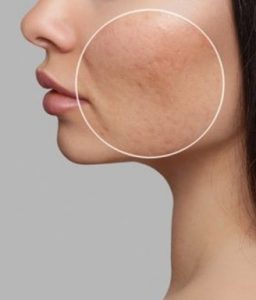
    According to Better Health Channel, most women will experience menopause between the ages of 45 and 60, with 51 being the average age, although it can happen outside of this timeframe. If menopause occurs before the age of 40 though, this is considered to be premature.

    There are many different symptoms of menopause, and it affects many other parts of your body. Thankfully there are different treatments that can lessen your symptoms and make the process slightly more bearable (or less unbearable?).

    The three stages of menopause

    • Perimenopause is when hormones start to change and decline and menstrual cycles become erratic. Hot flushes can begin at this time, as well as other menopause symptoms.
    • Menopause occurs when your body no longer produces hormones that cause your menstrual period. This is for 12 consecutive months. 
    • Postmenopause is after those 12 menopause months, and you remain in this stage for the rest of your life.

    Overall, menopause symptoms can last between 5- 10 years, sometimes even more. Every woman is different. 

    Menopause symptoms and treatments

    There are a wide range of symptoms, and not every woman going through menopause will experience all of them. These can be general symptoms or specific parts of your body that change. They include, but are not limited to:

    • Changes to your menstrual cycle are very common in the lead-up to menopause – or perimenopause. It can be periods occurring less often, but sometimes periods increase in frequency during this stage.sleeping problems during menopause
    • Hot flushes are alsoextremely common, defined as a sudden feeling of warmth in the neck or chest. According to Robert R Freedman, these can be defined as “feelings of intense warmth along with sweating, flushing, and chills”.
    • Sleeping problems can occur, which extends to general tiredness and lower energy levels.
    • Mood changes can be quite severe, with more leading situations leading to anxiety, irritability and sometimes depression.
    • Breast tenderness and, in some cases, quite severe pain.
    • Muscle pain, muscle tension and joint pain – even Osteoporosis.

    Menopause can also lead to weight gain, dry skin, increased heart rate, forgetfulness and irritability.

    Health Direct explains that menopause symptoms sometimes appear before your period stops. These symptoms can often be more severe in cases where menopause was brought on by surgery or cancer treatment. Furthermore, “hot flushes and night sweats are more common in women from Western cultures, while Asian women report more aches and pains, insomnia and mood changes.” As can be seen, menopause symptoms are highly variable.

    Enrich Clinic can help

    For some of the more specific symptoms, ENRICH Clinic offers a range of services and treatments that can help with some of the milder symptoms of menopause.

    Adult Acne

    acne scarring during menopause

    A lesser-known result of menopause is the occurrence of adult acne. In the study Menopausal Acne – Challenges And Solutions, Khunger and Mehrotra observe that acne is a common side-effect of menopause. The study states that the “etiology of menopausal acne is multifactorial, with hormonal imbalance being the major culprit”. Whilst the hormonal imbalance is hard to manage without some form of replacement therapy, there are options to treat acne.

    ENRICH’s acne and acne scar treatment options are wide-ranging, offering treatments and strategies to help manage your acne. 

    Dry Skin and Itchiness

    More broadly, menopause can cause skin dryness and itchiness. As the Australian Medical Centre describes, some women have experienced “a sensation like insects crawling under their skin”.

    Skin breakouts can be helped with regular treatments, but they have to be the right ones. As all cases are different, we would love to have a chat about your situation and establish the best possible method to address your acne. You can call us on 03 9500 9500, or come and see us at 872 High St, Armadale.

    Hair loss

    hair loss during menopause

    Menopause has been linked to hair loss and hair thinning. In their paper Skin Ageing, Calleja-Agius, Muscat-Baron and Brincat state, “The onset of menopause can lead to a diffuse or an androgenic alopecia”. They also note that there are a number of compilations with menopause that can lead to hair loss and thinning. 

    Thankfully, there are hair loss treatment options that can help.

    At ENRICH, we use PRP (platelet-rich plasma) and other solutions tailored to our patient’s needs. Check out our hair loss treatment truths blog for a quick hair loss overview.

    Spider veins

    During menopause, you might develop spider veins, which are thankfully less terrifying than they sound. They are sometimes confused with varicose veins, which are “knobbly, twisted and darkish-blue in appearance”, as explained by Better Health. “Spider veins are like varicose veins, but smaller and closer to the surface of the skin. They are often red or blue, and can look like tree branches or spider webs.” They cover variable areas and usually appear on your legs or face.

    We offer Sclerotherapy for spider veins, which involves injecting the vein with a solution that causes it to collapse, and renders it useless. There can be side effects to this treatment, but this is uncommon. This is not to be confused with surgical varicose treatments, which ENRICH does not offer.

    Our Excel V treatments are also an option. These can reduce redness in your face and treat unsightly blood vessels. You can learn more about these by reading our Excel V Laser for Blood Vessels blog.

    Other Skin Conditions

    Without the “anti-ageing” influence of oestrogen, our skin can suffer from laxity and reduced collagen production. Menopause can often make our skin either break out or become dry.  Looking after our skin health is key during this time. Following a treatment plan set specifically for your skin at this time can not only help with the physical but also play a big part in your mental well-being. Feeling good about your skin is not spoiling yourself, it’s essential, especially during menopause. 

    Given there are so many varied changes you go through during menopause, it is easy to feel stressed out and for the process to negatively affect your mental health. It is crucial to take care and be kind to yourself during this time, as this can give you that vital boost you need to get through the process.

    We can help

    Contact us

  • How we treat different types of scars

    How we treat different types of scars

    A scar is your body’s repair mechanism, made up of collagen fibres that stitch areas of skin together. A scar is not brand new regular skin, like for like, but a sort of patch that behaves differently. For example, hair doesn’t usually grow out of scars, and scars can get sunburnt because they can’t produce melanin. 

    The size and depth of a scar depend on the original injury to the skin. When just the top layer of skin cells is damaged, you’ll likely get like for like skin repair; for example, a child’s graze tends to heal entirely with fresh skin and no scarring. An abrasion is a superficial wound. Deeper wounds require your body to patch up the gap with collagen fibres. 

    How types of scars look as they age

    At first, scars tend to be pink or red, and as they age, they will lighten or darken. Scars almost always look different to your normal skin, but they can blend in or gradually disappear over time. 

    Scars are usually flat, though some scarring can be raised. The scar’s surface might be texturally different from other surrounding skin. 

    Some scars respond very well to scar treatments, while others are trickier. 

    types of scars - treatments

    Scars that restrict movement

    Sometimes scars heal a little tight, restricting movement. Scars that need a bit of loosening up can benefit from our collagen remodelling treatments, such as micro-needling. While we can’t remove the collagen (unless surgical excision is an option for your scar), we can reshape it, making it less prominent and less restrictive. 

    Raised scars (keloid scarring, hypertrophic scars)

    If your body made a lot of collagen to fill the injury site, you might end up with a scar that bulges above your other skin, also known as a keloid scar or hypertrophic scar. 

    Keloid scars are different to other scars in that if you are susceptible, a big scar can appear for minor reasons, such as getting your ears pierced, a picked pimple or a scratch, and spread. 

    When it comes to understanding keloid vs hypertrophic scars, keloid scars spread while hypertrophic scars do not. They’re just raised. Hypertrophic scar treatment differs from keloid scar treatment, which requires significant care to avoid further trauma to the skin and an increase in the scar. 

    Raised acne scars can also appear since acne can create a unique situation inside the skin, whereby scars can vary considerably. 

    Pitted scars

    Sunken, depressed or pitted scarring can occur when the wound is associated with inflammation, such as acne or chickenpox. A cavity develops under the skin, which leaves a dip in the surface once it heals. These sunken scars create a slight shadow on the skin. 

    Acne scar treatments vary depending on the type of scar (pitted, rolling, etc.). Talk to your dermatologist at ENRICH Clinic in Melbourne, and we’ll explain which types of acne scars you have and how to best treat them. 

    Proper wound care to help prevent scarring

    How you deal with a wound after an injury can make a difference in how healing progresses and the scar looks. We aren’t always thinking about how a wound will heal when it first occurs, but remembering a few essential items can help minimise scarring.

    Always keep a wound clean and free from infection. You can use antimicrobial solutions such as iodine or alcohol and wash the wound gently with soap and water. Avoid harsh agents that could further inflame your wound. 

    After cleaning and drying the wound, apply a barrier ointment to help keep the wound flexible such as pawpaw ointment or Vaseline. This moisture can be a pleasant relief from tight scabbing, particularly on flexible body areas like the knees or elbows. 

    Check with a medical professional to see if you need stitches. Stitches can make a huge difference in terms of scar size since if you draw together the sides of a wound, your body doesn’t have to fill such a big gap with the scar. 

    scar removal melbourne

    Taking care of scars

    Every scar is different with a unique location, size, shape and depth. Getting good advice from your healthcare provider regarding wound healing is recommended, with care possibly involving massaging vitamin E oil or another cream into the scar and using other topical treatments to reduce the risk of infection. 

    Keep scars from the sun – the collagen fibres do not contain melanin and thus cannot protect themselves. Scars increase your risk of skin cancer, so be sun smart. 

    If a scar is causing you grief, see an experienced dermatologist at ENRICH Clinic in Melbourne for advice and treatment. 

    Reducing the prominence of scars with treatment and scar removal 

    We usually can’t altogether remove scars, as they are a permanent mark on our body, but we have a handful of effective strategies to minimise the appearance of scarring

    Scars can be a reminder of an event you would rather put behind you, so efforts to reduce their appearance can be very healing. At ENRICH Clinic in Melbourne, we understand scarring can be difficult to live with and work hard with our patients to remove, fade, shrink or remodel all types of scarring. 

    The type of treatment we recommend will depend on the scars we’re dealing with. Treatments range from laser and radiofrequency to micro-needling but can involve several effective treatment strategies. 

    Get in touch to talk over your scarring, and we’ll put together a plan to help you feel better in the skin you’re in. 

    ENRICH Clinic

  • How lasers can improve the look of scars

    How lasers can improve the look of scars

    Each of our scars has a character and a story. If we’re unhappy with the restrictions they impose upon us, our scars deserve an individualised treatment strategy to lighten, remodel, soften, shrink or fade. 

    While there is no such thing as complete ‘scar removal’ (we cannot remove scar tissue), modifications can be made to scars, making them easier to live with. 

    Lasers can make considerable improvements to the appearance of scars. We can: 

    • Reduce redness
    • Remodel scar tissue to reduce bulk
    • Smooth or flatten scar tissue
    • Reduce the visual impact of scars
    • Implement preventatives for planned surgical scars
    • Reduce itching and pain
    • Improve range of motion of tight scars

    What are the most common scar treatments?

    Laser skin treatments are the most common way to treat scars, with laser skin resurfacing very popular. Laser skin resurfacing is a method of ‘levelling out’ skin or evening scar tissue to match the surrounding skin. 

    Raised scars can create shadows, so smoothing the height of a scar using laser skin resurfacing can reduce its overall visual impact. Lack of a shadow means skin tone is more consistent and less likely to draw the eye. 

    We might also use microdermabrasion, radiofrequency, dermal filler injections and micro-needling to augment the shape, size, colour or texture of a scar. 

    What to expect from scar treatment

    laser scar treatment melbourne

    Remember, every scar is unique, and thus what you can expect in terms of results will differ widely. We can’t ‘get rid of scars’ in the way you might get rid of a pimple; a scar is a permanent scaffolding to join two areas of skin that were forcibly separated. This scaffolding is thicker, tougher collagen, and it is not the same as normal skin; it’s a patch, not a like-for-like replacement. 

    Your scars may require more than just laser treatments. Our clinic has some of the best technology available anywhere, and we utilise these devices to support your end goal, mixing and matching technology and other treatments. 

    Scars may require several treatments to create lasting and impactful change. Remodelling collagen, for example, may happen over several months rather than in one go. If you don’t see instant results, don’t worry – all will be revealed, but it can take some time. 

    The recovery period for lasers tends to be short and easy, but that depends on the extent of your treatment. Talk to your dermatologist at ENRICH Clinic in Melbourne about your expectations so we can discuss what you can realistically get out of your scar treatments. 

    How much does scar treatment cost?

    Scar treatment cost depends on the plan, including the frequency and type of treatments and who performs the treatments. In some cases, Medicare may cover the cost of your procedures, particularly if your scars restrict movement. Call the clinic to book a consultation, and we’ll provide you with an accurate quote and a detailed treatment plan. 

    Do scar treatments hurt?

    Scar treatments at our Melbourne clinic are non-invasive, and we make sure you’re comfortable during your treatment. We use whatever is necessary in terms of anaesthetic cream or local anaesthetic to make sure you don’t feel much at all. Some inflammation after treatments is normal but very tolerable. 

    Can we treat old scars?

    We can treat scars of any age though younger scars tend to respond more readily to treatment; it doesn’t matter how old your scars are. We can treat scars of any age.

    How long does scar treatment take to work?

    We individualise our treatments to the scar and the person, and there is no one-size-fits-all approach to softening, fading or shrinking a scar. Each scar will respond differently to treatment, but how long that will take will depend on the specifics of the treatments used and the nature of the scar. 

    How soon can a scar be treated?

    We can treat surgical scars as soon as the stitches are out, which is the best time to start work on scarring. The sooner we get to it, the better the outcomes. 

    If you have a surgery planned, plan in your scar treatments for as soon as your surgeon estimates your stitches can come out. 

    Can stretch marks be faded?

    Stretch marks aren’t the same as a scar, but they’re close. Stretch marks are also made of collagen and are used to fill in gaps in the skin caused by stretching of skin before it had time to adapt. Stretch marks occur during periods of growth, significant weight gain, pregnancy and when building muscle quickly. 
    We treat stretch marks the same as other scars and as with other scarring; the sooner, the better. So, while we can’t do stretch mark ‘removal’ as such, we can perform laser stretch mark treatments. We can treat very old stretch marks and soften, fade and recontour your body’s protestations from time.

    Can hypertrophic scars be treated?

    Hypertrophic scarring is thickened, raised scar tissue that developed abnormally as part of the wound healing process, with extra connective tissue sent to the area. 

    Hypertrophic scars can make what would typically be a small blemish on the skin from a minor injury or surgery become raised, red and puffy scar tissue. We can treat hypertrophic scars, reducing redness and excess scar tissue to reduce prominence. 

    Get help with your scars.

    Make an appointment to talk over your scars – we are expert cosmetic dermatologists with innovative treatment strategies and state-of-the-art equipment. We can help you get the most out of your skin. 

    ENRICH Clinic

  • What you need to know about the skin needling for acne scars

    What you need to know about the skin needling for acne scars

    Skin needling involves inserting tiny needles into the top few layers of skin with or without extra ingredients to stimulate the natural healing response. Skin needling is also known as collagen induction therapy since, ultimately, that is what we’re trying to achieve. When treating acne scars with micro-needling, we’re also looking to break up existing scar tissue to soften the appearance of scars, a process known as collagen remodelling. 

    The micro-injuries to the skin caused by the very fine needles stimulate collagen production in special skin cells called fibroblasts. Your fibroblasts are responsible for producing collagen and elastin to keep skin firm and flexible so it can continue to protect you and remain smoother and healthier for longer. 

    The process is a little more involved with acne scarring since we’re breaking up very fibrous collagen deposits while also stimulating new collagen. Don’t worry – we’re not adding to the scars by promoting further collagen production but instead augmenting the skin and scars’ appearance. 

    Why we use skin needling

    • Remodel scar tissue
    • Reduce prominence of scars
    • Reduce redness of scars
    • Smooth the skin’s surface
    • Improving the appearance of fine lines and wrinkles
    • Strengthen junctions between dermis and epidermis
    • Rejuvenate the complexion
    • Reduce pore size
    • Improve skin texture

    Skin needling for improving the look of acne scars

    When we insert a set of tiny needles into an acne scar, we break up the fibrous tissue a little, which softens the scar. Softening a scar can be extremely useful when scars are tight or depressed, improving the appearance of the surface of the skin by evening it out and reducing dark patches. 

    The action of poking a series of very tiny holes in a scar relaxes the collagen that makes up the scar and effectively helps to remodel the scar tissue. We can’t remove the scar, but collagen is not a fixed entity; we can modify it somewhat. 

    You will require more than one treatment for best results since remodelling collagen is a process rather than something we can do quickly. A course of skin needling treatments might consist of between 2-5 sessions, but you’ll start to see improvements as you go. Treatments are necessarily at least a month apart. 

    The process is entirely mechanical and doesn’t use any heat, unlike other treatments like laser, radiofrequency or ultrasound. Micro-needling can work  for all skin tones and types. 

    Who can and can’t get skin needling

    We can’t treat inflamed or infected skin, so if you’re experiencing a breakout of cystic acne when your appointment is due, it’s best to rebook so you’ve got time to clear the outbreak. We also can’t treat skin affected by sunburn, eczema, psoriasis or very sensitive skin. Those on blood thinners and other medications should check with our team first. If you’re pregnant or breastfeeding, we will rebook your appointments for a later time. 

    Having hydrated skin helps the treatment be a success, so drink up! 


    skin needling for women

    The best candidates for skin needling are those with acne scarring, fine lines or anyone looking to improve the texture and firmness of the skin. 

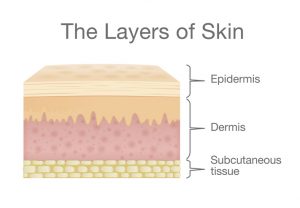
    Understanding the skin layers

    The needles of The Secret, our skin-needling device, puncture the upper dermal layer. The epidermis is the outer layer of the skin, so the Secret’s needles get further than any topical treatment can. 

    The Secret’s needle set can be switched out for a deeper or more superficial treatment and are set into spring-loaded bases to ensure consistent treatment across all areas of the face. The Secret and other clinic-based needling technology go deeper than at-home treatments. 

    Once the treatment is complete, the work has only just begun – for your skin cells. The process of regeneration reliably kicks off, albeit slowly. You can expect improvements to start to appear after about six weeks post-treatment. 

    Does skin needling for acne scars hurt?

    Deeper skin needling can result in some discomfort which we manage with anaesthetic cream and pain medication as needed. Each of you will experience discomforts differently, but some areas will indeed feel better than others. Boney areas are more likely to be more uncomfortable, such as the forehead and cheekbones. We work with you to ensure you’re always comfortable. 

    Acne scarring treatments do require deeper treatments than other types of skin needling. 

    Success rates of skin needling for acne scars

    Skin needling is gaining a reputation for being a solid strategy for dealing with acne scarring, proving itself repeatedly reliable with consistently good results. The treatment is useful for a broad range of skin types and tones, so it is a very accessible treatment. Skin needling can treat other types of scarring, soften the scar tissue and make it more pliable.  Skin needling treatments are not just used on the face; we can do back, buttock and neck treatments – almost anywhere scarring occurs. 

    You can expect a recovery time of about a week and the impacts to be revealed over the coming months, making skin needling a low-downtime treatment. 

    We are experts in treating acne scarring, so if you’re unsure what your next best step is, contact us for a personalised consultation to discuss your options. 

    ENRICH Clinic

  • Types of acne scarring and removing old acne scars

    Types of acne scarring and removing old acne scars

    The first step in treating acne scarring is establishing the type of scarring you have. Each treatment is a little different in how it diminishes the scars’ appearance, but a lot depends on the type and severity. 

    Most people who get acne end up with scarring. The cause of this characteristic scarring is how acne develops and how it is different from a regular pimple. 

    In an acne lesion, the bacteria involved disable skin cells’ innate immunity, thus preventing cells from defending themselves. This process leaves the bacteria-free to feed and replicate, resulting in minor infections under the skin. 

    The bacteria carve out a little hole for themselves under the skin, which is why acne scars have their specific appearance, particularly the pits and pocks.

    Understanding the treatment of atrophic acne scars

    Atrophic acne scars appear pitted. The edges cast a shadow, making the pits seem darker than the surrounding skin. Because the scars are a dent, we use specific tools to level out the hills and valleys of the skin’s surface as best we can, resulting in a more even complexion with fewer shadows. 

    There are three main types of atrophic acne scars:  

    1. Icepick scars


    Icepick scars are small, deep, narrow and cylindrical, causing a depression in the skin. 

    2. Boxcar scars

    A boxcar scar is a shallow, broad depression, usually oval or rectangle with sharp vertical edges. Most boxcar scarring appears on the cheeks and temples. 

    3. Rolling scars

    By far the most common acne scar, rolling scars are shallow and wide with sloping edges. Rolling scars result in what looks like tiny uneven, wavy valleys and are most likely to be caused by long-term acne. 

    Rolling acne scarring isn’t as noticeable in younger skin, but the scarring tends to become more visible as skin loses its elasticity with age. Very shallow rolling scars may fade and soften over time without treatment, but procedures can significantly improve their appearance. Rolling scars are the easiest to treat.

    What are hypertrophic acne scars?

    Hypertrophic scars are raised and often look thick, lumpy and red and feel rubbery. Most hypertrophic scars will fade on their own, but a dermatologist may recommend treatment. 

    Keloid scars, a type of hypertrophic scar, may develop in some people, particularly anyone of Asian or African descent. A keloid scar results from the body overproducing scar tissue in response to an injury and can occur in pierced ears and everyday cuts and scrapes. Keloid scarring is red, raised and looks like a smooth, shiny red bubble that may keep growing. Most people who experience keloid scarring are prone to it. 

    Because in those prone to keloid scarring, any skin injury can result in this type of scar; thus, treatment must be delicate to avoid any extra damage. For example, you can’t just cut a keloid scar off because the skin injury will simply produce another scar. 

    Treating post-acne pigment changes – Melbourne

    Red, brown or white patches of skin are not uncommon with acne scarring. While pigmentation (or loss of pigmentation) isn’t a scar, it is another element of skin that we can treat once the acne resolves.

    When these dark areas develop after acne, it’s often a result of inflammation (post-inflammatory hyperpigmentation). The affected areas might be brown, black or red and consist of many smaller marks or a consistent pigment spread. Hyperpigmentation usually fades over time, but it can take up to two years, depending on severity.

    When areas of skin lose pigmentation, we call it hypopigmentation. The pigment disappears due to the damage the acne caused, and at first may be pinkish, fading into white over time. Loss of pigmentation is often a long-term problem. 

    Treating acne scarring

    Advances in dermatology mean at ENRICH Clinic in Melbourne, we now have many options for reducing acne’s impact on your skin. The scar type  and your skin type will determine the route, and your treatment may consist of several strategies. 

    Treatment strategies for acne scarring and pigmentatio

    • Filling in depressions with dermal filler injections to even skin surface
    • Remodelling collagen within depressions to even skin and reduce the depth of scars
    • Stimulating collagen production to fill in scars
    • Remove outer layers of scar tissue via several mechanisms
    • Microneedling for collagen production and pigmentation
    • Chemical peels for exfoliating and reducing pigmentation
    • Sun protection for preventing worsening of pigmentation
    • Bleaching for hyperpigmentation
    • Laser microdermabrasion to smooth skin’s surface
    • Dermabrasion resurfacing
    • Punch grafting for deeper scars
    • Surgical techniques to divide and relax fibrous scar tissue
    • Surgical procedures to remove more extensive scars
    • Topical steroids for hypertrophic scars topically or injected into the scar
    • Silicone dressings
    • Cryotherapy (freezing)
    • Light and energy-based treatments involving topical gels

    We have many options to help get your skins acne scarring. Get in touch for a consultation, and let us help you with your skin health. 

    Contact us for a consultation

    ENRICH Clinic

  • Acne treatment Melbourne – acne scarring at ENRICH Clinic

    Acne treatment Melbourne – acne scarring at ENRICH Clinic

    acne treatment melbourne

    Acne is an inflammatory skin condition resulting in whiteheads, blackheads & pimples appearing predominantly on the face, forehead, chest, upper back & shoulders.

    Dr Michael Rich leads a team of experienced cosmetic doctors & dermatologists in Melbourne, highly trained in advanced lasers & treatments for acne and acne scarring. If acne or acne scarring is an issue for you, contact us to arrange a consultation. 

    Types of Acne Scars

    • Rolling scars – broad, sloped-edge depressions in the skin
    • Ice-pick scarring – pitted, deep, thin slit-like scars
    • Box-car scars – defined-edge depressions
    • Atrophic scarring – thin, flat scars
    • Keloid (hypertrophic) scars – thick, lumpy scarring

    Treatments for acne scarring – Acne treatment Melbourne

    ENRICH Clinic is home to several effective laser treatments for acne scarring. Radio frequency devices & lasers can be used to target skin cells at a deeper level, working to strengthen and support skin cells & structure. This reduces the appearance of scars and marks that acne can cause.

    Radio frequency treatments have the added benefit of killing bacteria and improving overall skin tone & texture. Laser treatments work by either stimulating collagen producing cells & collagen or ablating the skin surrounding the scar, evening out the surface of the skin.

    Other effective and minimally invasive treatments include:

    Deep acne scars

    Of course, there are some very extreme cases of deep acne scarring and they will be too deep for ablative laser treatments to work alone. A combination of medicated creams, medication, lasers, light treatments & lasers and of course time may be the best route to clear, smooth skin. 

    Contact us to secure an appointment for acne scarring consult or treatment at ENRICH Clinic

  • Top conditions dermatologists treat

    Top conditions dermatologists treat

    While there are doctors of many sorts who encounter and treat skin conditions, the ultimate skin specialist is a dermatologist. A dermatologist is a skin, hair and nail expert, dealing with everything from hair loss, to skin cancers, to autoimmune conditions that manifest in the skin.

    Other doctors who may treat skin conditions include GPs, paediatricians (children’s doctors), gynaecologists, ear, nose and throat specialists, emergency physicians and even sometimes dentists.

    Your family doctor often successfully treats most common skin conditions such as insect bites, mild contact dermatitis and skin infections; however there comes the point where a doctor will refer you on to someone more experienced – a dermatologist.

    Patients are referred to a dermatologist when their complaint is complex, severe, or isn’t responding to the usual treatments. In fact, you need a referral from your GP to see a dermatologist.

    A visit to the dermatologist may be in order when there are certain functional or cosmetic complaints, for example, when scar tissue is preventing the full range of motion or is causing distress.

    A dermatologist may spend a great deal of time diagnosing and treating a variety of skin issues. This in turn helps people to feel better about how they look, which is an important aspect of dermatology practice.

    The most common skin conditions a dermatologist treats include: 

    1. Benign and malignant skin tumours and melanomas (growths and cancers)
    2. Psoriasis (an autoimmune skin condition where the skin cells replicate too quickly causing patches of hard skin)
    3. Acne (severe, persistent pimples that become infected on the face, back, chest or another area)
    4. Acne scarring
    5. Contact dermatitis (skin reaction caused by contact with an irritant, e.g. dishwashing liquid)
    6. Actinic and seborrhoeic keratosis (skin growths caused by sun exposure)
    7. Rosacea (facial flushing and redness)
    8. Alopecia (hair loss)

    Research into the most treated dermatological conditions shows that our skin complaints usually aren’t life-threatening, and while many are annoying or uncomfortable, they are not serious.

    There are so many expressions of health or disease that appear as symptoms on the skin, but some skin conditions – like pimples – are just what they look like and aren’t complicated (a blocked pore).

    A dermatologist can treat underlying health conditions

    A dermatologist is a medical doctor and therefore can treat other elements of your health besides just your skin, hair or nails.

    Some examples of the broad scope of practice of a dermatologist include: 

    Acne, acne scarring and acne treatments

    Acne is a great example of the skin interacting with what’s going on in your body as a whole. Acne doesn’t have just one cause; however, the hormonal interactions that cause the sebum-producing glands in the skin to produce more oil can be a major factor.

    This abundance of oil gets trapped in the skin, which provides a food source for bacteria, and persistent acne can be the result. A treatment to manage hormones or inflammation may be appropriate for acne in some people, resulting in full or partial clearance of the problem.

    There are frequent new developments in active acne treatments, and we cherry-pick the very best for our patients. We won’t just give you the standard treatments; we have novel light-based treatments, lasers, topical treatments and medications. We have access and training in the strongest, best acne therapies.

    Dealing with active acne isn’t our only challenge; the resultant scarring can be distressing. Acne bacteria cause a small space to be created underneath the skin, which results in the classic appearance of acne scarring. The scars are depressed in the skin a little, which leaves the face ‘pockmarked’, with shadows cast by the small hollows of the scar. dermatology treatments melbourne

    We have several treatments to modify the appearance of this scarring, smoothing out the skin in both tone and texture using state-of-the-art scar remodelling technology.

    Psoriasis and psoriasis treatments – managing the immune system

    Psoriasis is a skin condition intricately connected with the immune system, though why psoriasis develops isn’t well understood. The treatment for psoriasis, in its most severe cases, is a strong drug that suppresses the immune system. The symptoms appear on the skin, but the trigger is coming from the immune system.

    Treatments for psoriasis in our clinic follow the latest in scientific guidelines and technology. We’re able to use several types of treatments to try to effect change in the skin, from high-tech wave-based treatments to the very latest in topical applications.

    Some conditions that affect only the skin include: 

    Actinic and seborrhoeic keratosis

    There are many skin conditions largely caused by UV exposure, including skin cancers and actinic (solar) and seborrhoeic keratosis. The sun causes changes to occur within the DNA of skin cells, and over a lifetime, this can result in skin lesions, some dangerous and some benign.

    Actinic (solar) keratosis – suspicious scaly spots

    Sun-damaged skin can develop actinic keratosis – a little patch of scaly, scab-like skin. These little scabs are understood to be a precancerous change or early form of skin cancer.

    Often actinic keratosis occurs in fair-skinned people who live in very sunny areas, such as the tropics or sub-tropics, and have a lot of sun exposure over many years. The cause of actinic keratosis is DNA damage by UVB rays.

    We treat actinic keratosis how we treat all suspicious growths: we will do a full investigation and likely remove the lesion.

    Seborrhoeic keratosis – benign brown wart-like growths

    While actinic keratosis is considered potentially dangerous, seborrhoeic keratosis is not. Seborrhoeic keratosis is a harmless, brown, wart-like growth on the skin, usually in areas exposed to the sun. People may have hundreds of these growths, which are very common. These growths are not the same as moles or freckles.

    We can comfortably and quickly remove these growths in the clinic using one of several effective methods.

    A dermatologist treats a wide range of issues affecting health

    At ENRICH Clinic, we are a specialist dermatology clinic and as you can see, treat a huge array of skin, hair, nail, and overall health problems.dermatology for hair growth

    We have a team of specialist doctors, each of whom has an area of interest that sets them apart from the others. Our team is diverse by design, so our patients get the best of everything.

    Want more beautiful skin?
    We can help.
    Contact us

    ENRICH Clinic

  • Non-invasive face treatments

    Non-invasive face treatments

    At ENRICH Clinic, we have many effective non-invasive facial treatments to suit your budget and skin goals. There are so many, with multiple names, that you may not know where to start. Here we offer you an overview of an excellent way to choose treatments based on your skin goals.


    Before we get into the specifics of the treatments, it’s useful to understand what your specific skin goals are and write them down. There may be a part of your face that is bugging you – redness, pimples, sun damage, dry skin, wrinkles – or you may want to look great for a special event or make an anti-ageing plan. We can also do non-surgical rhinoplasty.

    Your skin goals are the most important thing for us here at ENRICH Clinic, so having a consultation will fast track your discovery process where you will benefit from our experience.

    The internet can be a mind-boggling place, so we recommend making an appointment with one of our specialist cosmetic practitioners to see how we can help you.

    Non-surgical face treatments

    Injectables

    • Dermal fillers
    • Muscle relaxers (anti-wrinkle injections)
    • Liquid facelifts (anti-wrinkle injections and dermal filler)
    • Fat-dissolving injections

    Skin treatments

    • Chemical peels
    • The Secret or Microneedling
    • Microdermabrasion

    Laser and similar procedures

    • Continuous, fractional, ablative and non-ablative lasers
    • IPL and other heat-based devices
    • LED anti-ageing devices
    • Piqo laser
    • China Doll Facial

    Each treatment has a thing or two that it’s really good at, so starting with your skin goals in mind, we can then narrow down the procedures that will most benefit you.

    Here are some great examples of how we help our patients to get you started.

    Anti-ageingPortrait of beautiful mature woman sitting in cafeteria looking away. Cheerful mature woman wearing eyeglasses thinking with finger on chin. Happy woman relaxing at cafe and smiling.

    Anti-ageing is where a cosmetic clinic comes into its own. We love our range of anti-ageing treatments, and so do our clients. There are many to choose from, and it will depend heavily on which element of anti-ageing you are focused.

    Because the ageing process affects the areas of the face differently, we treat each area separately.

    Elements of facial ageing include:

    • The development of fine lines and wrinkles
    • Loss of fat volume creating a sallow look of the cheeks and around the eyes
    • Loss of collagen and elastin contributing to wrinkling and sagging
    • Deepening of grooves

    To combat each of these, we can use a collection of tools that address one or more element. Fine lines and wrinkles can be softened using resurfacing (makes all skin the same ‘height’), filled in with dermal fillers, or collagen boosted with wave-based treatments.

    We can arrest deep grooves and wrinkles as they are forming with anti-wrinkle injections, keeping your face smoother for longer.

    Fat in our face creates a more youthful appearance, so dermal filler has a huge role to play in our anti-ageing strategies. The hollows left due to diminishing fat volume in the cheeks can be plumped back up with dermal filler injections, as can the tear troughs and nasolabial folds (the lines that join your mouth and nose).

    Facial redness

    Redness is the result of blood vessels close to the surface of the skin. There is regular redness – this may be genetic, maybe you run hot – then we have redness caused by inflammation, known as rosacea.

    We have very effective laser treatments that remove the tiny blood vessels, reducing the visible impact of being hot, flushed or generally blotchy or red. This treatment works the same for any blood vessel condition, minor or major.

    If you have red cheeks or a red face all the time,  you may benefit from a consultation with a dermatologist to look into the cause. Sometimes a skin treatment isn’t the most appropriate way forward here.

    Rough or dry skin

    The outer layer of skin is by design made up of hard, dead skin cells – the keratinised layer of skin that protects us from the outside world. Keratinised skin, because it’s dead skin cells, can easily become dry, flakey and rough. Think of elbows, knees and heels.

    These dead skin cells can also lead to face appearing dry, dull and lacklustre. The solution is to get rid of the skin cells. We achieve this with several tools, for example, laser resurfacing, chemical peels and microdermabrasion. The top layer of dull skin is removed, revealing the fresh skin underneath.

    Acne or acne scarring

    Acne and acne scarring are two very distinct problems with individual solutions. Acne is an active skin infection, while acne scarring is the result of a specific skin injury. Acne scars develop due to a space created underneath the skin, in the pore, by the infection, that is then filled in with scar tissue.

    We have several strategies for managing acne, including hormonal management and very targeted skin treatments. Skin treatments include light- and wave-based devices to kill bacteria and promote skin health.

    Acne scar treatments often include collagen remodelling to change how scars appear, but depending on the type of scar, we can also work to resurface the skin.

    We are skin experts who prefer to use non-invasive strategies to achieve your skin goals. We have such an amazing array of tools at our disposal, so come in for a consultation so we can show some of them off to you! We feel confident that we can help you have more beautiful skin, whatever that means to you.

    At ENRICH Clinic, we have three expert dermatologists, including our founder Dr Michael Rich, Dr Lena Ly and Dr Charles Xie

    We are experienced cosmetic dermatologists & phsicians.
    Contact us for an appointment

  • Skin resurfacing with the Fraxel, fractional CO2 laser and Portrait

    Skin resurfacing with the Fraxel, fractional CO2 laser and Portrait

    Skin resurfacing is the process whereby the topmost layers of skin are removed, taking with them sun damage, pigmentation, wrinkles and scars.

    Resurfacing to this degree comes with some downtime, as the skin needs to peel, then heal, ultimately revealing a fully refreshed complexion.

    layers of skin infographicResurfacing treatments can create a dramatic change in the skin’s appearance, but this type of treatment does come at a cost. Skin resurfacing is not for the faint of heart! We don’t recommend this type of treatment for those who are new to cosmetic procedures.

    (Need something a little less extreme but that leaves you with beautiful, younger-looking skin? Check out our Gym for Skin ebook.)

    The depth of resurfacing varies between machines and energy settings. At ENRICH Clinic, we use three primary devices for resurfacing. Choosing which one is right for your skin will largely be the job of your cosmetic doctor. Your doctor can advise you based on your skin type and other factors to get the maximum benefit from your treatment.

    Here we give you the rundown of our favourite resurfacing lasers at ENRICH Clinic. We use the Fraxel laser, fractional CO2 laser, and the Portrait plasma device for resurfacing treatments, with each having unique qualities.

    If you’re interested in how resurfacing works in more detail, this scientific review looks at new and emerging trends in laser skin resurfacing.

    The benefits of Fraxel laser for skin resurfacing

    We use the Fraxel dual laser to help correct:

    • Hyperpigmentation on the face, decolletage, neck, arms or hands
    • Sun damage
    • Wrinkles and fine lines
    • Acne scarring, particularly icepick, boxcar and rolling scars

    About the Fraxel laser

    The Fraxel laser is a dual laser, meaning it has two lasers at different wavelengths in the one machine. This dual function increases the Fraxel’s range of treatment options, which is uncommon in lasers and makes the Fraxel a uniquely useful laser. Usually, lasers only have one frequency which targets one specific set of skin issues, for example, blood vessel conditions or sun damage, but not both.

    One of the Fraxel’s frequencies is used to target sun damage and pigmentation within the epidermis (top layer). The other laser goes deeper, targeting the dermis, the layer that houses and produces collagen. The dermis is responsible for deeper wrinkles, skin texture and scarring.

    Fraxel lasers all work the same way – by creating little columns of heat that penetrate the skin cells, stimulating the deeper cells to trigger regeneration. This depth is why you’ll have 3-5 days of downtime – your face is going to be red, peeling and scaley as the process of ‘out with the old, in with the new’ occurs.

    Fast facts about Fraxel laser skin resurfacing

    • Your skin must be free from infections, severe breakouts or open wounds before treatments
    • No retinoids a week before treatment
    • Total treatment time including numbing is about 90 minutes (45 minutes numbing, 20-30 minute treatments)
    • Feels like a prickling sensation, can be mildly uncomfortable
    • Downtime expected
    • Deep treatment
    • Leave skin alone to heal – no picking!
    • For pigmentation, you may need 1-2 treatments a month apart
    • For sun damage, you may need 1-2 treatments 6-8 weeks apart
    • Cost depends on areas treated and the clinic
    • No surgery, no injections
    • Effective treatment to look younger without a dramatic change

    The benefits of fractional CO2 laser for skin resurfacing

    We use the fractional CO2 laser to help correct:

    • Wrinkles and fine lines
    • Scars
    • Skin imperfections
    • Sagging skin
    • Sun damage
    • Texture and tone
    • Sagging or loose facial skin

    About the fractional CO2 laser

    Fractional CO2 lasers also use tiny columns of thermal (heat) laser energy to produce an effect within the skin. These columns are a little different to the Fraxel’s. Fractional CO2 lasers are considered to be the strongest resurfacing lasers used across many areas of the body, including the hands and neck.

    The topmost layer of skin is vapourised during the treatment, while the heat columns pierce the dermis and remodel collagen. This piercing treatment results in significant firming and smoothing of the skin.

    Fractional CO2 lasers have fewer risks associated with them compared with traditional CO2 lasers because of the ‘fractional’ aspect. Treatments fit patient needs, rather than the non-fractional CO2 lasers that tend to run at full steam ahead as the default setting.

    The columns of heat leave untouched skin between the columns – this is why it’s called ‘fractional’ since it only treats a fraction of the skin, while still obtaining an overall impact. Fractional CO2 lasers improve recovery times and healing compared with traditional CO2 lasers.Beauty Woman face Portrait. Beautiful model Girl with Perfect Fresh Clean Skin color lips purple red. Blonde brunette short hair Youth and Skin Care Concept. Isolated on a white background

    Fast facts about fractional CO2 laser resurfacing

    • Expect downtime of 3-14 days depending on the depth of resurfacing – ask your doctor
    • You will need to take time off, but ask your doctor just how much for your treatment
    • Dramatic results
    • Full treatment time is about 90 minutes including numbing time (actual treatment time is about 30 minutes for the full face)
    • Expect a hot, red, swollen face after treatments
    • Skin will peel and flake as it heals
    • Triggers regeneration of new skin
    • Antibiotics or antivirals may be required depending on the person

     The benefits of the Portrait for skin resurfacing

    We use the Portrait to help correct:

    • Wrinkles and fine lines
    • Loose or sagging skin
    • Uneven skin tone
    • Uneven texture
    • Pigmentation
    • Early drooping of jowls

    About the Portrait

    The Portrait is a plasma energy device, not a laser per se. Plasma energy is emitted from the Portrait at two different levels – low and high. Skin tightening is more pronounced at the top settings and where we do more than one pass.

    Fast facts about Portrait plasma resurfacing

    • Low energy treatments have no-low downtime, work slower
    • High energy treatments come with some downtime (but not as much as the fractional CO2 laser)
    • Total treatment time depends on which energy setting we use, but after numbing time, treatments take between 15 minutes and 45 minutes
    • After low energy passes skin will be a mild red and flaking may occur
    • After high energy passes, the skin will be moderately red and then turn brown and flake off over a week – 7-10 days
    • Results are immediate and continue to improve for up to a year
    • Treatments feel warm and require anaesthetic

    We are anti-ageing experts.
    Contact us today to see what the Portrait can do for you

    ENRICH Clinic

  • Why two skin treatments can offer 3X the result

    Why two skin treatments can offer 3X the result

    Combining skin treatments may seem like double the effort, but it could offer triple the benefit. There is no single ‘best’ treatment when it comes to your skin. Often a few excellent procedures combine that offer, together, even better results than you’d see with just one treatment alone.

    If you are concerned about signs of ageing (wrinkles, blemishes, brown spots or sallow cheeks), you aren’t going to find one single best treatment. A laser may work well on your skin tone, while an anti-wrinkle injection may be useful to stave off a deep wrinkle.

    Age and sunspots are treated with a laser, chemical peel or another light-based treatment, while sallow cheeks can also be treated with hydration increasing treatments.

    Finding treatments that complement one another is key to getting the 1 + 1 = 3 effect. We love combining treatments because the results can often be three times more effective!

    Ageing is a complicated process

    There is no one-size-fits-all when it comes to how your face is going to age or what concerns you the most. There is an intricate pattern of wrinkles, some that stay static (like a frown line) and those that appear on flatter surfaces of the skin (think forehead and cheeks).

    We lose facial volume, which in turn results in new folds and contours appearing over time. Blood vessels can also become more prominent.

    The multifaceted process of ageing, therefore, is best served with a combination cosmetic approach.

    Treatments that work well in combination

    Needling, lasers, intense pulsed light (IPL), microdermabrasion, chemical peels, hydration treatments and high-quality skincare products can all be used together in various combinations for positve cosmetic outcomes.

    We use these combos a lot at ENRICH Clinic, where Dr Michael Rich is a great proponent of the multi-treatment approach. The treatments can often be performed in one appointment but may be scheduled over several appointments where necessary.

    Classic treatment combos

    • Laser and radiofrequency
    • Hydration and wrinkle reducing treatments
    • Acne medication and topical acne or acne scarring treatments
    • Skin needling (The Secret) and chemical peels
    • Peels & Diodes
    • Ultraformer (HIFU) and lasers

    What is the best cosmetic treatment combination?

    The best cosmetic treatment combination for you depends on your skin concerns. Talk to your cosmetic dermatologist or doctor to see what their thoughts are. Consultations are the key as well as developing a long-term plan for your skin health, and also handy for budgeting!  Combination treatments can be different for everyone and depends on ou skin type, age, diet, gender and genetics.

    A break between treatments may be necessary, so your skin can do its thing

    Some procedures are, by necessity, performed away from others. For example, a robust collagen-boosting treatment requires at least a month, if not more, to reach its maximum potential. There’s not much point in doing more collagen-boosting treatments over the top. Your skin is already maxing itself out. However, this doesn’t mean you can’t do wrinkle-reducing treatment or even a pampering, ultra-hydrating facial.

    Other treatments require a break due to the way they function in the skin. For example, certain needle-based treatments need time to settle before other skin treatments go over the top. This timing is in place because the liquid can migrate, or the skin has been pierced so you have to be careful of infection for at least 24 hours — also, no facial massage after any kind of needling.

    Swelling from some treatments may impede the effect of others, so a break for healing may be useful for the best outcomes for some combined treatments. You don’t have to have them done in the same appointment for the combination treatment effect to come into play.

    Using lasers and other wave-based treatments in combination

    Some cosmetic devices are designed to penetrate more deeply than others, which is why we may utilise the powers of two or more wave-based devices as a combination treatment.

    One such combination may be a radiofrequency device, which penetrates deeper layers, with a laser that works on the skin’s surface. This way, skin gets a deep treatment that stimulates, tightens and strengthens as well as undergoes a smoothing, brightening, resurfacing treatment. Here’s a paper on a study that reviewed how certain combination treatments can be effective.

    Your cosmetic doctor knows the best combination of treatments. 

    If you’re not sure what you need, don’t worry! We do. Come in for a consultation, and we’ll help you figure out the best course of action for your skin.


    Let us get the most out of your skin.
    Contact us for an appointment

    ENRICH Clinic

  • At ENRICH, we love the The China Doll laser facial

    At ENRICH, we love the The China Doll laser facial

    The China Doll laser facial, also known as a carbon laser peel, has smoke, it’s got drama, it’s got beautiful results!

    The carbon laser facial is one of those treatments that gives you instantly glowing skin, but the China Doll facial has more up its sleeve than just a pretty face. The carbon laser peel is a therapeutic skin treatment that can, over multiple treatments, make a dent in some serious skin conditions like acne.

    Why you’ll love the China Doll facial

    • No downtime – lunchtime pamper time!
    • Ideal for newbies to cosmetic treatments
    • Great for before a big event or big night out – won’t leave marks on your face, just beautiful skin
    • Improves skin texture and tone
    • Reduces oiliness
    • Reduces the appearance of large pores
    • Removes blackheads and deeply cleanses pores
    • Removes dead skin and impurities
    • Increases thickness of the dermal barrier
    • Stimulates collagen and elastin

    How does the carbon laser peel work?

    First up, the skin is cleansed, and a gentle pass with our PiQ04 laser is taken across the skin surface.

    A carbon laser peel requires a thin layer of carbon serum which applied next up, to the face.

    The carbon mask then has ENRICH’s unique PiQ04 picosecond laser applied to it. china doll laser facial melbourne

    The overall treatment is still a laser treatment – with ENRICH it’s the picosecond laser, unique to China Doll laser facials in Australia – but the carbon serum acts as what’s known as a photo enhancer. This amplifies the effect of the treatment, increasing its potency.

    The carbon particles absorb debris and oils in the skin; then the laser beam is attracted to the blackness of the carbon. As the laser hits the carbon, the carbon explodes (gently!).

    This explosion removes the outer layer of dead skin, sucking the dirt out of pores and promoting a glowing complexion.

    The science behind the carbon laser peel

    It can be easy to get swept up in marketing jargon when it comes to trendy new facial treatments. We’ve done our best to demystify the China Doll facial, so you know exactly what to expect – based on scientific research and our own clinical experience.

    We love the China Doll facial at ENRICH, and we think you will too!

    carbon laser facial

    How many treatments are required?

    The carbon laser facial can be a standalone clarifying treatment, but it’s also proved itself as a therapeutic treatment used over time. The carbon laser facial can be used every 2-4 weeks to improve skin quality, tone, texture, and to treat skin problems like acne.

    The treatments need to be done at spaced intervals to allow the skin to repair itself and start the process of collagen production. Once a course of treatments has been completed, a treatment every 1-3 months is likely to maintain the results.

    Side-effects of the China Doll facial

    One of the drawcards of the carbon laser peel is that there is no discomfort and no downtime. Because we are treating areas that contain hair follicles, some hair removal and hair lightening may occur.

    During treatments, you’ll feel some warmth and tingling as the carbon is treated with the laser, from the tiny explosions. You may experience some tingling or slight redness for a few hours after your treatment, but this will disappear.

    Why the PiQ04 is a spectacular laser for the carbon laser facial

    ENRICH uses a picosecond laser for carbon laser facials. The benefits of using the picosecond laser include faster, stronger laser pulses that penetrate deeper. This produces an overall better treatment in less time than other types of lasers.

    How is a China Doll treatment performed?

    1. Your skin is thoroughly cleansed
    2. A gentle pass is applied to the skin with our PiQ04 laser
    3. A thin layer of medical grade carbon serum is applied to the skin – this is the photo enhancer that seeps into your pores
    4. The picosecond laser beam is applied to the skin, is attracted to the carbon and blasts it apart taking with it dirt, oil, dead skin cells and other debris, while also tightening pores
    5. Another rejuvenating pass is applied to the skin with the laser at a different setting
    6. We cleanse and nourish your skin with special skincare products; then you’re done!

    Who gets great results from the China Doll facial?

    • Any age or skin type
    • Those with skin laxity
    • Anyone with active acne
    • Those preparing for a special occasion
    • Anyone looking to pamper themselves!

    A quick look at the science & studies behind the carbon serum & the China Doll facial *

    Carbon laser facial for reducing the appearance of enlarged pores – it works! (Chung et al 2011)

    Researchers looked at reducing enlarged facial pores in Asian women. The study was to compare using just a laser treatment, and using a laser treatment with the added carbon serum that characterises the carbon laser facial.

    The study included 25 Asian women aged 20-40, who all underwent carbon laser facial treatments. One side of the face was treated with the laser and the other side of the face treated with the laser and carbon serum. There was just one treatment.

    After just three weeks, 75 per cent of the study participants showed improvements on the carbon serum and laser side of the face, compared to 67 per cent showing improvement in the laser-only side of the face.

    Teenage girl with cystic acne significantly improves (Calderhead 2011)

    A 14-year-old girl with severe cystic acne across her cheeks and chin was treated with regular carbon laser facials. She was given six laser treatments using the carbon serum, two weeks apart.

    By the fourth treatment, significant improvements were observed, and by the sixth treatment, over 90 per cent of her inflammatory acne had been visibly cleared.

    Eight weeks after the last treatment, lasting improvements were seen. The general skin condition was much improved, with pores, sebum production and red spots all reduced.

    Pigmentation spots in older Japanese women treated with carbon serum and IPL (Kawasaki and Kawana 2014)

    Three older Japanese women (aged 58, 78 and 85) with specially selected pigmentation spots underwent a treatment using carbon serum and intense pulsed light (IPL) treatment.

    There were solid improvements in the pigmented areas compared with non-treated pigmented lesions. Treatments were well tolerated with minimal side effects.

    *note: these are studies. Every patient’s journey, results and treatment is unique.

    The China Doll Facial – an ENRICH Clinic  favourite

    The China Doll treatment is absolutely one of our teams’ favourites. ENRICH Clinic is one of the only clinics in Melbourne to perform this treatment, and we are definite devotees.  No downtime, clean glowing skin and rejuvenation, who wouldn’t be?

    We are skin experts.
    Contact us today to see what we can do for you