Category: Hair Removal

  • Why laser hair removal is a great winter treatment

    Why laser hair removal is a great winter treatment

    If you’re sick of shaving or waxing during summer to bare your legs, bikini line, back or chest, maybe it’s time you invested in a winter of laser treatments to solve the problem once and for all. 

    Summer in Melbourne is the best time to be hair-free; therefore, we at ENRICH Clinic believe hair removal is best done in winter and by a specialist dermatology clinic.laser hair removal
    Why laser hair removal is better in winter

    It’s hard not to get even a tiny tan in summer.

    It’s easy to get a little bit of colour as you hang out in the summertime in Australia, but this isn’t great for laser treatments. Lasers are best not mixed with tan lines or very tanned skin. Fake tan is also a no-no when undergoing laser treatments of any kind. 

    Laser hair removal works using the pigment in the hair shaft, so having excess pigment – real or fake – can create an additional risk of burns or pigmentation problems. 

    You need to avoid swimming in a pool or spa after treatments 

    Laser hair removal treatments do come with some aftercare. The skin can be delicate and a little inflamed after your treatments. Avoiding activities that could cause extra skin damage or infection is easier when there isn’t fun to be had in a pool or the lure of other summer activities.  

    You’re less likely to get too hot post-treatment

    Your treatments cause your skin to become hot, so avoiding extra heat afterwards can be part of your aftercare routine. Imagine getting a sunburn, then adding more heat to the skin. We want to prevent the skin from becoming overheated and inflamed after treatments to avoid excess redness and hotness. Being cooler is much easier in winter when the blazing sun can’t get you. 

    You’re less likely to cancel or delay treatments in winter

    It can be difficult to attend your treatments on time throughout summer when there are events and holidays, but treatments on time matters when it comes to laser hair removal. Timing is everything because of the hair growth cycles. These cancellations or delays could increase the cost of laser hair removal. 

    Each follicle runs on a 4-6-week growth cycle. The hair grows, then falls out, then it all starts again. We treat a collection of follicles at a time, but not all – follicles are not all active at once, or every hair growth cycle, we’d be bald for a while. You can expect between treatments, hair will grow back, but after several treatments, the hair will be thinner and thinner until it doesn’t grow back at all. laser hair removal services in melbourne

    Catching these hairs in the critical part of their growth phase every time is key to a treatment that marches ahead of schedule. Missing a treatment means delaying the result for another 4-6 weeks. 

    You will need 6-10 sessions, so consider what that looks like when spread across the calendar. It can be longer than a year for a treatment plan to be finalised, so starting in winter means the bulk is complete by summer. You’ll still need top-up treatments. 

    There are pros and cons to laser hair removal treatments, but we love it and think it’s worth exploring! 

    You can avoid sweating post-treatment

    If you get caught out in a hot car, a sunny patio or a humid carpark, sweating can be unavoidable. After your treatments, you want to avoid getting sweaty if possible, so your skin has time to cool down and become less inflamed after treatment. Anything that makes your skin hotter is not on the recommended list. 

    You’ll need to stop waxing

    If you’ve decided to take the plunge and move on from waxing, the transition period might be an issue because you’ll need to stop waxing. You won’t need to stop shaving, but if you’ve been waxing a long time, shaving might seem like a lot of hard work for such a short time. 

    For the laser hair removal to work, the hair shaft needs to be present in the follicle. Waxing removes the full hair from the follicle, leaving it empty. The laser simply won’t do anything if it has no hair to treat. The hair acts as a conduit for the laser’s thermal energy, which travels down the hair shaft to damage the follicle at the root. 

    If you plan your laser hair removal in winter, you can hide in your long pants as your hair grows out and skip the shaving altogether. 

    Your hair will take time to fall out

    After your treatment, the hair does not fall out immediately. As the follicle takes stock of its damage and gives up, the hair remains in place, slowly moving out of its follicle. 

    You are allowed to shave during this time, but the less you have to do, the better. If it just falls out in its own good time while you enjoy the couch and trackies, all the better. 

    What if I’m going on holiday to a hot place during my treatments? 

    If you plan a trip away to a hot climate where you expect to get a tan or sunburnt (even by mistake), you’ll need to take a break from your treatments or plan it another time. Keeping the momentum is vital for optimal outcomes, and this means planning. 

    When you book in for your laser hair removal, you’re booking in for the whole thing, not just one session. We book you ahead of time for the 4-6-week mark at regular intervals when the hair growth cycle is peaking. 

    Becoming hair-free

    If you’re not sure what the next best step for you is, get in touch and come in for a consultation. Our expert laser hair removal specialists will have you hair-free in no time. 

    ENRICH Clinic

  • 4 things to do before your laser hair removal treatment

    4 things to do before your laser hair removal treatment

    Preparing for your laser hair removal treatments is reasonably straightforward, but there are some clear dos and don’ts you should be aware of. To understand how to prepare for laser hair removal, first, let’s see how a laser is different from other hair removal methods. 

    How laser hair removal works

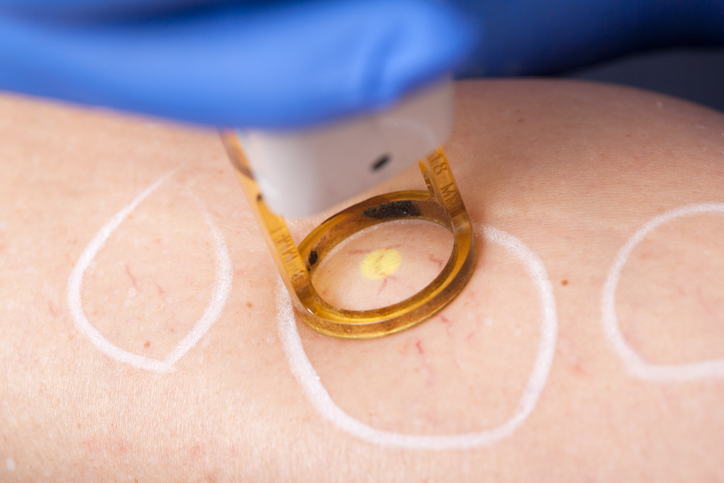
    The laser beam is attracted to the dark pigment in hair, with the hair acting as a lightning rod. The laser energy – heat – travels down the hair and overheats the root of the hair, causing it permanent damage so it can no longer produce a hair. The surrounding skin cells are not affected, because the laser is only attracted to the pigment in the hair (which is why bleached, grey or very light hair is not so easy to treat). 

    Each hair grows and sheds independently of its neighbours. The idea is to disable all the active follicles as they ride out their growth cycle; hence 6-10 appointments are scheduled 6-8 weeks apart. 

    The cost of laser hair removal will vary depending on the areas requiring treatment  – more significant surface area increases the time spent in the clinic, thus the overall cost. 

    How to prepare for laser hair removal

    #1. Stop plucking or waxing and shave instead

    Because we require the hair’s length for the laser energy to travel down to the all-important root, the hair should only be shaved off, not pulled out entirely. If you are a waxer, you’ll need to let your hair grow out and then shave it before your appointment. 

    Long hairs are unhelpful during laser hair removal procedures because the hair on top of the skin can frizzle and burn before the energy reaches the root. Burning hair isn’t a pleasant smell, and doesn’t feel too good either. Skin-level hair, as achieved with shaving, is ideal. 

    Between treatments, your untreated active hair follicles will still produce hair, so you’ll need to skip waxing or plucking between treatments, using only a razor. ENRICH’s Melbourne clinic suggests you shave the treatment area 24-48 hours before your appointment. If you forget, don’t worry, we will do a quick shave of the area before treatment. 

    #2. Stay out of the sun

    Now that you know that lasers are attracted to pigment, it’s not such a stretch to understand that having tanned skin is bad news for hair removal treatments. Tanned skin can end up discoloured after laser treatments or result in discomfort. We do not advise undertaking treatment if you are excessively tanned or sunburnt.  

    #3. Don’t apply creams, lotions, make-up, deodorant

    Your skin should be clean and free from lotions, creams and other topical beauty applications like makeup. We want nothing except the cooling gel between you and the laser. You may use products on the areas you usually do, for example, underarm deodorant; however, we’ll need to ensure it’s cleaned off before your treatment. 

    Avoid on the treatment area:

    • Moisturiser
    • Oils
    • Deodorant
    • Antiperspirants
    • Fragrances
    • Topical medication
    • Sunscreen (but use the rest of the time!)

    #4. On medication or had a skin treatment recently? Check with us first.

    Some medications can make your skin extra sensitive to light, so make sure you inform your practitioner of any medicines you use on your skin or take by mouth, even if it seems unrelated. Some key medications can include antibiotics, birth control, and potent acne drugs. 

    Some skin treatments may cause the skin to become more sensitive, for example, certain chemical peels. Fillers and anti-wrinkle injections may fall into this category too, depending on the area being treated. Check with us first. 

    None of these medications will stop you from undertaking laser hair removal. Still, your practitioner may need to modify the settings to ensure you are as comfortable as possible.

    What to expect during treatments

    When you arrive for your appointment, you will go through our pre-treatment questions to make sure it is ok for us to treat your skin. We’ll run through everything that we’ve discussed in these four tips, plus some extras. 

    What areas to have hair removed from

    Treatment areas vary from person to person, and we can treat more than one area in an appointment. A common set of treatments might be the armpits and bikini area, the bikini area and legs (upper or lower or both), or buttocks and back. The only real constraint is the time we book for your session, so it’s best to know what you want before your first appointment so we can allow enough time. 

    What to do after your treatments

    Some people find that laser hair removal causes some redness or slight swelling, which can be quickly resolved by applying ice or letting it settle in a few hours. This reaction is normal and will subside within a few hours. 

    The area might feel hot because the laser treatment uses thermal (heat) energy. For this reason, it’s best to avoid exacerbating any inflammation with sweaty sports or hot showers or baths. 

    Use a high SPF sunscreen and avoid sun exposure where possible. 


    Contact us for a consultation

    ENRICH Clinic

  • Why two skin treatments can offer 3X the result

    Why two skin treatments can offer 3X the result

    Combining skin treatments may seem like double the effort, but it could offer triple the benefit. There is no single ‘best’ treatment when it comes to your skin. Often a few excellent procedures combine that offer, together, even better results than you’d see with just one treatment alone.

    If you are concerned about signs of ageing (wrinkles, blemishes, brown spots or sallow cheeks), you aren’t going to find one single best treatment. A laser may work well on your skin tone, while an anti-wrinkle injection may be useful to stave off a deep wrinkle.

    Age and sunspots are treated with a laser, chemical peel or another light-based treatment, while sallow cheeks can also be treated with hydration increasing treatments.

    Finding treatments that complement one another is key to getting the 1 + 1 = 3 effect. We love combining treatments because the results can often be three times more effective!

    Ageing is a complicated process

    There is no one-size-fits-all when it comes to how your face is going to age or what concerns you the most. There is an intricate pattern of wrinkles, some that stay static (like a frown line) and those that appear on flatter surfaces of the skin (think forehead and cheeks).

    We lose facial volume, which in turn results in new folds and contours appearing over time. Blood vessels can also become more prominent.

    The multifaceted process of ageing, therefore, is best served with a combination cosmetic approach.

    Treatments that work well in combination

    Needling, lasers, intense pulsed light (IPL), microdermabrasion, chemical peels, hydration treatments and high-quality skincare products can all be used together in various combinations for positve cosmetic outcomes.

    We use these combos a lot at ENRICH Clinic, where Dr Michael Rich is a great proponent of the multi-treatment approach. The treatments can often be performed in one appointment but may be scheduled over several appointments where necessary.

    Classic treatment combos

    • Laser and radiofrequency
    • Hydration and wrinkle reducing treatments
    • Acne medication and topical acne or acne scarring treatments
    • Skin needling (The Secret) and chemical peels
    • Peels & Diodes
    • Ultraformer (HIFU) and lasers

    What is the best cosmetic treatment combination?

    The best cosmetic treatment combination for you depends on your skin concerns. Talk to your cosmetic dermatologist or doctor to see what their thoughts are. Consultations are the key as well as developing a long-term plan for your skin health, and also handy for budgeting!  Combination treatments can be different for everyone and depends on ou skin type, age, diet, gender and genetics.

    A break between treatments may be necessary, so your skin can do its thing

    Some procedures are, by necessity, performed away from others. For example, a robust collagen-boosting treatment requires at least a month, if not more, to reach its maximum potential. There’s not much point in doing more collagen-boosting treatments over the top. Your skin is already maxing itself out. However, this doesn’t mean you can’t do wrinkle-reducing treatment or even a pampering, ultra-hydrating facial.

    Other treatments require a break due to the way they function in the skin. For example, certain needle-based treatments need time to settle before other skin treatments go over the top. This timing is in place because the liquid can migrate, or the skin has been pierced so you have to be careful of infection for at least 24 hours — also, no facial massage after any kind of needling.

    Swelling from some treatments may impede the effect of others, so a break for healing may be useful for the best outcomes for some combined treatments. You don’t have to have them done in the same appointment for the combination treatment effect to come into play.

    Using lasers and other wave-based treatments in combination

    Some cosmetic devices are designed to penetrate more deeply than others, which is why we may utilise the powers of two or more wave-based devices as a combination treatment.

    One such combination may be a radiofrequency device, which penetrates deeper layers, with a laser that works on the skin’s surface. This way, skin gets a deep treatment that stimulates, tightens and strengthens as well as undergoes a smoothing, brightening, resurfacing treatment. Here’s a paper on a study that reviewed how certain combination treatments can be effective.

    Your cosmetic doctor knows the best combination of treatments. 

    If you’re not sure what you need, don’t worry! We do. Come in for a consultation, and we’ll help you figure out the best course of action for your skin.


    Let us get the most out of your skin.
    Contact us for an appointment

    ENRICH Clinic

  • Why there isn’t one laser for all treatments

    Why there isn’t one laser for all treatments

    To understand why there isn’t one laser for all treatments, you need to understand what each laser does during a treatment. You’ll soon see why one is better for specific jobs than another.

    What does a laser do?

    A laser is a single wavelength – a colour – of high-energy light focused into a tiny, single beam.

    Uses of lasers in everyday life

    • A teacher or professor may have a laser pointer in a classroom
    • The remote control on your TV uses a laser
    • A light show during a show may use lasers

    A laser beam, laser precision, laser light – the point of a laser is that it is a single beam of focused light energy. Laser beams come in varying strengths, for example, your remote control laser beam is very weak, transmits only over a short distance, and won’t do any damage if you shine it in your eyes.

    Stronger lasers, however, can get hot and burn, penetrate solid objects, and can transmit signals over a long distance. You do not want those going in your eyes.

    How a laser beam works

    Lasers can only emit one wavelength – colour – at a time. When we use lasers in cosmetic treatments, we are utilising a process known as ‘selective photothermolysis’.

    Photothermolysis
    Photo means light
    Thermo means heat
    Lysis means to destroy

    In cosmetic treatments that use thermolysis, we, therefore, use light to produce heat to destroy tissue.

    The wavelength – like the colour – of whatever we are targeting must be the same as the wavelength – like the colour – of the laser beam. This is how we selectively target blood vessels, brown spots, or remove tattoo ink with laser treatments.

    Many laser treatments target the water in tissue, which has its own wavelength (as opposed to a ‘colour’ as we know it).

    Each laser is generally able to produce just the one wavelength at a time, but up to four different wavelengths (using different settings) in total, limiting each of them to whatever wavelength(s) they were built for. A laser can’t produce two wavelengths at the same time.

    Starting to get it now?

    Each laser has its particular wavelength(s) that are attracted to different elements in our skin. This selectivity is why lasers are so precise and don’t affect the tissue that does not match the colour (wavelength) of choice. The laser can’t ‘see’ these colours (wavelengths) and so can’t affect them.

    If you have a brown spot (melanin) you want vapourising, the ablative brown-wavelength laser is your tool of choice.Young beautiful freckles woman face portrait with healthy skin

    Similarly, laser hair removal uses the same system: darker hair pigments attract the laser beam.

    Spider veins on your cheeks? The red-wavelength laser is your tool of choice to target haemoglobin.

    Some lasers have a long-range, while others have a short range. If you want to target a spider vein under the skin, for example, you need a laser that can reach that distance into your tissue but doesn’t affect outer skin or nearby skin. So, a non-ablative laser treatment targeting the red colour wavelength would be the choice.

    But, it’s also a matter of heating the target tissue quickly enough to cause damage to it. This is where the power and depth capacity of the laser treatment comes into play.

    The word laser is an acronym:

    Light
    Amplification by
    Stimulation
    Emission of
    Radiation

    Types of lasers – ablative versus non-ablative lasers

    There are two general types of lasers used in cosmetics: the ablative and the non-ablative laser.

    • Ablative lasers vapourise the top layers of skin, causing varying degrees of downtime and visible results on the topmost skin
    • Non-ablative lasers keep the top layer of skin intact, affecting deeper layers of tissue – no visible damage, no downtime

    From there, we have a vast array of brands and variations in the power and settings of each laser. The main difference between machines is the wavelength (colour) the device produces, which directly affects what sorts of skin conditions you might use it for.

    Different types of skin tightening lasers for fine lines and wrinkles

    When using a laser treatment to remove or reduce fine lines and wrinkles, we’d likely start with a skin resurfacing (ablative) laser. We would use this to remove the hills and valleys of the wrinkle. That is, to even out the skin, so it is all the same level, softening the contrast between the dips and creases a little. This reduces the appearance of wrinkles and can erase fine lines.

    These lasers also stimulate collagen production, so over time, help increase the strength and firmness of the skin.

    The carbon dioxide (CO2) laser or Erbium YAG are the most common laser treatments for fine lines and wrinkles. The CO2 laser treatment is often used for more in-depth skin treatments but also to remove skin tags and warts or for laser-assisted surgeries that require precision.

    At ENRICH, we have a vast array of state-of-the-art lasers !

    Different types of skin tightening lasers

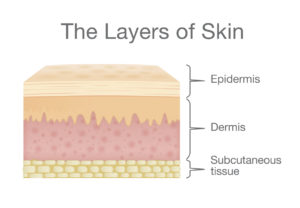
    Skin tightening is achieved by applying the laser treatment to the skin, which produces a controlled injury to the collagen-producing layer, the dermis. Existing collagen is contracted, and new collagen production is ramped up.

    Collagen is your skin’s infrastructure, the matrix that holds you together. When you contract and stimulate collagen, it has a tightening and  toning effect on your tissue, resulting in a visible skin tightening effect.

    We have many devices for skin tightening, depending on your individual needs.

    Different types of lasers for skin pigmentation

    Pigmentation (melanin) is produced in the epidermis – the top layer of skin – by melanocytes. The lasers most appropriate tend to be ablative devices that are matched for brown colouring. Sunspots, liver spots, age spots, melasma and hyperpigmentation, can be successfully vapourised.

    Different types of lasers for removing precancerous lesions

    Indeed, a skin cancer is usually surgically removed by a doctor to ensure the full cancer is removed. However, when a lesion is not yet cancerous, it can be quickly and easily removed with a laser treatment before it has a chance to develop into a malignancy.

    This works much like pigmentation, and we vapourise the lesion with an ablative laser.

    Different types of lasers for blood vessel conditions (spider veins, birthmarks, etc.)

    Vascular lesions such as broken blood vessels, spider veins, spider nevi, hemangiomas and port-wine birthmarks (which contain a vast blood supply) can be successfully treated with a laser treatment that targets haemoglobin-red – red. The laser ignores the tissue around the red so that a blood vessel can be destroyed without harm to other tissue.

    Different types of  tattoo removal lasers

    Tattoo removal can be done with a CO2, Q-switched laser or Nd:YAG laser, but our laser treatment of choice is the very fast, effective PiQ04 picosecond laser.

    Our picosecond laser has four different wavelengths that actively target many different colours typical in tattoos. When we combine all our lasers, we have the best selection for any tattoo to be removed, no matter the colours, including trickier cosmetic tattoo pigments. The picosecond laser is exceptionally efficient when it comes to tattoo removal.

    Different types of hair removal lasers

    Hair removal lasers have been restrictive in the past because they relied so heavily on light skin and dark hair; however, advancements in lasers have all but eliminated this. In laser hair removal, the laser needs something to be attracted to, which tends to mean a slightly darker, pigmented hair shaft.

    The laser energy travels down the hair shaft, transferring its heat to the surrounding follicle, damaging it so that it cannot produce a hair. This is how laser hair removal works.

    Visit us for laser hair removal in Melbourne

    Different types of lasers for acne and acne scars

    Deeper acne scarring can be treated using the CO2 laser, but this depends on the state of the skin and the depth of the scarring. Acne scarring may be addressed by remodelling the collagen that makes up the scarring or by resurfacing the skin, and your doctor will decide which laser is best for your skin.

    A combination of both ablative and nonablative lasers may be used, along with some of our non-laser devices.

    We have a large range of lasers to tackle your skin issues
    Contact us to see how we can help you

    ENRICH Clinic

  • Why are some hair removal treatments more expensive than others?

    Why are some hair removal treatments more expensive than others?

    Hair removal techniques vary in cost, with laser hair removal being more expensive upfront, but very cost-effective over the long term. When laser hair removal is compared with shaving or waxing, a lifetime of hair removal adds up in real dollar terms. While laser hair removal is not as permanent as it is sometimes made out to be, it is a long-lasting hair removal technique.

    The costs of laser hair removal are spread out over a year or so, with treatments performed every 6-8 weeks with your hair growth cycles. This means every couple of months, you need another treatment.

    The areas you have treated – and how hairy you are – all matter when estimating the costs of these treatments over time. Many clinics offer a bulk discount – if you buy 6-10 sessions upfront, there can be a significant discount on the overall cost. Your appointments are then booked in advance, and you just show up. This often makes the most sense for people, and saves money.

    When you have to pay for each session as the appointment draws nearer, it can be tempting to delay the treatment and spend the money on something else or delay it because you’re busy. This means you miss that hair growth cycle, and the overall time for all treatments take much longer. Setting your appointments to the correct schedule is critical for the success (and timeliness) of the treatments due to how your hair growth cycles work.

    Estimated cost of various hair removal treatments over a lifetime

    • $42,000 on waxing (legs, bikini, underarms), which takes 30-60 minutes per session, every 6-8 weeks
    • $12,000 on shaving (legs, bikini, underarms), which takes 1-20 minutes per session, with regularity varying between people (and men may shave more regularly)

    How much does laser hair removal cost?

    • $1,500-$2,500 for laser hair removal (lower legs, bikini, underarms), which takes 10-60 minutes per session, every 6-8 weeks, 6 sessions and should be followed up with one top-up possibly annually, as required. *
    • Full body laser hair removal will cost more, however you can expect to pay around $100-$500 per session for multiple areas
    • Full body laser hair removal takes longer to administer, so expect longer or more appointments

    As you can see, the numbers work out in favour of the longer-lasting, time- and money-saving laser hair removal treatments.

    Read more about the best places to get laser hair removal in Melbourne

    Why is laser hair removal only ‘long-lasting’ and not permanent?

    There is a misconception that laser hair removal lasts forever, which is not true for one key reason: you have millions of hair follicles, and they are not all growing hairs at the same time or rate. Read about the science behind laser hair removal.

    The hair growth cycle:

    • One hair follicle produces one hair
    • The hair falls out as another grows up underneath it, pushing it out
    • Not all follicles produce a hair all the time – some may lay dormant

    When we do laser hair removal, the laser targets only actively growing hair follicles. This leaves many inactive hair follicles untreated. These hair follicles may or may not later produce a hair.

    How hair types differ

    There are also different types of hair, which may be triggered in different phases of your life. Pubic hair and armpit hair, for example, are called ‘terminal’ hairs, and these follicles are stimulated by hormones. This is why when we hit puberty, these hairs pop out.

    Some of us are hairier than others, and the quality of our hair changes across our lifetime and body. Some hair may be wiry, coarse, and dark, compared to say, the hairs on your arms which may be softer, lighter, and downy.

    Men and women experience different patterns of hair growth, so men will see terminal (coarse, wiry) hairs pop up on their faces and chests (and backs, buttocks, legs and belly), while women see far less of this type of hair growth. That is unless a woman has a hormonal imbalance such as polycystic ovarian syndrome (PCOS), which causes an excess of or sensitivity to androgens in the body. This results in male-pattern hair growth (and loss).

    Women with PCOS (or other hormonal imbalances that favour male-type hormones) may find hair growing in unwanted places. This can be distressing, particularly when it’s on the face. Women can grow full beards and moustaches, and these terminal hairs can spring up anywhere on the body.

    Laser hair removal for the face

    Laser hair removal can be a very effective weapon against unwanted male-pattern hair growth on the face in women and in men. A small area may be affected, or maybe there are just a few pesky, persistent hairs, but larger areas can also be affected.

    Treating the underlying hormonal imbalance that has triggered unwanted hair growth remains important, but sometimes this can take a long time. In some cases, hair growth stemming from hormonal imbalances simply has to be managed.

    Laser hair removal on these areas reduces the need for shaving, waxing or plucking, and doesn’t leave stubble. Stubble appears when the blunt end of a shaved hair pops back out of the surface of the skin, as opposed to a new hair, which has a finer tip. Stubble therefore feels rough to the touch.

    At ENRICH, we can treat any type of hair on the body or face with laser hair removal lasers.

    How laser hair removal works at ENRICH

    First, the hair must be in its active growth phase, which at first is easy – whatever hairs are growing out of the skin at the time are typically in their active cycle. You’ll be asked to shave the area before you come in (or we can do it during your appointment) so that the hairs are cut off at skin level. This avoids sizzling the protruding hair, as opposed to treating the deeper hair follicle.

    As we apply the specially-calibrated laser beam to your skin, the laser beam is attracted to the pigments in the hair. This is why darker hair and lighter skin tend to see the best results from laser hair removal, but we can now treat most hair and skin types successfully.

    The energy from the laser beam (heat) travels down the hair shaft, and is transferred to the cells that surround the hair, damaging the hair follicle. The hair follicle is then unable to produce another hair, and the hair falls out.

    Because your hair growth cycles are 6-8-weekly, you’ll need to come back in for the next session when the next lot of hairs – from undamaged follicles – start to appear. Then, we repeat the process once again.

    Over time, we get all the actively growing hair follicles in the chosen area, bit by bit, until there are no more hairs growing there.

    Best areas of the body to get laser hair removal

    • Underarms
    • Bikini line
    • Back
    • Chest
    • Arms
    • Legs (upper and lower)
    • Buttocks
    • Chin
    • Moustache
    • Back of the neck

    Don’t be fooled by good marketing for low-quality laser treatments

    You want experience and the best most effective equipment. Some hair laser clinics sell a single treatment at a very low price, but make sure you read the fineprint – you may end up going back up to 20 times due to poor results. Ask as many questions as possible about the treatment with your practitioner before undertaking any cosmetic treatment.

    We have the best lasers and most experienced hair removal practitioners.
    Contact ENRICH to start your journey to smooth

    *This cost is only an indication as fee is dependant on area, hair type and amount and a quote will always be provided at consultation prior to treatment.

  • 4 important things you didn’t know about laser hair removal

    4 important things you didn’t know about laser hair removal

    Hairy legs laser hair removal Melbourne#1 You can now have laser hair removal on most skin colours, hair colours, and skin types

    Older lasers weren’t very good at subtleties, but more recent lasers have been finetuned to account for every hairy person, not just those with paler skin and darker hair. That’s because there are now two types of laser used for laser hair removal – thosethat target pigment and those that target blood. Pigment-targeting lasers can only treat the pale-skin dark-hair types, where those that target blood can treat all skin colours, since everyone’s blood is the same colour.

    We still cannot remove grey or white hair. (We’re working on it!)

    #2 Laser hair removal doesn’t hurt anymore (and if it does, they’re doing it wrong)

    Newer lasers have an array of settings that can treat different areas of the body with ease (including creases, delicate areas and curves), with cooling tips that ice up or blow cool air (or both) to keep skin chilled. This effectively prevents burning, while the laser can target the hair follicle. Laser hair removal has in the past sometimes been extremely painful to endure, due to inexperienced practitioners and incorrectly set or inappropriate machines. This should never happen now.

    Compared with other methods of hair removal, laser hair removal is less painful – if you calculate the time it takes to do, say, electrolysis, tweeze or wax – the time and discomfort saving is vastly improved. Lasers are extremely powerful machines, so make sure you are only getting laser hair removal by trained, experienced professionals (see our Melbourne clinic for laser hair removal experts).

    # 3 Laser hair removal will not make your hair grow back more

    This is impossible, since you are only born with a certain number of hair follicles, though they are not all active at the same time. (If laser hair removal could make hair grow back faster and thicker, it would be being used as a hair loss treatment, not a hair removal treatment.)

    Hair follicles can only be killed during certain phases of growth of the hair, and sometimes hair follicles may only appear at certain times of our lives. The hair we have as children is vastly different to the hair we have as adults, and as we age, hair changes again.

    If you kill the hair follicle in the growth stage, it can never produce a hair again, but if you didn’t quite kill it, the follicle will continue to produce hairs. Just 10-30 per cent of all your hair is in the growth phase at any one time (except head hair, which is 85 per cent in grow mode), which is why you need multiple treatments for successful laser hair removal. It also means hair will continue to grow, and may grow after your treatments have finished, from hair follicles that were not active during your treatments or follicles that got missed.

    # 4 Laser hair removal is now cheaper than ever

    Good razors are not cheap, salon waxing appointments are never-ending and expensive over a lifetime, and creams, bleaches, electrolysis and waxing are time-consuming, unpleasant, and actually not great ways to have smooth hair-free skin. We think laser hair removal is a cost-effective option over the long-term.

    We love our laser hair removal lasers!

    Contact our Melbourne clinic

  • Dermatologists call for more regulation on laser hair removal

    Dermatologists call for more regulation on laser hair removal

    laser hair removalDermatologists are calling for more regulations on laser hair removal, due to the swathes of untrained, inexperienced beauty therapists providing these services in Melbourne.

    While there are no official figures, burns are not uncommon during laser hair removal procedures. Most burns are not severe enough to be reported, but this doesn’t mean burns are not serious: the truth is, they shouldn’t be happening at all.

    There is a lack of regulation in Australia and globally when it comes to laser hair removal, with thousands of Australians undergoing the procedure every year in beauty clinics, at the dermatologists, and at other specialist laser clinics. There are plenty of reputable clinics and therapists in Melbourne; however, there are also therapists who are not completely across laser hair removal techniques – knowing how to tell the difference is key to a good outcome.

    Women with darker skin are suffering more burns than anyone else, due to many lasers being inappropriate for use on darker skins. There are only a handful of lasers that are appropriate for darker skin, the likes of which we use at our Melbourne clinic for laser hair removal.

    Burns can occur when the laser operator uses the wrong laser with the wrong settings for the skin and hair type they are treating. The skin can burn, blister, and sometimes scar. Considering many laser hair removal treatments are performed on very intimate areas, this lack of regulation is even more concerning.

    Laser hair removal treatments should be performed by a qualified, experienced practitioner under the supervision of a doctor or by a doctor. Lasers are high-powered medical devices and left in the wrong hands can cause immense damage to skin and even eyes.

    Another issue in the laser hair removal industry is incorrect lasers being used. Pulsed light machines are not as good as a laser at hair removal, and may be ineffective, particularly on some skin types with some hair colours. This could result in more treatments than necessary, which equals greater expense of both money and time. Hair reduction may not even meet your expectations.

    Lasers have become freely available to anyone with enough money to buy one, with cheap imports coming out of Asia – a quick glance down any Melbourne street reveals multiple laser clinics, laser tattoo removal clinics, and laser hair removal clinics. Cheap lasers are typically not as well-produced as other higher quality (pricier) machines or they are not suited to the particular job.

    Laser hair removal techniques take some specialised training to perfect, and experience trumps everything when it comes to any cosmetic procedure. Equipment in this case, is meaningful in terms of the time it takes to get results and the amount of hair reduced; however, your practitioner is ultimately the user of the machine with you on the other end of it.

    When choosing a laser hair removal practitioner and clinic, make sure they have the appropriate laser for hair laser and that their practitioners are experienced in your skin tone and type. If you have darker skin, this is doubly important.

    Contact our Melbourne clinic

  • Pros and cons of laser hair removal

    Pros and cons of laser hair removal

    Laser hair removallaser hair removal is not for everyone, and there are some very good reasons for that. You should be fully informed before you get started on your hair removal adventure at our Melbourne clinic.

    There are a few options for hair removal, some temporary and some longer-lasting. You’ve probably graduated from shaving to the various hair removal creams to waxing, and now you want a longer-lasting solution to your hairiness. Laser hair removal fits the bill, but what are you getting yourself in for?

    How laser hair removal works

    The laser beam damages the hair follicle by targeting the melanin in the hair (pigment), which then throws heat to nearby tissue in the follicle, severely upending the follicle’s ability to produce a hair. While laser hair removal is an effective and long-lasting solution, because you have so many follicles that can produce hairs, it’s hard to get them all over the 6-10 sessions you’ll need, but we will surely try.

    The benefits of laser hair removal at our Melbourne clinic

    • Laser hair removal significantly reduces hair growth, to the point that you can stop using other forms of hair removal (unless you get a stray, or over time light fluff can appear).
    • Laser hair removal can be done anywhere on the body, including entire legs, back, and belly, but also delicate areas like the face. The surface area can be quite large, and new machines do this amount of skin quickly.
    • Laser hair removal doesn’t hurt, which is a bonus. If your laser hair removal hurts, your beautician or practitioner is using an old machine, and you should move on to another practitioner who has a more modern machine, like the state-of-the-art lasers at ENRICH. New laser hair removal machines should not hurt, but older versions have been known to.

    The cons of laser hair removal

    • Laser hair removal takes some time and multiple appointments, so as to get all the hair follicles in their perfect stage of growth. You may need from 6-10 sessions, about six weeks apart, and then top-up treatments later if necessary. Each hair removal session may be quite short – an underarm, for example, takes less than a minute to do – but having to make repeated appointments and make your way to the clinic can be a drag. Make it worth it by saving up and getting a lot done at a time, and taking advantage of any bulk appointment discounts.
    • Laser hair removal comes with a price tag, especially for larger areas, though over time it works out far cheaper than any other hair removal method because ideally, you only have to do this once. Hair removal via laser is now becoming cheaper and cheaper because lasers are becoming more and more commonly available to more practitioners.
    • Inexperienced laser hair removal practitioners can cause damage and burns, so make sure you choose an experienced, qualified practitioner. At ENRICH, your laser hair removal treatments are always done by someone who has done it a thousand times before, and understands the treatments and your skin intimately.
    • Inexperienced practitioners with the wrong lasers can’t do dark skin tones. Not everyone’s hair is dark enough or their skin light enough to effectively have their hair removed using some lasers, making this treatment most effective in those with darker hair and lighter skin, but the contrast is what’s important here.People with darker skin tones (more pigment) require a more careful approach by your practitioner, and this means having an experienced practitioner and the right laser is key. Some lasers can differentiate between hair and skin, while others are not so great. ENRICH has lasers that work on darker skin tones, and experienced practitioners who know what they’re doing.

    We are experts at laser hair removal on every skin type.
    No mistakes.
    Contact us