Category: Pigmentation

  • At Home Skin Needling Rollers – Do They Really Work?

    At Home Skin Needling Rollers – Do They Really Work?

    Skin needling has become one of the most talked-about treatments in modern skincare. From at-home dermal rollers to advanced clinical devices, the promise is the same: smoother, brighter, healthier-looking skin.

    But do at-home skin needling rollers actually work—and are they the best option for your skin?

    Let’s break it down

    What Is Skin Needling and What Does It Do to the Skin?
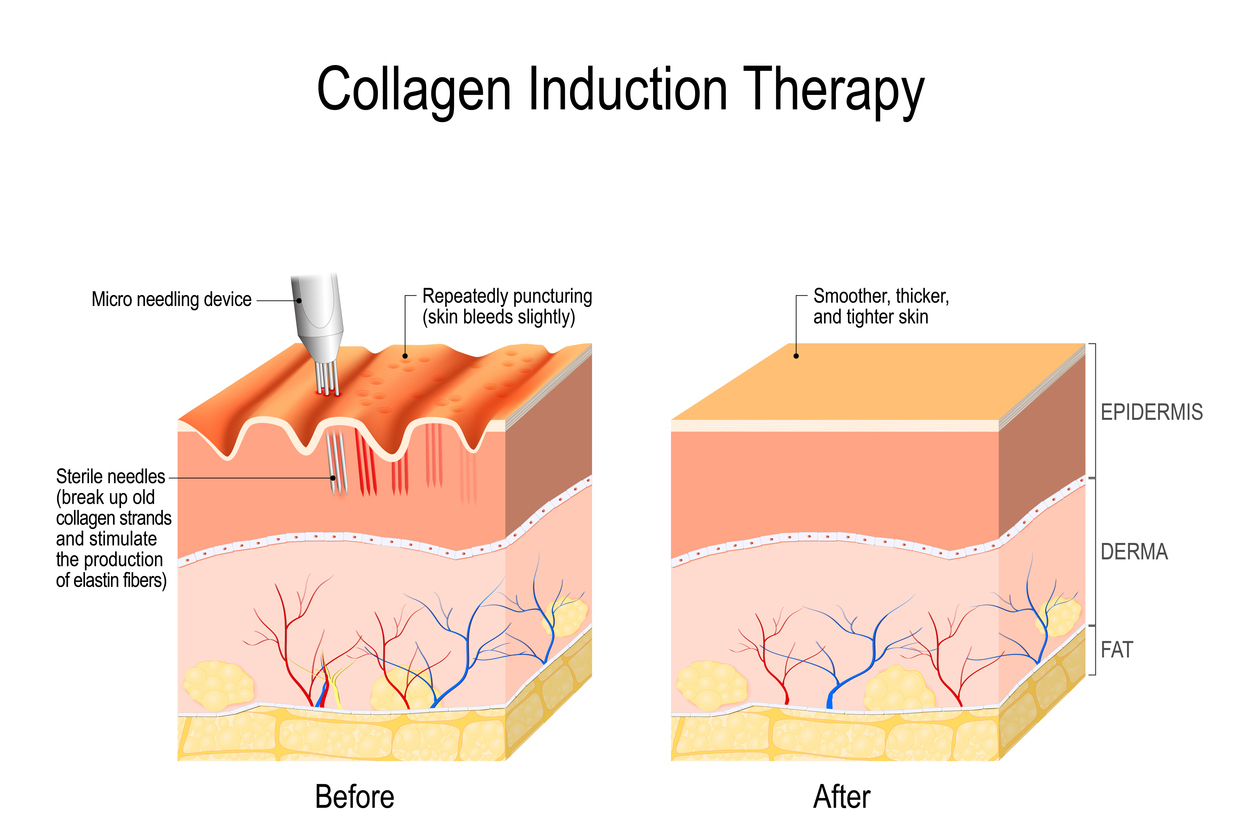
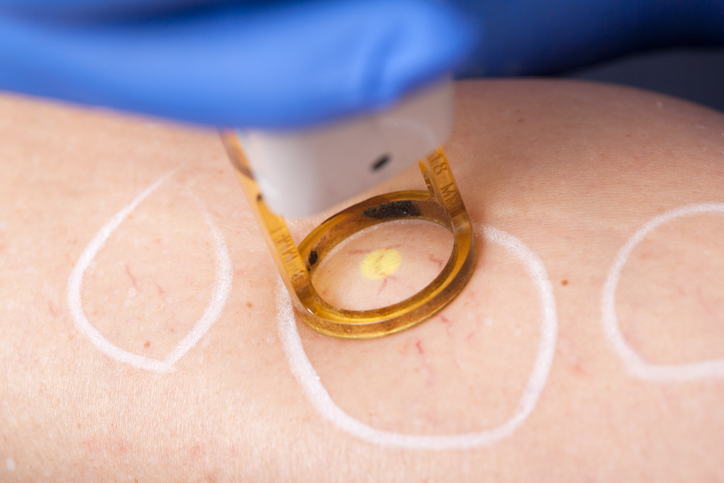
    Skin needling (also known as microneedling or collagen induction therapy) is a process that creates controlled micro-injuries in the skin using fine needles.

    These micro-injuries stimulate the skin’s natural repair process, leading to:

    • Increased collagen and elastin production
    • Improved skin texture and tone
    • Reduction in the appearance of fine lines
    • Support for acne scarring and pigmentation management

    In simple terms, skin needling encourages your skin to behave like it did when it was younger—repairing, renewing, and rebuilding.

    How Do At Home Skin Needling Rollers Work?

    At home dermal rollers use very short needles (typically 0.2mm–0.5mm) that roll across the skin to create superficial microchannels.

    These devices can:

    • Enhance product absorption
    • Gently stimulate the skin surface
    • Improve skin radiance over time

    However, their effects are generally mild and surface-level compared to professional treatments.

    Do Skin Needling Dermal Rollers Really Work?

    The honest answer is: yes—but with limitations.

    At home rollers can:

    ✔ Improve product penetration
    ✔ Support overall skin maintenance
    ✔ Give a temporary “glow” effect

    But they cannot:

    ✘ Reach deeper layers of the skin
    ✘ Significantly remodel collagen
    ✘ Effectively treat deeper acne scarring or wrinkles

    For more noticeable, longer-term skin changes, clinical skin needling treatments are required.

    Should You Use a Serum with a Dermal Roller?

    Yes—but this is where caution is essential.

    Because microneedling creates microchannels in the skin, anything you apply can penetrate more deeply than usual.

    Recommended:

    • Simple, hydrating serums (e.g. hyaluronic acid)
    • Barrier-supporting ingredients

    Avoid:

    • Active ingredients like retinol or strong acids
    • Fragranced or potentially irritating products

    Using the wrong serum can lead to irritation or adverse reactions—especially with repeated use.

    What Are the Risks of At-Home Skin Needling?

    While convenient, at-home devices come with risks if not used correctly:

    • Skin irritation and inflammation
    • Infection from poor hygiene
    • Worsening of pigmentation
    • Damage to the skin barrier

    If you are managing pigmentation or melasma, it’s best to seek professional advice 

    Clinical Skin Needling at ENRICH Clinic & DIV

    At ENRICH Clinic and Dermatology Institute of Victoria (DIV), skin needling is performed using advanced medical-grade devices under the supervision of trained professionals.

    Clinical Microneedling Benefits

    • Targets deeper layers of the skin
    • Stimulates significant collagen production
    • Improves Acne scarring  and texture
    • Supports long-term skin rejuvenation

    What Is the Secret RF Treatment?

    One of our most advanced options is the Secret RF (Radiofrequency Microneedling) treatment.

    This technology combines microneedling with radiofrequency energy to:

    • Deliver heat into deeper skin layers
    • Stimulate collagen more effectively
    • Improve skin firmness and texture
    • Address fine lines, acne scarring, and laxity

    At ENRICH Clinic, we have been performing advanced skin needling treatments, including Secret RF, for many years with consistently positive patient outcomes.

    At Home vs Clinical Skin Needling: What’s the Difference?

    Feature At-Home Rollers Clinical Treatments
    Needle depth Superficial Adjustable, deeper
    Results Mild, gradual More significant
    Safety User-dependent Professionally controlled
    Skin concerns treated General maintenance Scarring, ageing, pigmentation

    So… Should You Use a Dermal Roller at Home?

    At-home skin needling can be a useful addition to your skincare routine, but it should be viewed as maintenance—not treatment. It’s always best to speak with your dermatologist or skin health practitioner before starting to use a dermal roller. 

    If your goals include:

    • Acne scar reduction
    • Wrinkle improvement
    • Skin tightening
    • Pigmentation management

    Then professional treatments at ENRICH Clinic or DIV will deliver more effective and predictable outcomes.

    FAQs – At-Home Skin Needling

    Do dermal rollers work?
    They can improve product absorption and skin texture slightly, but the results are limited.

    How often should you use a dermal roller?
    Typically once every 1–2 weeks, depending on needle length and skin tolerance.

    Can skin needling damage the skin?
    Yes, if overused or used incorrectly, it can cause irritation or barrier damage.

    What serum should I use with microneedling?
    A gentle hydrating serum such as hyaluronic acid is usually recommended.

    Is professional microneedling better than at-home rollers?
    Yes, clinical treatments reach deeper layers and deliver more noticeable results.

    Does microneedling help with acne scars?
    Clinical microneedling may help improve the appearance of acne scarring over time.

     Book a consult or make an enquiry about skin needling today

  • How Often Does Skin Renew? Skin Cell Turnover Explained

    How Often Does Skin Renew? Skin Cell Turnover Explained

    Your Skin Is Shedding Right Now: Understanding Skin Cell Turnover & How to Support It


    How Often Does Your Skin Renew Itself?


    Did you know your skin is constantly renewing itself? On average, your body sheds 30,000–40,000 skin cells every minute. That adds up to roughly 4 Kilograms of skin cells each year — a statistic that never fails to surprise.
    But what does that mean on a smaller, more relatable scale?

    Daily Skin Cell Shedding

    Your skin is a living, breathing organ that’s always in motion. Each day, your body sheds an estimated 500 million skin cells. These cells come from the outermost layer of the skin, the epidermis, which acts as your primary barrier against the outside world.

    Weekly Skin Cell Shedding

    Over the course of a week, this natural process results in the loss of around 3.5 billion skin cells. While it sounds dramatic, it’s completely normal — and essential for healthy, resilient skin. This constant renewal allows new, healthier cells to rise to the surface, helping your skin maintain its protective function, texture and appearance.

    Why Does Skin Shed in the First Place?

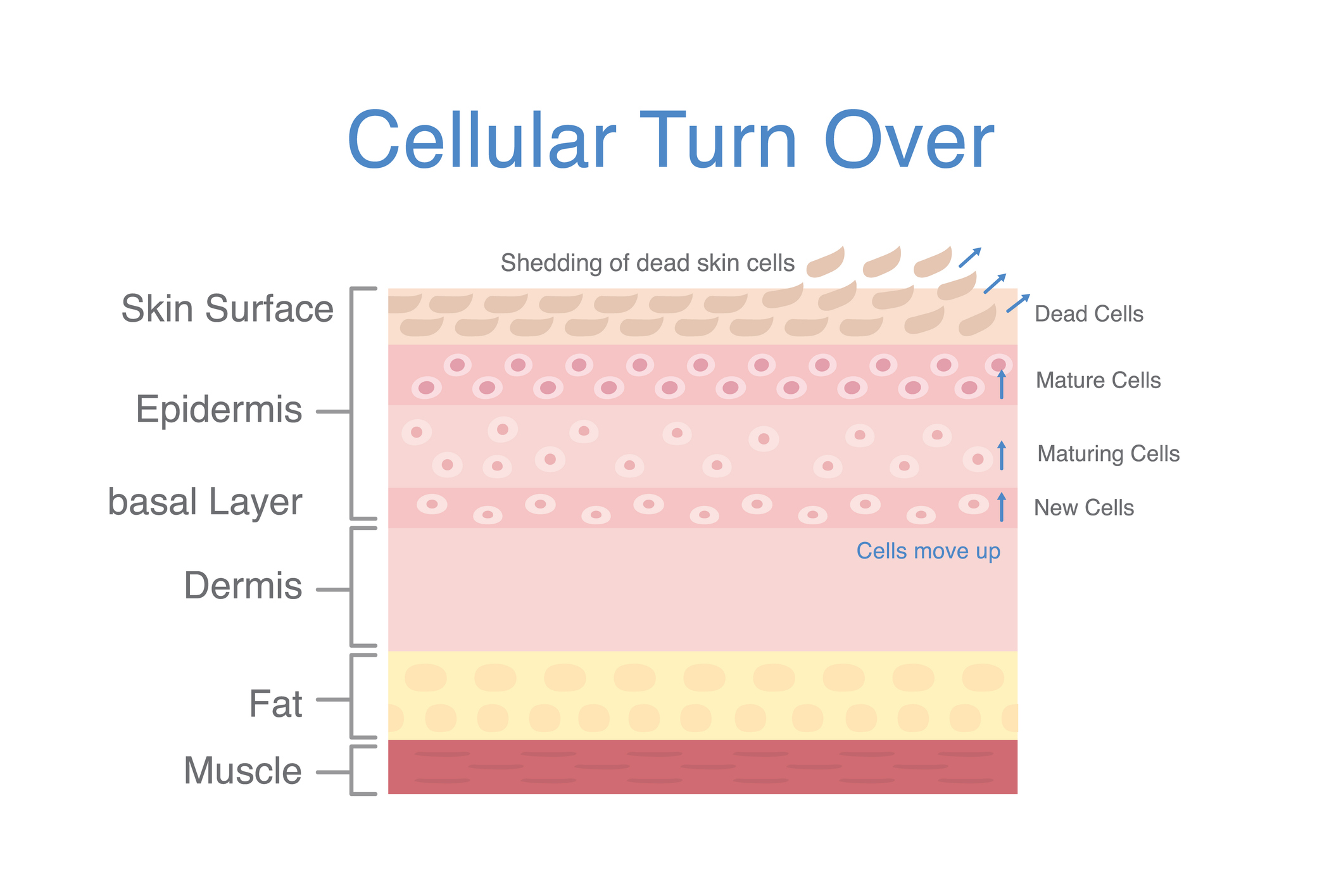
    Skin shedding (also known as desquamation) is part of your skin’s renewal cycle, often referred to as cell turnover. New skin cells are formed in the deeper layers of the epidermis and gradually migrate upwards. As they reach the surface, older cells flatten, die, and are eventually shed.

    This process helps:

    • Maintain a healthy skin barrier
    • Protect against environmental damage
    • Regulate temperature
    • Support even skin tone and texture

    However, cell turnover slows with age, stress, sun exposure and certain skin conditions. When old skin cells linger on the surface for too long, skin can appear dull, rough or uneven — which is why exfoliation and in-clinic treatments can be helpful for some people.

    Factors That Affect How Quickly Your Skin Sheds

    Several internal and external factors influence skin renewal:

    Age and Skin Renewal

    Younger skin typically renews itself every 28 days. Over time, this process can slow to 40–60 days, contributing to dryness, congestion and texture changes.

    Sun Exposure

    UV radiation can disrupt healthy cell turnover, damage collagen and lead to uneven shedding. This is also one of the big factors in premature ageing. 

    Climate & Environment

    Dry air, pollution and harsh weather can interfere with the skin barrier and shedding process.

    Skincare and Exfoliation Habits

    Over-exfoliation can damage the barrier, while too little exfoliation may allow dead cells to accumulate. Dermatologists are fans of harsh daily scrubs (such as those containing nut shells or large, jagged particles), which can create microscopic tears in the skin and erode the stratum corneum, or the outermost layer. 

    Supporting Your Skin’s Natural Renewal Process

    Hydration

    Well-hydrated skin functions better. Adequate water intake and barrier-supportive moisturisers help prevent flakiness and irritation.

    Gentle Exfoliation

    Exfoliation assists the skin in removing dead cells that don’t shed efficiently on their own.

    Sun Protection

    Daily sunscreen use helps preserve healthy skin renewal and prevents UV-related damage that slows turnover and can be a factor in premature skin ageing. If you ask Dr Rich what the best anti-aging cream is, he will always say SPF 50 sunscreen.

    Dermatology Skincare Products That Support Skin Shedding

    If you’re looking to support your skin’s natural exfoliation process, dermatology-guided skincare can help.

    Chemical Exfoliators (AHAs & BHAs)

    Chemical exfoliants dissolve the bonds holding dead skin cells together.

    • Glycolic Acid (AHA): Improves texture and radiance
    • Salicylic Acid (BHA): Penetrates pores and supports congestion-prone skin

    These ingredients are commonly incorporated into dermatologist-recommended peels and home-care products. are generally preferred over physical scrubs because they dissolve the “glue” between dead cells without creating micro-tears like some harsh daily scrubs that cause micro-tears, inflammation, clogged pores and more. 

    Retinoids (Vitamin A Derivatives)

    Retinoids are widely used to support skin renewal and texture refinement.

    • Encourage more efficient cell turnover
    • Support collagen production
    • Improve uneven texture and tone

    They are often introduced gradually to minimise irritation and are best guided by a dermatologist.

    • Retinol & Retinoid Products
      • Retinol: A gentler, over-the-counter form of Vitamin A that encourages skin renewal.
      • Prescription Retinoids: Stronger retinoids like tretinoin are often recommended by dermatologists for more significant skin concerns like acne and signs of aging.
      • Popular Products @ Scriptskincare  :

    Enzyme-Based Exfoliation

    Fruit enzymes gently digest surface proteins, making them suitable for sensitive skin types who struggle with acids or scrubs.

    Enzyme-based products gently exfoliate the skin by breaking down the proteins that hold dead skin cells together. These products are often a good alternative for those with sensitive skin who may find acids or scrubs too harsh.

    Hydrating Moisturisers

    When your skin sheds, it’s important to lock in moisture to prevent dehydration and keep the skin barrier intact. Moisturisers help replenish moisture and create an optimal environment for skin regeneration.

    • Ceramides & Hyaluronic Acid
      • These ingredients strengthen the skin’s natural barrier and prevent moisture loss.

    Barrier-Supporting Moisturisers

    Ingredients such as ceramides and hyaluronic acid support hydration while skin renews itself, helping maintain comfort and resilience.

    Chemical Peels (Professional & At-Home)

    Chemical peels are designed to assist exfoliation of surface skin layers and support the skin’s natural renewal process. They range from mild at-home peels to more intense professional treatments.

    • Superficial Peels – focus on texture & brightness 
      • Mild chemical peels that use AHAs or BHAs help exfoliate the skin without downtime.
    • Professional Peels –  delivered under medical supervision for targeted concerns
      • Stronger chemical peels, such as TCA or glycolic peels, are typically performed by dermatologists and can offer more noticeable results.

    Vitamin C Serums

    While Vitamin C is often thought of as an anti-aging powerhouse, it also promotes cell turnover. Vitamin C helps brighten the skin and fades hyperpigmentation caused by sun exposure or acne scars. It can aid the shedding of skin cells by encouraging fresh, new skin growth.

    Popular Products:

    Laser & Device Treatments That Support Skin Texture & Renewal

    For patients looking for in-clinic options, device-based treatments can complement the skin’s natural renewal process by targeting texture, tone and collagen support.

    At Dermatology Institute of Victoria and Enrich Clinic, dermatologists may recommend the following technologies depending on skin type and concerns:

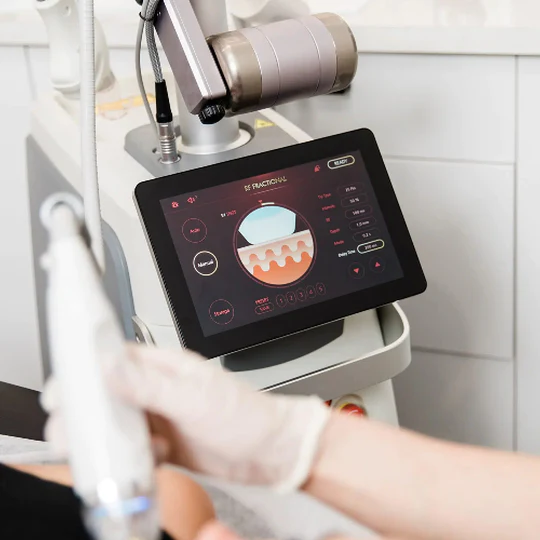
    Fractional Laser Treatments

    Fractional lasers work by creating controlled micro-injuries in the skin, stimulating repair and renewal.

    They can help improve:

    • Uneven skin texture
    • Fine lines
    • Sun-related skin changes

    By encouraging the skin’s natural healing response, these treatments support exfoliation and long-term regeneration.

    Non-Ablative Laser Treatments

    Non-ablative lasers target deeper skin layers while leaving the surface largely intact.

    They are commonly used to:

    • Improve skin tone and texture
    • Support collagen remodelling
    • Encourage gradual skin renewal with minimal downtime

    Microneedling (Medical Skin Needling, The Secret)

    Microneedling uses fine needles to create micro-channels in the skin, triggering repair pathways.  Devices such as The Secret and Micro Needling help with collagen production as well as other benefits, including:

    • Improved texture
    • Enhanced penetration of topical treatments
    • Support for smoother, more even skin

    Light & Energy-Based Devices

    Certain light-based treatments can help manage pigmentation, redness and textural irregularities by encouraging healthy skin turnover and barrier repair.

    All treatments are assessed individually and tailored by dermatologists to ensure suitability and safety.

    Vitamin C & Skin Renewal – How does it fit in?

    Vitamin C supports skin brightness and collagen formation. While it doesn’t exfoliate directly, it works alongside the renewal process to improve the appearance of newly surfaced skin.

    Sun Protection: The Final (Essential) Step

    Freshly renewed skin is more vulnerable to UV damage. Daily sunscreen use helps protect the skin barrier, maintain even texture, and preserve the results of exfoliation or in-clinic treatments.

    SPF Protection

    After shedding skin cells, your skin is often more sensitive and prone to damage. Protecting your newly revealed skin with sunscreen is essential to prevent further UV damage and support the skin’s overall health.

    See the full range at Script Skin here

    Final Thoughts: Skin Shedding Is a Good Thing

    Skin shedding isn’t something to worry about— it’s a sign that your skin is doing its job. Supporting this process with the right skincare, sun protection and (when appropriate) dermatologist-guided treatments can help maintain smoother, healthier-looking skin over time. Supporting the natural shedding process is essential for maintaining fresh, glowing skin. Whether you prefer exfoliating with gentle acids, applying retinoids for cell turnover, or using a hydrating moisturiser to lock in moisture, there are plenty of dermatology products to fit your routine. Just remember to start slowly with active ingredients (like retinoids or exfoliators) to avoid irritation, and always follow up with sunscreen to protect your skin!

    Ready to start your skin shedding journey? Consider consulting one of our dermatologists to tailor a skincare regimen to your specific needs!


  • Skinovation: 5 Aesthetics Skincare Trends of 2022 Influencing 2023

    Skinovation: 5 Aesthetics Skincare Trends of 2022 Influencing 2023

    Australians are no strangers to the pursuit of flawless skin, with the nation spending an astounding $22 billion on skincare yearly. As the skincare market continues to expand, a plethora of innovative products and treatments are becoming available, providing us with a diverse range of options to achieve our desired skin goals.

    Being well-informed about these trends not only allows you to make educated decisions about the products you use and the treatments you invest in but also helps you navigate the vast skincare landscape with ease.

    So, buckle up and get ready to explore the world of cutting-edge skincare as we help you discover the trends that will transform your complexion and redefine your approach to skincare in 2023.

    Trend #1: Prevention and More Frequent Skin Checks

    In recent years, there has been a growing emphasis on proactive skincare and prevention, with consumers increasingly recognising the importance of maintaining a consistent, well-rounded skincare routine to protect their skin from potential damage. 

    “Addressing concerns early, such as when fine lines start to appear around the eyes, using anti-wrinkle injections then rather than waiting until the lines get more prominent will give a better result and also less cost,” says our very own Dr Maria Milone.

    This shift in mindset has led to more frequent skin checks and consultations with professionals, ensuring that potential issues are identified and addressed before they become more serious.

    Benefits of regular skin checks and consultations with professionals

    • Early detection. Regular skin checks mean early identification of your skin’s potential problems, such as sun damage, pigmentation and even skin cancer, increasing the chances of successful treatment and minimising long-term consequences.
    • Personalised skincare recommendations. Consulting with professionals allows for a deeper understanding of your skin type, concerns, and goals, ensuring that your skincare routine is tailored to your needs and optimised for maximum efficacy.
    • Monitoring progress. Regular consultations facilitate tracking your skin’s progress over time, enabling you to make necessary adjustments to your routine and treatments to maintain optimal skin health.

    Tips for incorporating prevention and skin checks into a skincare routine

    • Schedule regular appointments. To stay on top of your skin’s health, book routine appointments with a dermatologist or skincare professional. Aim for at least one comprehensive skin check per year, with more frequent visits if you have a history of skin issues or concerns.
    • Embrace sun protection. Prevention starts with daily sun protection. Incorporate a broad-spectrum sunscreen with a minimum SPF30 into your skincare routine, and reapply every 2 hours when spending extended periods outdoors.
    • Invest in quality skincare. Opt for high-quality skincare products formulated with active ingredients that provide both preventative and corrective benefits, such as antioxidants, retinoids and peptides.
    • Educate yourself. Stay informed about the latest skincare trends, research and innovations to make informed decisions about the products and treatments that align with your skin goals and values.
    • Adopt a holistic approach. Remember that skincare is just one aspect of overall skin health. Incorporate a balanced diet, regular exercise and stress management techniques into your lifestyle to support the health and appearance of your skin from the inside out.

    Trend #2: More natural results

    Today, more individuals seek treatments and products that enhance their unique features while preserving their authentic appearance rather than opting for dramatic, artificial transformations.

    As Dr Afrah Mazhar noted, “I’m finding that the current trend in the cosmetic field is aiming for a more natural result. Patients and celebrities are reversing their dermal filler if it’s not looking right or natural. We have also become more focused on skincare and lasers. Now I’m my opinion, this is a great change. This has always been my personal aesthetic, and now I feel like the tide is turning on overdone cosmetic results.”

    How skincare and aesthetic treatments are adapting to deliver more natural results:

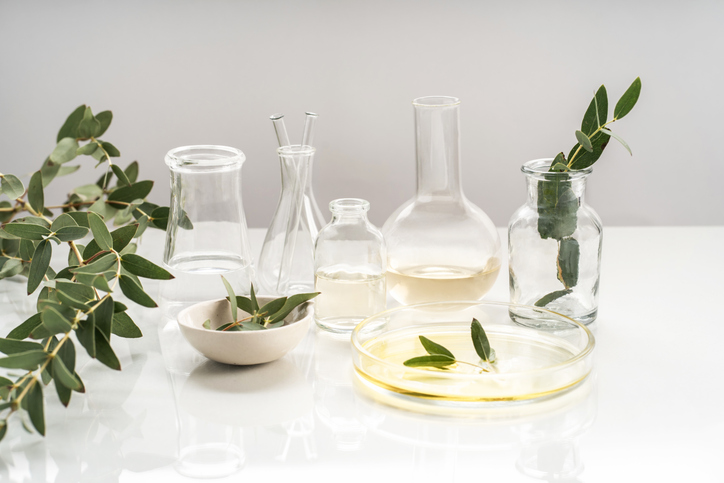
    natural beauty skin care products and glassware, flasks and petri bowl with plants

    • Subtle enhancements. Skin specialists now focus on subtle, targeted treatments that amplify a person’s natural beauty while minimising signs of ageing and skin imperfections. New techniques with dermal fillers, microneedling and gentle chemical peels are gaining popularity for their ability to deliver refined, understated results.
    • Customisation. The industry is increasingly embracing personalised skincare solutions, recognising that a one-size-fits-all approach may not yield your desired natural outcomes. Bespoke treatment plans and product formulations are also becoming more prevalent, ensuring you receive tailored care that addresses your unique preferences.
    • Ingredient innovation. Skincare products are formulated with innovative, naturally-derived ingredients that work synergistically with our skin to support its inherent healing and regenerative processes, promoting a more natural and youthful appearance.

    Tips for achieving a natural look with skincare treatments and products:

    • Choose the right practitioner. Select a skincare professional or aesthetician who shares your vision of natural beauty and has a proven track record of delivering subtle, natural-looking results.
    • Prioritise quality. Invest in high-quality skincare products with effective, naturally-derived ingredients supporting your skin’s health and natural radiance. Look for brands that prioritise transparency and sustainability in their formulations.
    • Develop a consistent routine. Maintain a regular skin care regimen that includes cleansing, exfoliating, moisturising, sun protection and targeted treatments for specific concerns such as pigmentation, fine lines or acne. Consistency is key to achieving a naturally beautiful complexion.
    • Embrace multi-functional products. Opt for products that serve multiple purposes, such as tinted sunscreens or serums that combine antioxidant, brightening, and anti-ageing benefits. These multi-functional products can help you look more natural while simplifying your skincare routine.
    • Focus on skin health. Remember that a truly natural look begins with healthy skin. Prioritize overall skin health by adopting a holistic approach encompassing a balanced diet, adequate hydration, stress management and sufficient sleep.

    Trend #3: Combination treatments

    This involves combining different skincare treatments to target multiple issues simultaneously, offering a more comprehensive and personalised solution. These treatments provide enhanced results, time efficiency and cost-effectiveness, making them an increasingly popular choice.

    Some popular treatment combinations for various skin concerns include:

    To choose the right combination treatments for your needs, we recommend consulting with one of our dermatologists, highly qualified nurses or aesthetic doctors, who can assess your skin concerns and provide personalised recommendations. Additionally, researching different treatment options, considering your skin type, setting realistic expectations and monitoring your progress will ensure you achieve the best possible results from your combination treatments.

    Trend #4: Bio Remodelling 

    Hydrating fillers or bio remodelling is a new generation of dermal hydration that contains a naturally occurring substance in our skin that attracts and retains moisture.

    Bio remodelling injections are formulated with a higher concentration of this substance which allows them to integrate seamlessly into our skin, providing deep hydration without causing significant volume changes. This results in a more natural and refreshed appearance and improved skin quality, texture and elasticity.

    Benefits of using bio-remodelling for skin rejuvenation and anti-aging:

    • Improved skin hydration. By attracting and retaining moisture, bio-remodelling help to restore and maintain optimal skin hydration levels, resulting in a plumper, more radiant complexion.
    • Enhanced skin quality. Bio-remodelling can improve our skin texture, elasticity and firmness, addressing common signs of aging and promoting a more youthful appearance.
    • Natural-looking results. Due to their unique formulation, hydrating fillers provide subtle, natural-looking results, enhancing your features without causing significant volume changes or altering your facial structure.
    • Minimally invasive. Hydrating filler treatments are minimally invasive and require little to no downtime, making them a convenient and low-risk option for skin rejuvenation and anti-aging.

    Expectations and potential risks associated with hydrating filler treatments

    While bio-remodelling is generally considered well-tolerated, some potential risks and side effects may include temporary redness, swelling, bruising, or discomfort at the injection site. These side effects are typically resolve on their own within a few days. Choosing a qualified and experienced practitioner to perform the treatment is essential to minimise potential risks.

    Minor results from bio-remodelling treatments can be seen immediately after the procedure, with optimal results typically visible within two weeks and two treatments, one month apart. The longevity of the results varies between individuals, but most of our clients noticed effects to last between six to twelve months. Our specialists may recommend regular maintenance treatments to prolong the results.

    Trend #5: Global Treatments

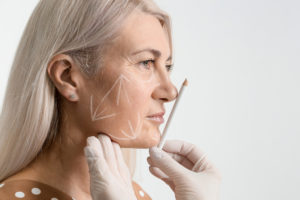
    Marking the face with a white pencil for surgical intervention close-up

    “As skin ages, a global treatment is often a better option (i.e. treating the whole face rather than just individual spots)  An example of that might be full face Fraxel for spot removal and anti-wrinkle injections for specific areas or filler and anti-wrinkle injections in one session across all the areas that require these treatments,” says Dr Milone.

    By adopting a global treatment approach and focusing on the whole face rather than just individual spots or areas, you can enjoy a more comprehensive skincare journey. As you explore and integrate these techniques and approaches into your skincare routine, you’ll be well on your way to achieving a more radiant, youthful, and healthy complexion.

    Examples of global treatment techniques and approaches

    • Layered treatments. Combining different treatments in a single session, such as chemical peels, microdermabrasion, and laser therapy, can simultaneously address various concerns like texture, pigmentation and scarring.
    • Facial contouring and rejuvenation. Utilising a combination of dermal fillers, hydrating fillers, and other injectable treatments can provide a more balanced and natural-looking facial rejuvenation, targeting the whole face rather than just specific areas.
    • Full-face skin resurfacing. Techniques like laser resurfacing, micro-needling, and radiofrequency treatments can target the entire face, improving overall skin quality, texture and tone.
    • Comprehensive skincare regimens. Creating a well-rounded skincare routine that includes products targeting hydration, exfoliation, sun protection and antioxidant support ensures that the entire face receives the necessary care and attention.

    Trending with Enrich

    The aesthetics skincare industry is continuously evolving, bringing forth innovative trends that cater to a wide range of skin concerns and preferences. As we move through 2023, we encourage you to explore new innovations and see what might suit your personal skincare routine. 

    Our team is dedicated to helping you navigate the ever-evolving world of aesthetic skincare, ensuring that your journey is both enjoyable and effective. Contact us today.

  • Why dermatologists use liquid nitrogen to remove spots

    Why dermatologists use liquid nitrogen to remove spots

    We use liquid nitrogen to freeze off skin spots in a process known as cryotherapy. In liquid form, nitrogen gas is very cold, sitting at -200°C. Superficial skin cells like warts, moles and sunspots can be frozen off and destroyed without damaging nearby skin. 

    One of the major benefits of cryotherapy is that it seldom leaves scarring. We use liquid nitrogen every day at our clinic for a wide range of skin growths, as treatments are quick with minimal discomfort and easy healing. 

    It’s important to have an experienced dermatologist performing cryotherapy to ensure the end result is smooth, clear skin. 

    cryotherapy in melbourne

    What is liquid nitrogen used for? 

    A dermatologist uses liquid nitrogen treatments for skin growths and spots, including: 

    • Skin tags
    • Warts
    • Skin cancers (non-melanoma)
    • Skin growths
    • Precancerous growths like actinic keratosis
    • Molluscum contagiosum
    • Seborrhoeic keratoses
    • Moles
    • Sunspots

    Does cryotherapy hurt?

    Usually, cryotherapy will cause mild stinging during treatment as the growth or spot is frozen and then thaws. However, discomfort is mild and lasts about five minutes. Most patients find cryotherapy to be a quick, tolerable procedure. 

    What happens to the spot after treatment?

    Later in the day, 1-2 hours from treatment, the treatment site becomes a little swollen and red. At some stage, the treated growth will form a crust, scab or blister, which will fall off by itself over the coming two weeks, taking the growth with it. Then, finally, new, healthy skin emerges underneath the blister. 

    liquid nitrogen for skin tags

    How to prepare for cryotherapy

    There is no preparation for cryotherapy, except perhaps removing makeup, creams, rings, watches or powders from the treatment area. Then, your doctor will clean the area to sterilise the skin and prepare you for treatment. 

    How to support quick healing

    There are some tips on how to help your liquid-nitrogen treated area heal faster. It is advisable to allow the blistering, crusting and scabbing process to run its course, allowing the healthy skin underneath to form to avoid visible scarring. 

    Apply an ointment such as Vaseline twice per day, and cover with a Band-Aid if desired to protect the scab. In the event of bleeding, hold gauze or a tissue firmly onto the wound until bleeding stops. 

    Avoid putting anything onto the blister or scab as it heals, for example, rings or makeup, potions or lotions, but do feel free to apply the protective ointment as often as it needs it. 

    Don’t pop the blister that will form, as this could introduce infection and interrupt healing. Clear fluid may leak out of the blister, which can be absorbed using tissue. 

    Does cryotherapy leave a scar? 

    Liquid nitrogen treatments don’t typically leave a scar, but they may leave a mark of a different colour on the skin (usually whiter). This colour change usually resolves over time but in some cases persists. This colour change is not dangerous and doesn’t mean your growth will come back, but depending on the location, it may be undesirable. 

    This colour mismatch may be more pronounced for deeper treatments since more collagen is required to repair the patch. Cryotherapy may require greater consideration on darker skin tones, as it leaves this white mark that may not return to its normal skin tone even in time. 

    Sometimes spots may require a second treatment if the first didn’t quite do the trick. A second treatment is preferable to doing a deeper treatment initially since it significantly reduces the additional risks of scarring. 

    Freezing skin cancers and precancerous growths using liquid nitrogen

    At ENRICH Clinic in Melbourne, we often use cryotherapy on precancerous growths such as actinic keratoses, though less often for skin cancers. We may use cryotherapy to treat small squamous cell carcinoma in situ. 

    There are only certain circumstances where liquid nitrogen for skin cancer is appropriate, for example: 

    • In the first instance of skin cancer in that area
    • Where multiple skin cancers need treatment
    • The patient has a bleeding disorder whereby excision is inappropriate
    • Another procedure is unable to be considered for some reason

    In some cases, when liquid nitrogen is the treatment of choice in skin cancers, cancer returns after treatment. However, one study found that cryotherapy had a cure rate of 99 out of 100 people. 

    Suppose the growth requires a biopsy to test for cancers. In that case, it is not appropriate to remove it using cryotherapy as this method will destroy the growth, removing the possibility of testing it. Instead, excision is more beneficial for biopsy. 

    Freezing off moles using liquid nitrogen

    Some moles can be frozen off using liquid nitrogen, but it will depend on how deep the roots or blood supply of the mole are. It might be more effective to cut the mole out to prevent it from growing back. 

    The process is the same for other skin growths like moles, and we can safely and effectively remove many types of pigmentation using cryotherapy. 

    Other options for removing spots at the dermatologist

    At ENRICH Clinic, we have many methods for removing spots, depending on the nature and location. We work with patients experiencing pigmentation issues such as sunspots, moles and freckles, clearing or fading spots with lasers, excision, freezing or burning, as per the spot’s requirements. 

    We have some of the best specialist dermatologists in Australia who can clear your skin effectively.

    Book a consultation to see how we can help you with your skin concerns. 

    ENRICH Clinic

  • What is vitiligo, and how is it different from melasma?

    What is vitiligo, and how is it different from melasma?

    Skin discolouration is too little or too much melanin, the pigment that gives our skin a tan or dark colour, and freckles and moles. The underlying cause of pigmentation changes in areas of the skin may be mysterious, but the outcome is obvious: patchy tone. 

    • Hypopigmentation means less than normal amounts of melanin, producing lighter or white skin, such as in vitiligo
    • Hyperpigmentation means more than normal amounts of melanin, producing brown or dark brown spots, as in melasma

    It is normal for skin to darken and lighten with the seasons and sun exposure; a clear example is getting a tan on sun-exposed areas in summer, such as arms and legs, which fades during the colder months. 

    Most discolouration is without consequence, but if you notice areas of skin emerging that are lighter or darker than other areas, it might be time to visit a dermatologist and be checked out. 

    What is vitiligo?

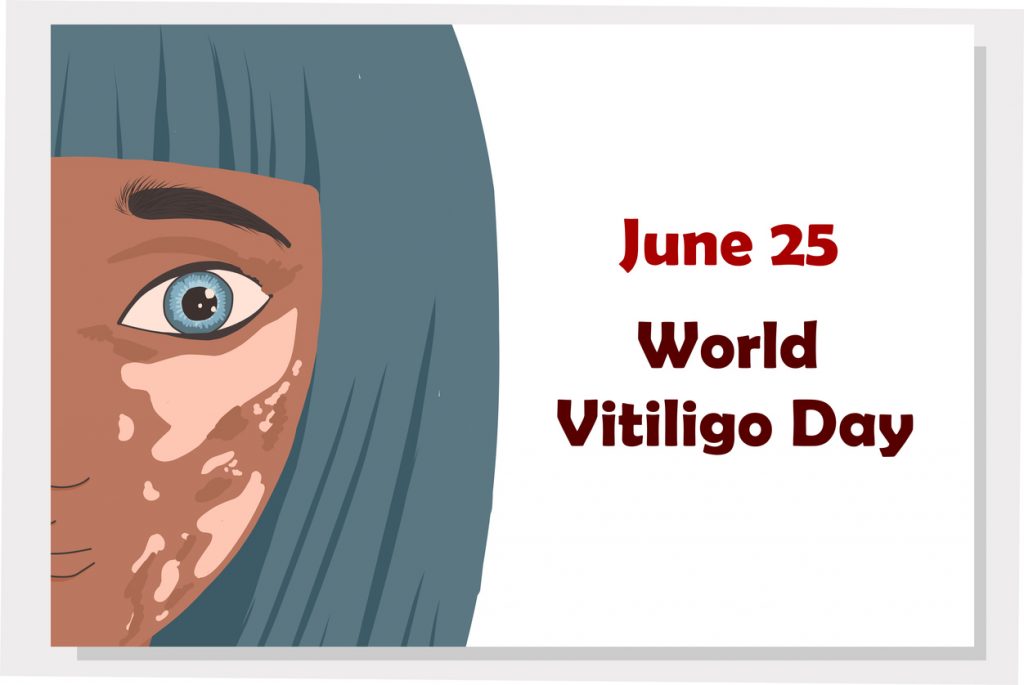
    Vitiligo is a hypopigmentation condition whereby patches of skin, including on the scalp, inside the mouth or the eyes, can lose their colour. Vitiligo is much more apparent in those with darker skin but can happen to anyone. 

    Vitiligo can be distressing for some people, but it doesn’t cause physical pain or debilitating disease. Vitiligo is chronic but not life-threatening. world vitiligo day

    What is melasma?

    Melasma is a hyperpigmentation condition whereby grey-brown patches of skin appear on the face or body, usually where the skin sees the most sun. Melasma is much more common in women, thought to be related to hormones and pregnancy. Melasma is made worse by UV exposure. 

    Understanding skin discolouration in vitiligo

    Melanin determines the colour of our hair and skin. In vitiligo, pigment disappears due to the loss of melanocytes – the pigment-producing cells in the skin – because the melanocytes have stopped functioning or have died. The patches get bigger over time, though treatment can sometimes restore colour to the affected areas. Still, treatment won’t prevent loss of pigment from spreading or returning. Vitiligo is not contagious. 

    The colour loss usually appears first on the face, hands and around openings in the body. Hair can prematurely lose colour and turn grey, including eyebrows, eyelashes, facial hair or head hair. 

    Mucous membranes in the mouth and genitals can also be affected. The white patches on the skin caused by vitiligo can start at any age, though most cases begin before 30. 

    Vitiligo can affect: 

    • Symmetrical body parts (both sides of the body, same body part)
    • Asymmetrical body parts (just one side of the body)
    • Just a few areas of the body
    • Hands and face
    • Body openings (eyes, nose, ears, mouth, vagina, anus, penis)

    Can vitiligo spontaneously clear up?

    Vitiligo sometimes disappears by itself, and colour will return to the skin. However, the more common outcome is that the loss of colour spreads across the body and the condition expands its reach. Each person is different in how their patches will appear and progress, and we can’t predict who will and won’t be more severely affected and who will spontaneously remit. 

    Causes of vitiligo – is vitiligo an autoimmune disease?

    The cause of vitiligo’s white patches on the skin remains mysterious. It might be an autoimmune condition, genetic or set off by a stressful event to the skin or person (emotional stress, sunburn, chemical). Research into vitiligo continues. 

    Treatments for vitiligo

    treatments for vitiligo in melbourne

    Vitiligo has no cure, but we have some workarounds available such as restoring or eliminating colour, achieved using camouflage techniques. 

    Vitiligo can result in some unexpected issues. Elements to look out for include emotional distress, sunburn and hearing loss. The emotional distress caused by vitiligo cannot be understated. While not everyone is affected emotionally or physically the same, the chronic nature of vitiligo can be challenging for some of us. 

    If you’re struggling with vitiligo, we can refer you to a psychologist who can help you through the more nuanced elements of chronic health concerns, particularly those that affect how you look. We understand how tricky it can be and support you in every way that we can. 

    Understanding how melasma is different to vitiligo

    Melasma is a condition with too much pigmentation, while vitiligo is a condition with not enough pigmentation. These two conditions are a result of entirely different processes and are unrelated to one another.

    What to do if you’re experiencing skin discolouration

    It’s vital that if your skin is losing or gaining in melanin deposits, you see a dermatologist for assessment. You can usually get a referral through your GP to see a specialist, which Medicare may at least partially cover. Your GP may not have the expertise to diagnose you or treat you appropriately, so we recommend seeing a specialist. 

    At ENRICH Clinic in Melbourne, we are skin experts and can support you through pigmentation disorders.

    Contact us to make an appointment.

    ENRICH Clinic

  • The difference between freckles and age or sunspots

    The difference between freckles and age or sunspots

    There are a few sorts of pigmented spots that can appear on the skin, and while they might all seem similar, there are some key differences. 

    What is a freckle?

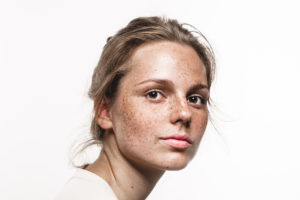
    Freckles are small pigmented spots on the skin, usually less than 5mm in diameter. A freckle develops when a group of skin cells produce more pigmentation than the surrounding cells, though the freckle itself is usually evenly coloured. 

    A freckle’s colour can vary from light or dark brown, black or even red, but the freckle is always darker than the person’s skin.Young beautiful freckles woman face portrait with healthy skin

    Why do we make freckles?

    Whether or not your skin makes freckles is genetic, with one known freckle gene: MCIR. If your parents are freckly, chances are you will be too, though by protecting your skin from the sun, you can reduce the development of freckles. Freckles appear due to the influence of UV rays on skin cells, but you must have the freckle gene, or you’ll remain freckle-less no matter how hard you try.

    Freckles – a type of natural sunscreen

    Melanin, produced by special skin cells, gives us our skin tones and tans but also makes freckles. Most people can develop visible freckles, even those with relatively dark skin, but anyone with maximum melanin production (very dark skin) won’t develop visible freckles. 

    These small darker spots act as a sort of sunscreen to protect the body by covering our outer layer with the tiny umbrella of melanin – a freckle. UV rays damage skin cells’ DNA, so the cell tries to shield itself by putting on a ‘hat’. 

    Freckles protect sun-sensitive skin and are not a sign of sun damage per se, though freckles can be a sign that you’re getting a lot of sun and perhaps need to consider adding more layers of protection. We get more freckles over time, though freckles do fade. 

    The difference between a freckle, age spot and sunspot

    Sunspots tend to be much larger than freckles – up to two centimetres – and appear in key sun-slathered areas like the face, shoulders, arms and backs of the hands. Young people rarely have sunspots, as they’re a development primarily associated with sun exposure and age. 

    Sunspots are also called age spots, but their medical name is the delightful senile lentigines. You might hear an age or sun spot called a liver spot, but that’s because they were initially mistakenly believed to be caused by liver issues.

    While freckles fade during winter, an age or sunspot does not, though they are both caused by UV exposure. 

    Freckles are cute; sunspots are not

    There is a movement to capitalise on the beauty of natural freckles, though not everyone is as enthusiastic about sunspots and wrinkles. 

    The best solution for pigmented areas of skin is prevention, but naturally, this only works by avoiding unprotected UV exposure going forward. Freckles, in particular, tend to fade over time, so spots you have as a child or young adult may be gone by the time you reach your middle or old age due to cellular shedding. Sunspots, by contrast, develop late and do not tend to fade much.

    At ENRICH Clinic in Melbourne, we have high-tech devices that work to remove or fade pigmented areas of the skin with a high degree of success. Because the pigment is on the outer layers of skin, we can gently remove skin cells to reveal fresh cells underneath that are unaffected by the pigmentation. Some pigmented areas will require multiple treatments.

    Woman portrait. Style. Beautiful blue eyed girl with freckles is looking at camera and smiling, on a white background

    We use several methods to remove skin cells, but two common strategies are laser microdermabrasion and chemical peels. Intense pulsed light (IPL), micro-needling and topical applications can also help to fade pigmentation.

    How to recognise sun damage

    Sun damage can appear in several forms but only develops over time – the sunburn you got as a teenager may show up later as evidence of sun damage: fine lines, wrinkles, freckles and sunspots. 

    Sun exposure can also result in skin cancers, so it’s essential to get regular skin checks and keep an eye out for freckles or moles that change shape, texture or colour. Neither freckles nor moles – or wrinkles for that matter – are dangerous in and of themselves. 

    How to treat sun-damaged or pigmented skin

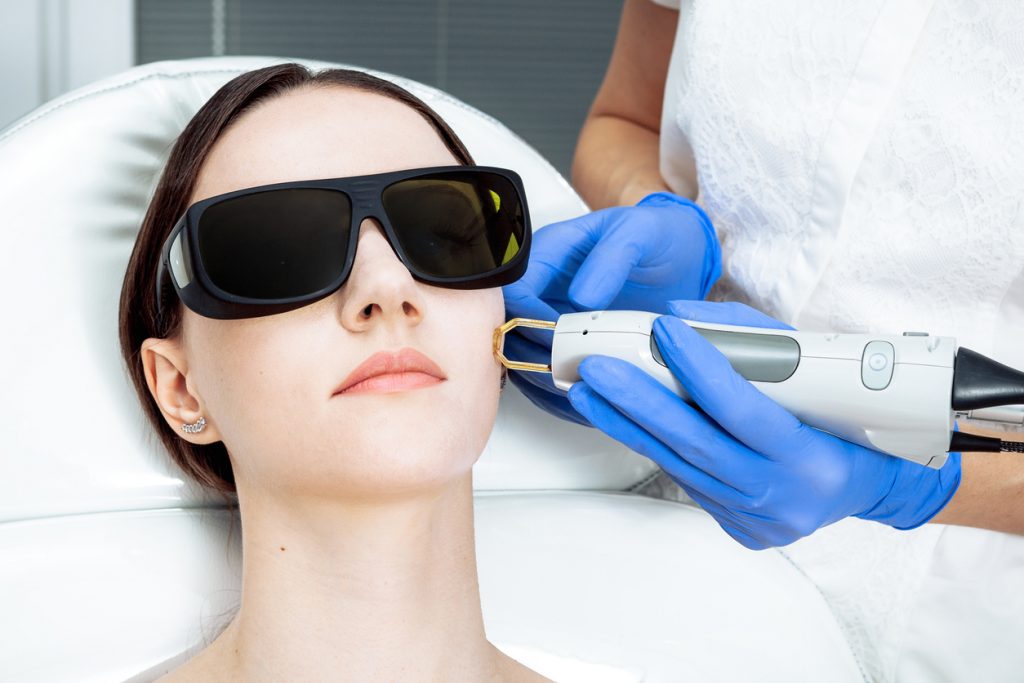
    If you’re unhappy with the look of your skin, there is plenty we can do to help. One of our main tools is laser treatments, whereby we can resurface the skin to a certain degree, literally vaporising the top layers. 

    Resurfacing has several functions. We remove the top layers of damaged, dry or dull skin, revealing fresh cells underneath. During the resurfacing process, the treatment provokes skin cells to produce collagen, which improves skin strength, tone and flexibility. The overall impact is fewer fine lines and wrinkles, clearer skin, a more even skin tone, and the complete removal of or fading of pigmented areas. If you’re not sure what options are available, we can help.

    Contact us for a consultation

    ENRICH Clinic

  • Wrinkle prevention: is there such a thing as too early to start?

    Wrinkle prevention: is there such a thing as too early to start?

    When considering the future of your face, many of you may be wondering if there is such a thing as ‘too early’ to start an anti-ageing regime.

    To answer this question, we need to understand a little bit about how the skin ages, and thus what is worth spending time and money on and at what age and stage.

    It is not unreasonable – if you’re into that sort of thing – to start an anti-ageing plan in one’s 20s, but it’s also just as feasible to work on your skin as issues arise.

    Prevention isn’t necessarily the goal for everyone, though it’s true that it works well as part of an anti-ageing strategy when started at the right time.

    Cosmetic treatments cost money and take time, and while it’d be marvellous if we all have nothing but time on our hands, that’s not the reality. We have to carefully choose our plan based on the resources we have available to us. It’s therefore worth having a consultation with your chosen clinic to discuss your goals and make a plan, rather than following fads and fighting cosmetic fires.

    Important note about teenagers and anti-ageing routines

    It’s important to note upfront that here at ENRICH Clinic, we do not believe teenagers should be considering anti-ageing treatments. It’s not your time, teenager!

    Anti-ageing treatments in teenagers are a potentially damaging pointless exercise – the skin is healthy and supple and not at risk of developing wrinkles, fine lines or creases just yet.

    The only anti-ageing routine that teenagers – and everyone else – should be undertaking is wearing high-SPF sunscreen every day and taking measures to protect skin from damaging UV rays.

    Of course, if there are problems such as acne, psoriasis or dermatitis, that is different altogether and a job for a dermatologist. That’s not what we are talking about here.

    The ageing process and when we ‘should’ start caring

    We are constantly getting older, from the minute we are born, which may seem obvious, but we don’t start talking about ‘ageing’ until we think about wrinkles, fine lines and creases in our face.

    These start to appear en masse during our late twenties and thirties, making themselves at home in our forties and fifties and beyond.

    An anti-ageing regime is designed to keep the skin looking smooth and supple for as long as possible, which may mean starting before the cracks start to appear.anti-ageing regime

    The most common way to start an anti-ageing routine in younger people is with wrinkle reducing treatment that relax certain muscles and prevent the development of wrinkles in key areas, but many approaches are just as useful, for example, regular laser treatments.

    How should I start my anti-ageing plan?

    At what point someone decides to start an anti-aging routine and what they start with varies depending on many factors: care factor, budget, time and skin type.

    For example, many Asians look 15 years younger than they are, which can be extremely annoying when trying to get into a bar but means many anti-ageing treatments can wait. Skin-beautifying can, therefore, be the focus, rather than wrinkle treatments.

    Caucasians tend to suffer a great deal of sun damage throughout life, particularly in Australia, and thus may age faster and less gracefully than darker skin tones. Reducing the impacts of sun damage may be a primary focus, for example, removing pigmented spots and softening fine lines and wrinkles.

    Young people have far more fat in their cheeks than older people. You’ll notice in older people that the cheekbones become prominent because the cheeks have lost fat volume.

    Chubby cheeks are very much related to youth. This loss of fat volume in the cheeks can have an impact on the eyes, dragging the skin down and contributing to looking tired. Strategically placed filler can create subtle – but impactful – changes to how aged the face appears.

    Making the most of your beautiful face

    An ageing face has so much character and beauty to it, so when we consider your anti-ageing plan, we aren’t aiming for an expressionless, frozen face that never creates a line.anti aging treatments

    Your face will always age; you will never look 25 when you are 55, no matter how hard you or we try or how much money you spend. And nor should you. That’s not the point.

    You want to look like yourself, at whatever age you are. At ENRICH Clinic, we always aim to enhance your natural assets, not change them. You have a great face and more to the point it’s unique to you! We help you make the most of it.

    Having beautiful skin will never go out of fashion

    There are some effective, non-invasive skin treatments that anyone can start their anti-ageing journey with: 
    • Non-invasive no-downtime treatments
    • Laser microdermabrasion
    • Facials – laser facials, HydroActive facials China Doll carbon serum facials
    • Skin peels
    When you get a little more experienced or know what you’re after, the treatment range includes: 
    • Deeper facial treatments that may include some downtime
    • Wrinkle reducing  & targetted dermal treatments
    • Non-surgical rhinoplasty (nose job)
    When you’re really on top of what you can expect, including deeper treatments that come with some downtime, the treatment range includes:
    • The Portrait – deep skin resurfacing
    • The Secret RF – skin needling and radiofrequency all-in-one for skin tightening and rejuvenation
    • Deeper laser microdermabrasion – deeper skin resurfacing

    Not sure what you need or where to start? Come in for a consultation, and we’ll help you. We understand that ‘looking good’ means different things to different people. For some of you just waking up without red cheeks would make a world of difference. For others, lifting the skin and softening wrinkles is the goal.

    Caring for your changing face is a unique journey for each of us. We at ENRICH Clinic are here to help you look your best self.

    Want more beautiful skin?
    We can help.
    Contact us

  • Non-invasive face treatments

    Non-invasive face treatments

    At ENRICH Clinic, we have many effective non-invasive facial treatments to suit your budget and skin goals. There are so many, with multiple names, that you may not know where to start. Here we offer you an overview of an excellent way to choose treatments based on your skin goals.


    Before we get into the specifics of the treatments, it’s useful to understand what your specific skin goals are and write them down. There may be a part of your face that is bugging you – redness, pimples, sun damage, dry skin, wrinkles – or you may want to look great for a special event or make an anti-ageing plan. We can also do non-surgical rhinoplasty.

    Your skin goals are the most important thing for us here at ENRICH Clinic, so having a consultation will fast track your discovery process where you will benefit from our experience.

    The internet can be a mind-boggling place, so we recommend making an appointment with one of our specialist cosmetic practitioners to see how we can help you.

    Non-surgical face treatments

    Injectables

    • Dermal fillers
    • Muscle relaxers (anti-wrinkle injections)
    • Liquid facelifts (anti-wrinkle injections and dermal filler)
    • Fat-dissolving injections

    Skin treatments

    • Chemical peels
    • The Secret or Microneedling
    • Microdermabrasion

    Laser and similar procedures

    • Continuous, fractional, ablative and non-ablative lasers
    • IPL and other heat-based devices
    • LED anti-ageing devices
    • Piqo laser
    • China Doll Facial

    Each treatment has a thing or two that it’s really good at, so starting with your skin goals in mind, we can then narrow down the procedures that will most benefit you.

    Here are some great examples of how we help our patients to get you started.

    Anti-ageingPortrait of beautiful mature woman sitting in cafeteria looking away. Cheerful mature woman wearing eyeglasses thinking with finger on chin. Happy woman relaxing at cafe and smiling.

    Anti-ageing is where a cosmetic clinic comes into its own. We love our range of anti-ageing treatments, and so do our clients. There are many to choose from, and it will depend heavily on which element of anti-ageing you are focused.

    Because the ageing process affects the areas of the face differently, we treat each area separately.

    Elements of facial ageing include:

    • The development of fine lines and wrinkles
    • Loss of fat volume creating a sallow look of the cheeks and around the eyes
    • Loss of collagen and elastin contributing to wrinkling and sagging
    • Deepening of grooves

    To combat each of these, we can use a collection of tools that address one or more element. Fine lines and wrinkles can be softened using resurfacing (makes all skin the same ‘height’), filled in with dermal fillers, or collagen boosted with wave-based treatments.

    We can arrest deep grooves and wrinkles as they are forming with anti-wrinkle injections, keeping your face smoother for longer.

    Fat in our face creates a more youthful appearance, so dermal filler has a huge role to play in our anti-ageing strategies. The hollows left due to diminishing fat volume in the cheeks can be plumped back up with dermal filler injections, as can the tear troughs and nasolabial folds (the lines that join your mouth and nose).

    Facial redness

    Redness is the result of blood vessels close to the surface of the skin. There is regular redness – this may be genetic, maybe you run hot – then we have redness caused by inflammation, known as rosacea.

    We have very effective laser treatments that remove the tiny blood vessels, reducing the visible impact of being hot, flushed or generally blotchy or red. This treatment works the same for any blood vessel condition, minor or major.

    If you have red cheeks or a red face all the time,  you may benefit from a consultation with a dermatologist to look into the cause. Sometimes a skin treatment isn’t the most appropriate way forward here.

    Rough or dry skin

    The outer layer of skin is by design made up of hard, dead skin cells – the keratinised layer of skin that protects us from the outside world. Keratinised skin, because it’s dead skin cells, can easily become dry, flakey and rough. Think of elbows, knees and heels.

    These dead skin cells can also lead to face appearing dry, dull and lacklustre. The solution is to get rid of the skin cells. We achieve this with several tools, for example, laser resurfacing, chemical peels and microdermabrasion. The top layer of dull skin is removed, revealing the fresh skin underneath.

    Acne or acne scarring

    Acne and acne scarring are two very distinct problems with individual solutions. Acne is an active skin infection, while acne scarring is the result of a specific skin injury. Acne scars develop due to a space created underneath the skin, in the pore, by the infection, that is then filled in with scar tissue.

    We have several strategies for managing acne, including hormonal management and very targeted skin treatments. Skin treatments include light- and wave-based devices to kill bacteria and promote skin health.

    Acne scar treatments often include collagen remodelling to change how scars appear, but depending on the type of scar, we can also work to resurface the skin.

    We are skin experts who prefer to use non-invasive strategies to achieve your skin goals. We have such an amazing array of tools at our disposal, so come in for a consultation so we can show some of them off to you! We feel confident that we can help you have more beautiful skin, whatever that means to you.

    At ENRICH Clinic, we have three expert dermatologists, including our founder Dr Michael Rich, Dr Lena Ly and Dr Charles Xie

    We are experienced cosmetic dermatologists & phsicians.
    Contact us for an appointment

  • What is the difference between a mole and a freckle?

    What is the difference between a mole and a freckle?

    A mole and a freckle share many of the same qualities, with the main one being colour. However, moles and freckles are different in some key ways, with the most significant difference being that a mole will be slightly raised, while freckles can’t be felt if you run your finger over them. Moles also tend to be darker than freckles.

    But, there’s more to it. To understand the significant differences between freckles and moles, we have to look into the skin cells that make moles and freckles: melanocytes.

    What is melanin?

    Melanin is a dark substance produced by pigment-producing skin cells, melanocytes. When your skin absorbs ultraviolet (UV) rays, your melanocytes are activated and produce melanin to help protect your other skin cells from UV damage. (You can think of melanocytes as putting up a protective umbrella for the next rainstorm. You got wet this time though.)

    Melanin is a physical barrier of colour between your upper skin cells and those beneath. This pigment absorbs future UV rays, ensuring they don’t damage your other cells. Skin cells under the top layer have no protection otherwise.

    Melanocytes are found all over your body but are restricted to the underneath side of the epidermis – the bottom section of the top layer of skin cells. Melanocytes are capable of producing a freckle or mole pretty much anywhere.

    What is a freckle?

    A freckle is made up of melanocytes that have produced pigment in response to UV rays. Freckles tend to be lighter in colour than moles, but this isn’t always true: freckles can be very dark, almost black. Freckles tend to be found in the superficial layers of skin cells compared with moles.

    Freckles can suddenly appear, but you’re most likely to notice freckles appearing in winter when the skin is pale, and they stand out more. Every winter, you’ll probably notice more freckles around your body if you’ve been out in the sun the previous summer.

    Freckles may fade and disappear over time.

    Do freckles require treatment?

    Freckles are not dangerous and do not require treatment. But some people don’t like their freckles. If that’s the case, we have strategies to remove the layer of skin that freckles reside in. We can lighten or remove freckles, depending on where they are and how many you have.

    Speak to us at ENRICH Clinic – we have treatments to reduce pigmentation spots like freckles.

    What is a mole?

    Moles are small brown (or tan, black, red, blue or pink) spots on the skin which range in size and their protrusion off the skin. Moles develop when melanocytes (skin cells) grow in clumps or clusters, on top of each other, and as such, they can have a wrinkly top or be flat, and vary quite a lot in colour. A mole may have a hair growing out of it.

    Moles originate deeper in skin layers and tend to appear when we’re younger, rather than with advancing age. It’s estimated that each of us will have 10-40 moles by the time we hit adulthood. Some moles can develop when we’re in the womb, meaning we can be born with moles.

    Moles can go away sometimes, but usually, they’re with you for the long haul.

    Do moles require treatment?

    Generally, moles are often safe and do not require any treatment, but its always worth having them checked routinely. Some moles may be removed for aesthetic or practical reasons or prophylactically to avoid melanoma issues in future. Mole removal techniques will depend on the size and location of the mole and whether it will be sent for a biopsy.

    Moles need to be checked regularly by a qualified person to look for changes. Moles can turn into melanomas (dangerous skin cancers), so early diagnosis and treatment are essential. This means getting regular mole checks.Young beautiful freckles woman face portrait with healthy skin

    If you notice a mole changing in any way – shape, colour, size, becoming itchy, sore or bleeding – see a doctor immediately.

    What’s the difference between a freckle and a mole?

    • Freckles cannot turn cancerous, but moles can
    • Moles originate in deeper skin layers than freckles
    • Freckles tend to be flat, while moles are usually raised
    • You usually see more freckles than moles
    • Fair-skinned people will often get a freckle instead of a tan (but not a mole)
    • Moles tend to appear earlier in our lives and stick around
    • Freckles can appear throughout our lives and disappear
    • Moles are not directly associated with sun exposure, whereas freckles are

    What’s alike between a freckle and a mole?

    • The tendency for moles and freckles is genetic
    • Both freckles and moles are darker than surrounding skin, never lighter
    • All skin colours can get freckles and moles, but they are easier to spot on light-skinned people

    What is a skin tag then?

    A skin tag is a small benign piece of skin that hangs by a stalk. Skin tags can look like moles but tend to be more skin-coloured than pigmented. The stalk gives them away as being a skin tag, but skin tags range in size and may appear quite mole-like.

    Skin tags are often found in areas that make regular rubbing skin contact  (armpits, groin, neck, etc.) and become more numerous as we age. Skin tags are not at risk of developing cancers, unlike moles.

    Do skin tags require treatment?

    Not unless you are unhappy with the appearance of a skin tag or if they are bothering you in a practical sense, for example rubbing on clothes or jewellery. Skin tags can be quickly removed in the doctor’s office or dermatology clinic using a few different methods, from a simple snip off, to burning, freezing or lasering.

    What are sunspots/lentigo?

    Lentigines are areas of pigmentation on the skin that we might call an age spot or a sunspot. These are similar to freckles but tend to be well defined; more like a splotch than a freckle. They are also larger than freckles.

    Lentigines appear most in areas that are in contact with UV rays, such as the back of hands, face, and chest. A lentigo may appear after radiation therapy and are more common as we age.

    Do lentigines require treatment?

    No, but like most of these other pigmented spots, we can remove it if you don’t like the look of it. Skin resurfacing and specialized lasers that address pigmentation are the best way to make these spots disappear. Speak to us – we can help.

    What are seborrheic keratoses?

    Seborrheic keratosis is a black or brown growth often found on the chest, back and head. These growths develop from keratinocytes and can look like warts. Seborrheic keratoses tend to develop as we age; however, they are harmless, not contagious, and are not typically associated with skin cancer.

    Do seborrheic keratoses require treatment?

    No, but you may not like their appearance. In that case, we have a few very simple, effective strategies for removing seborrheic keratoses in our clinic.

    We can effectively remove most spots!
    Contact us for an appointment.

    ENRICH Clinic

  • Skin resurfacing with the Fraxel, fractional CO2 laser and Portrait

    Skin resurfacing with the Fraxel, fractional CO2 laser and Portrait

    Skin resurfacing is the process whereby the topmost layers of skin are removed, taking with them sun damage, pigmentation, wrinkles and scars.

    Resurfacing to this degree comes with some downtime, as the skin needs to peel, then heal, ultimately revealing a fully refreshed complexion.

    layers of skin infographicResurfacing treatments can create a dramatic change in the skin’s appearance, but this type of treatment does come at a cost. Skin resurfacing is not for the faint of heart! We don’t recommend this type of treatment for those who are new to cosmetic procedures.

    (Need something a little less extreme but that leaves you with beautiful, younger-looking skin? Check out our Gym for Skin ebook.)

    The depth of resurfacing varies between machines and energy settings. At ENRICH Clinic, we use three primary devices for resurfacing. Choosing which one is right for your skin will largely be the job of your cosmetic doctor. Your doctor can advise you based on your skin type and other factors to get the maximum benefit from your treatment.

    Here we give you the rundown of our favourite resurfacing lasers at ENRICH Clinic. We use the Fraxel laser, fractional CO2 laser, and the Portrait plasma device for resurfacing treatments, with each having unique qualities.

    If you’re interested in how resurfacing works in more detail, this scientific review looks at new and emerging trends in laser skin resurfacing.

    The benefits of Fraxel laser for skin resurfacing

    We use the Fraxel dual laser to help correct:

    • Hyperpigmentation on the face, decolletage, neck, arms or hands
    • Sun damage
    • Wrinkles and fine lines
    • Acne scarring, particularly icepick, boxcar and rolling scars

    About the Fraxel laser

    The Fraxel laser is a dual laser, meaning it has two lasers at different wavelengths in the one machine. This dual function increases the Fraxel’s range of treatment options, which is uncommon in lasers and makes the Fraxel a uniquely useful laser. Usually, lasers only have one frequency which targets one specific set of skin issues, for example, blood vessel conditions or sun damage, but not both.

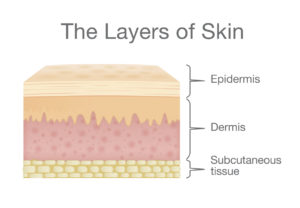
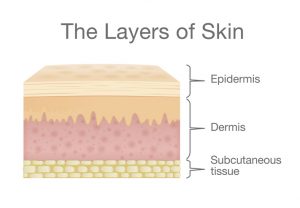
    One of the Fraxel’s frequencies is used to target sun damage and pigmentation within the epidermis (top layer). The other laser goes deeper, targeting the dermis, the layer that houses and produces collagen. The dermis is responsible for deeper wrinkles, skin texture and scarring.

    Fraxel lasers all work the same way – by creating little columns of heat that penetrate the skin cells, stimulating the deeper cells to trigger regeneration. This depth is why you’ll have 3-5 days of downtime – your face is going to be red, peeling and scaley as the process of ‘out with the old, in with the new’ occurs.

    Fast facts about Fraxel laser skin resurfacing

    • Your skin must be free from infections, severe breakouts or open wounds before treatments
    • No retinoids a week before treatment
    • Total treatment time including numbing is about 90 minutes (45 minutes numbing, 20-30 minute treatments)
    • Feels like a prickling sensation, can be mildly uncomfortable
    • Downtime expected
    • Deep treatment
    • Leave skin alone to heal – no picking!
    • For pigmentation, you may need 1-2 treatments a month apart
    • For sun damage, you may need 1-2 treatments 6-8 weeks apart
    • Cost depends on areas treated and the clinic
    • No surgery, no injections
    • Effective treatment to look younger without a dramatic change

    The benefits of fractional CO2 laser for skin resurfacing

    We use the fractional CO2 laser to help correct:

    • Wrinkles and fine lines
    • Scars
    • Skin imperfections
    • Sagging skin
    • Sun damage
    • Texture and tone
    • Sagging or loose facial skin

    About the fractional CO2 laser

    Fractional CO2 lasers also use tiny columns of thermal (heat) laser energy to produce an effect within the skin. These columns are a little different to the Fraxel’s. Fractional CO2 lasers are considered to be the strongest resurfacing lasers used across many areas of the body, including the hands and neck.

    The topmost layer of skin is vapourised during the treatment, while the heat columns pierce the dermis and remodel collagen. This piercing treatment results in significant firming and smoothing of the skin.

    Fractional CO2 lasers have fewer risks associated with them compared with traditional CO2 lasers because of the ‘fractional’ aspect. Treatments fit patient needs, rather than the non-fractional CO2 lasers that tend to run at full steam ahead as the default setting.

    The columns of heat leave untouched skin between the columns – this is why it’s called ‘fractional’ since it only treats a fraction of the skin, while still obtaining an overall impact. Fractional CO2 lasers improve recovery times and healing compared with traditional CO2 lasers.Beauty Woman face Portrait. Beautiful model Girl with Perfect Fresh Clean Skin color lips purple red. Blonde brunette short hair Youth and Skin Care Concept. Isolated on a white background

    Fast facts about fractional CO2 laser resurfacing

    • Expect downtime of 3-14 days depending on the depth of resurfacing – ask your doctor
    • You will need to take time off, but ask your doctor just how much for your treatment
    • Dramatic results
    • Full treatment time is about 90 minutes including numbing time (actual treatment time is about 30 minutes for the full face)
    • Expect a hot, red, swollen face after treatments
    • Skin will peel and flake as it heals
    • Triggers regeneration of new skin
    • Antibiotics or antivirals may be required depending on the person

     The benefits of the Portrait for skin resurfacing

    We use the Portrait to help correct:

    • Wrinkles and fine lines
    • Loose or sagging skin
    • Uneven skin tone
    • Uneven texture
    • Pigmentation
    • Early drooping of jowls

    About the Portrait

    The Portrait is a plasma energy device, not a laser per se. Plasma energy is emitted from the Portrait at two different levels – low and high. Skin tightening is more pronounced at the top settings and where we do more than one pass.

    Fast facts about Portrait plasma resurfacing

    • Low energy treatments have no-low downtime, work slower
    • High energy treatments come with some downtime (but not as much as the fractional CO2 laser)
    • Total treatment time depends on which energy setting we use, but after numbing time, treatments take between 15 minutes and 45 minutes
    • After low energy passes skin will be a mild red and flaking may occur
    • After high energy passes, the skin will be moderately red and then turn brown and flake off over a week – 7-10 days
    • Results are immediate and continue to improve for up to a year
    • Treatments feel warm and require anaesthetic

    We are anti-ageing experts.
    Contact us today to see what the Portrait can do for you

    ENRICH Clinic

  • Why two skin treatments can offer 3X the result

    Why two skin treatments can offer 3X the result

    Combining skin treatments may seem like double the effort, but it could offer triple the benefit. There is no single ‘best’ treatment when it comes to your skin. Often a few excellent procedures combine that offer, together, even better results than you’d see with just one treatment alone.

    If you are concerned about signs of ageing (wrinkles, blemishes, brown spots or sallow cheeks), you aren’t going to find one single best treatment. A laser may work well on your skin tone, while an anti-wrinkle injection may be useful to stave off a deep wrinkle.

    Age and sunspots are treated with a laser, chemical peel or another light-based treatment, while sallow cheeks can also be treated with hydration increasing treatments.

    Finding treatments that complement one another is key to getting the 1 + 1 = 3 effect. We love combining treatments because the results can often be three times more effective!

    Ageing is a complicated process

    There is no one-size-fits-all when it comes to how your face is going to age or what concerns you the most. There is an intricate pattern of wrinkles, some that stay static (like a frown line) and those that appear on flatter surfaces of the skin (think forehead and cheeks).

    We lose facial volume, which in turn results in new folds and contours appearing over time. Blood vessels can also become more prominent.

    The multifaceted process of ageing, therefore, is best served with a combination cosmetic approach.

    Treatments that work well in combination

    Needling, lasers, intense pulsed light (IPL), microdermabrasion, chemical peels, hydration treatments and high-quality skincare products can all be used together in various combinations for positve cosmetic outcomes.

    We use these combos a lot at ENRICH Clinic, where Dr Michael Rich is a great proponent of the multi-treatment approach. The treatments can often be performed in one appointment but may be scheduled over several appointments where necessary.

    Classic treatment combos

    • Laser and radiofrequency
    • Hydration and wrinkle reducing treatments
    • Acne medication and topical acne or acne scarring treatments
    • Skin needling (The Secret) and chemical peels
    • Peels & Diodes
    • Ultraformer (HIFU) and lasers

    What is the best cosmetic treatment combination?

    The best cosmetic treatment combination for you depends on your skin concerns. Talk to your cosmetic dermatologist or doctor to see what their thoughts are. Consultations are the key as well as developing a long-term plan for your skin health, and also handy for budgeting!  Combination treatments can be different for everyone and depends on ou skin type, age, diet, gender and genetics.

    A break between treatments may be necessary, so your skin can do its thing

    Some procedures are, by necessity, performed away from others. For example, a robust collagen-boosting treatment requires at least a month, if not more, to reach its maximum potential. There’s not much point in doing more collagen-boosting treatments over the top. Your skin is already maxing itself out. However, this doesn’t mean you can’t do wrinkle-reducing treatment or even a pampering, ultra-hydrating facial.

    Other treatments require a break due to the way they function in the skin. For example, certain needle-based treatments need time to settle before other skin treatments go over the top. This timing is in place because the liquid can migrate, or the skin has been pierced so you have to be careful of infection for at least 24 hours — also, no facial massage after any kind of needling.

    Swelling from some treatments may impede the effect of others, so a break for healing may be useful for the best outcomes for some combined treatments. You don’t have to have them done in the same appointment for the combination treatment effect to come into play.

    Using lasers and other wave-based treatments in combination

    Some cosmetic devices are designed to penetrate more deeply than others, which is why we may utilise the powers of two or more wave-based devices as a combination treatment.

    One such combination may be a radiofrequency device, which penetrates deeper layers, with a laser that works on the skin’s surface. This way, skin gets a deep treatment that stimulates, tightens and strengthens as well as undergoes a smoothing, brightening, resurfacing treatment. Here’s a paper on a study that reviewed how certain combination treatments can be effective.

    Your cosmetic doctor knows the best combination of treatments. 

    If you’re not sure what you need, don’t worry! We do. Come in for a consultation, and we’ll help you figure out the best course of action for your skin.


    Let us get the most out of your skin.
    Contact us for an appointment

    ENRICH Clinic

  • How to reverse sun damage on the face

    How to reverse sun damage on the face

    The jury is out on whether you can reverse all sun damage on the face with cosmetic treatments, but we have a few tricks up our sleeve for just that. At ENRICH Clinic, we have a set of pretty great tools in our arsenal, some which can remove sun-damaged skin cells.

    Before we get into reversing sun damage, we need to be on the same page with just what sun-damaged skin is.

    What is sun-damaged skin?

    When you expose your skin to the sun, ultraviolet (UV) rays penetrate your skin, entering the cells and send signals to your skin cells. Not all UV rays are damaging – just UVB rays.

    In response to this damaging influx of UVB energy, specialized skin cells called melanocytes produce a pigment, melanin. Melanin is the dark skin pigment that makes darker skin tones and in lighter skin tones, causes a tan to develop. Melanin is responsible for freckles and moles – and melanoma.

    The little skin cell that got a tan…

    Melanin production occurs when the DNA in a skin cell is damaged. The DNA damage is the SOS of a skin cell to the melanocytes: “Produce more pigment!” they cry, “More! More! We’re dying here!”

    The skin cell lays gasping while the melanocytes get to work, trying to prevent further damage by building a physical barrier of pigment in the skin cells. This pigment helps protect against future sun, but the damage to the DNA in the cell has occurred. That’s how the melanocyte knew what to do in the first place.

    A tan is never a healthy sign for your skin cells – it’s a cry for help. It just means you’ve been out in the sun (which may seem like you’ve been on a relaxing tropical holiday, hence the association with relaxation and health).

    Is darker skin protective, or does it mean I’ve got damaged skin cells?

    In darker skin tones, there is already a base layer of melanin present from birth that protects the cells from increased UVB damage. Darker skin tones still have a skin cancer risk and in some cases, a higher risk of certain types of melanoma.

    Darker skin does not exempt you from skin damage from UVB rays (though darker skin types don’t get as much skin cancer as lighter skin tones, plus darker skin ages better regardless of sun exposure).

    You still have to wear sunscreen!reverse sun damage with cosmetic procedures

    Sun-damaged skin makes you wrinkly faster

    The more sun you are exposed to, the worse the damage. Excessive UV exposure may result in the production of certain enzymes in the skin that breaks down collagen and elastin fibres. These fibres are the strength and structure of your skin and are the only things holding you up. Without collagen and elastin, your thinning skin starts to sag and wrinkle.

    Another problematic occurrence is the increase in a specific growth factor that increases the proliferation of blood vessels, resulting in very sun-damaged skin appearing with a map of veins across it.

    Sun-damaged skin can look fine from the outside, but once you put it under a Woods lamp, all the sun damage appears. This damage will keep appearing as the years wear on, as pigmentation spots, wrinkles and sagging.

    The big sun that got a bad reputation

    We shouldn’t completely hide from the sun. We need sunshine to cause the chemical reaction in our skin that results in vitamin D production. Vitamin D is essential for our immune system and bones, and we should remember this in our attempts to cover up and block the sun’s rays.

    If you don’t get any sun or are always fully protected, consider getting tested regularly for vitamin D levels and using a supplement. Speak to your healthcare provider.

    Reversing sun damage in the skin

    ‘Reversing’ may not be the best term here, since that’s not necessarily the process that occurs in the skin when we treat sun damage. Sun damage may have gone deep.

    When we treat sun-damaged skin, we are usually removing the damaged or pigmented skin cells and promoting the function of the skin. These advanced skin treatments are done at the clinic only, so do require appointments and in some cases, an outlay of money and recovery time.

    However, we can remove much of the sun damage from your face in our clinic, sometimes in just one treatment.

    Can skin cells repair DNA damage?sunscreen to protect skin

    Other animal species can repair DNA damage, but humans, not really. Non-mammals have a photolyase enzyme that can remove damaged lesions; however, mammals don’t have this marvellous piece of kit.

    The only protection we have from DNA damage to skin cells is to avoid direct UV rays without sunscreen or protective clothing. Wearing sunscreen is the only protection we have from damaging UV rays.

    You do have some internal mechanisms to help, which is where antioxidants come in. Research shows that UV exposure is a significant trigger for the release of damaging free radicals. Eating a diet rich in antioxidants can help mitigate some of the damage. Antioxidants can help pick up some of those stray free radicals floating around, taking them out of circulation so they can’t keep doing damage.

    That means a diet rich in high-antioxidant fresh fruit and vegetables.

    Methods we use to reverse or remove sun-damaged skin

    • Chemical peels
    • Microdermabrasion
    • Laser skin resurfacing
    • Laser skin treatments
    • Topical treatments

    How chemical peels remove sun damage on the face

    Chemical peels are a type of skin resurfacing using various ingredients to dissolve the outermost layers of skin. The depth of the peel depends on the ingredients used.

    Benefits of chemical peels

    • May remove sun-damaged and pigmented superficial skin cells
    • Freshens complexion
    • Improves texture and tone
    • Can mitigate blemishes and redness
    • Stimulates collagen production
    • Deep clean skin – removes whiteheads and blackheads
    • Helps control oil production
    • Tends to be low or no downtime
    • One or more treatments
    • Peels are very affordable

    How microdermabrasion removes sun damage on the face

    Microdermabrasion is the gentle process of removing the topmost skin cells, revealing fresh new skin underneath. At ENRICH Clinic, we prefer to use the erbium laser for microdermabrasion as results are far superior to other abrasive dermabrasions on the market.

    Benefits of microdermabrasion

    • Helps remove damaged superficial skin cells
    • Refreshes complexion
    • Evens skin tone
    • Improves skin texture
    • Reduces the appearance of large pores
    • Smooths blemishes, pigmentation and redness
    • Stimulates collagen production to help firm skin
    • Clears breakouts
    • Helps control oil production
    • Low or no downtime
    • One treatment is excellent, but regular treatments improve results
    • Microdermabrasion is gentle on skin

    How laser skin resurfacing removes sun damage on the face

    Using the laser to resurface skin is much like microdermabrasion, but much more in-depth. This type of treatment can come with some dramatic results, but also some downtime. Where microdermabrasion can be a lunchtime no-downtime treatment, laser resurfacing requires some home time.

    Benefits of laser skin resurfacing

    • Dramatic results
    • Removes significant amounts of sun-damaged skin
    • Improves the appearance of fine lines and wrinkles
    • Can soften deep grooves
    • Completely resurfaces the skin to a deep level
    • How laser skin treatments remove sun damage on the face

    We also have laser skin treatments that target specific issues on the skin surface caused by sun damage such as pigmentation. Lasers can focus on any one particular skin problem with ease, allowing us to target the results of sun damage, rather than a full resurfacing treatment. Spots on the face, hands and chest are easy and painless to remove in the clinic.

    Laser skin treatments work well with other treatments such as anti-wrinkle injections and dermal fillers.

    Benefits of laser skin treatments

    • Remove or reduce the prominence of single spots quickly
    • No need for full laser resurfacing treatments
    • Work on individual areas or full face and neck
    • Efficiently treat the skin on the backs of the hands
    • Reduce the appearance of fine lines and wrinkles
    • Stimulate collagen for overall firming (where required)

    How topical treatments remove sun damage on the face

    There are a handful of excellent high-strength topical treatments for sun-damaged skin only available through your clinic and cosmetic doctor. You require a prescription for these products, and therefore, a consultation will be required.

    Benefits of topical treatments

    • Reduce the appearance of fine lines and wrinkles
    • Improve skin texture and tone
    • Rejuvenate skin cells
    • Strengthen skin
    • Helps prevents degradation of collagen
    • Improves skin barrier and skin thickness

    Interested in the process of skin ageing and what science is doing about it? Read this scientific paper, Fighting Against Skin Ageing.

    We are cosmetic skin experts!
    Contact us for a consultation on your skin

    ENRICH Clinic

  • The Portrait Laser – How it works

    The Portrait Laser – How it works

    The Portrait is a cosmetic device that uses plasma energy to rejuvenate skin. The Portrait is unique amongst high-tech cosmetic technology, as it triggers the regeneration of new skin. This is opposed to removing skin cells for a fresher complexion or stimulating collagen production to tighten skin.

    What is plasma?

    There are two types of plasma, one you have probably heard of, and one you probably haven’t.

    The first kind of plasma is the sort found in your blood – the liquid in which your red and white blood cells are suspended.

    The second sort of plasma is a complex chemistry experiment that results in energy production. This is the sort of plasma that the Portrait uses.

    How does the Portrait exert its effect on the skin?

    The special handpiece has a complex system inside it that produces an ultra high frequency (UHF – what walkie talkies use to communicate) that affects a gas (nitrogen), which then gets converted into plasma energy. Using this handpiece, the Portrait delivers millisecond pulses of this unique plasma energy to the skin.

    This plasma-containing energy is then directed at the skin through a nozzle. The heat created removes damaged epidermal skin, and stimulates the dermis to produce new collagen. The dermis and epidermis start to regenerate.

    Don’t believe us? Check out the science.

    There are three recommended energy levels:

    1. PSR1 – low energy treatments
    2. PSR2 – high energy x 1 treatment
    3. PSR3 – high energy x 2 in the same treatment

    What do the different Portrait plasma skin resurfacing settings accomplish?

    All plasma skin resurfacing treatments using the Portrait at ENRICH improve fine lines, tighten skin, even out skin tone, promote smoother texture while reducing pigmented spots.

    Skin tightening is more pronounced after high-energy treatments compared with low-energy treatments but comes with some downtime. Low energy treatments exert their benefits over a more extended period, without downtime.

    The Portrait is one of our greatest weapons against the visible signs of ageing and isn’t associated with the same levels of downtime as, say, the carbon dioxide (CO2) laser.

    laser treatments for men

    Benefits of Portrait plasma skin regeneration

    • Can dramatically reduce visible signs of ageing
    • Can help to correct early drooping of jowls
    • Tightens skin
    • Reduces or removes pigmentation and discolouration spots like age or sun spots
    • Improves the appearance of creases and wrinkles around nose and mouth
    • Rejuvenates the skin

    What does a Portrait facial rejuvenation treatment look and feel like?

    1. Discussion and skin assessment comes first – what do you want out of your treatments?
    2. We take pre-treatment photographs so you can compare the before and afters
    3. Anaesthetic cream is applied to your face an hour prior to treatments
    4. The Portrait handpiece is applied to the skin – low energy treatments take less than 15 minutes, while high energy treatments (PSR3) take about 45 minutes

    Recovery for Portrait plasma skin regeneration

    Portrait facial rejuvenation treatments are well tolerated by most people, particularly the low energy treatments. How recovery looks and feels is very much dependent on whether your Portrait plasma skin regeneration treatment was low or high energy, and whether you had one or two passes at high energy.

    The next day you can use make-up and shave, and you can return to normal activities that day or the following day.

    There have never been any significant side effects reported from Portrait plasma skin regeneration treatments; however, some side effects can occur. If complications arise after high energy Portrait facial rejuvenation treatments, they may include excessive skin peeling, redness and swelling that lasts up to a week after treatment, and temporary hyperpigmentation. There have been circumstances where redness has remained for 6-8 weeks; however, this is very rare.

    Low energy Portrait facial rejuvenation recovery

    Skin will have a mild redness that lasts a few days. Flaking of skin may occur. Do not pick!

    High Energy Portrait plasma skin regeneration

    Higher energy Portrait plasma skin regeneration treatments cause mild/moderate redness of the skin, and the skin will turn brown and shed over the coming week or so. Do not pick! Expect to have brown skin flaking off for 7-10 days.

    It’s crucial to use a high-SPF sunscreen and protect yourself physically from the sun (hats, clothing, etc.) after plasma skin resurfacing treatments.

    How long until I see results from the plasma skin resurfacing and skin tightening, and how long do results last?

    Results are usually visible immediately and continue to improve over time as the skin cells regenerate and collagen production ramps up. Results can continue to be seen for up to a year.

    Does plasma skin resurfacing hurt?

    During plasma skin resurfacing, you’ll feel some heat. You need anaesthetic, either topical or injected, and possibly some pain relief to tolerate Portrait facial rejuvenation treatments. This makes the actual treatment relatively painless. A topical anaesthetic will be applied about an hour before your treatments no matter what the energy level.

    Your comfort – and positive results – are our top priority.

    We are anti-ageing experts.
    Contact us today to see what the Portrait can do for you

    ENRICH Clinic

  • Why there isn’t one laser for all treatments

    Why there isn’t one laser for all treatments

    To understand why there isn’t one laser for all treatments, you need to understand what each laser does during a treatment. You’ll soon see why one is better for specific jobs than another.

    What does a laser do?

    A laser is a single wavelength – a colour – of high-energy light focused into a tiny, single beam.

    Uses of lasers in everyday life

    • A teacher or professor may have a laser pointer in a classroom
    • The remote control on your TV uses a laser
    • A light show during a show may use lasers

    A laser beam, laser precision, laser light – the point of a laser is that it is a single beam of focused light energy. Laser beams come in varying strengths, for example, your remote control laser beam is very weak, transmits only over a short distance, and won’t do any damage if you shine it in your eyes.

    Stronger lasers, however, can get hot and burn, penetrate solid objects, and can transmit signals over a long distance. You do not want those going in your eyes.

    How a laser beam works

    Lasers can only emit one wavelength – colour – at a time. When we use lasers in cosmetic treatments, we are utilising a process known as ‘selective photothermolysis’.

    Photothermolysis
    Photo means light
    Thermo means heat
    Lysis means to destroy

    In cosmetic treatments that use thermolysis, we, therefore, use light to produce heat to destroy tissue.

    The wavelength – like the colour – of whatever we are targeting must be the same as the wavelength – like the colour – of the laser beam. This is how we selectively target blood vessels, brown spots, or remove tattoo ink with laser treatments.

    Many laser treatments target the water in tissue, which has its own wavelength (as opposed to a ‘colour’ as we know it).

    Each laser is generally able to produce just the one wavelength at a time, but up to four different wavelengths (using different settings) in total, limiting each of them to whatever wavelength(s) they were built for. A laser can’t produce two wavelengths at the same time.

    Starting to get it now?

    Each laser has its particular wavelength(s) that are attracted to different elements in our skin. This selectivity is why lasers are so precise and don’t affect the tissue that does not match the colour (wavelength) of choice. The laser can’t ‘see’ these colours (wavelengths) and so can’t affect them.

    If you have a brown spot (melanin) you want vapourising, the ablative brown-wavelength laser is your tool of choice.Young beautiful freckles woman face portrait with healthy skin

    Similarly, laser hair removal uses the same system: darker hair pigments attract the laser beam.

    Spider veins on your cheeks? The red-wavelength laser is your tool of choice to target haemoglobin.

    Some lasers have a long-range, while others have a short range. If you want to target a spider vein under the skin, for example, you need a laser that can reach that distance into your tissue but doesn’t affect outer skin or nearby skin. So, a non-ablative laser treatment targeting the red colour wavelength would be the choice.

    But, it’s also a matter of heating the target tissue quickly enough to cause damage to it. This is where the power and depth capacity of the laser treatment comes into play.

    The word laser is an acronym:

    Light
    Amplification by
    Stimulation
    Emission of
    Radiation

    Types of lasers – ablative versus non-ablative lasers

    There are two general types of lasers used in cosmetics: the ablative and the non-ablative laser.

    • Ablative lasers vapourise the top layers of skin, causing varying degrees of downtime and visible results on the topmost skin
    • Non-ablative lasers keep the top layer of skin intact, affecting deeper layers of tissue – no visible damage, no downtime

    From there, we have a vast array of brands and variations in the power and settings of each laser. The main difference between machines is the wavelength (colour) the device produces, which directly affects what sorts of skin conditions you might use it for.

    Different types of skin tightening lasers for fine lines and wrinkles

    When using a laser treatment to remove or reduce fine lines and wrinkles, we’d likely start with a skin resurfacing (ablative) laser. We would use this to remove the hills and valleys of the wrinkle. That is, to even out the skin, so it is all the same level, softening the contrast between the dips and creases a little. This reduces the appearance of wrinkles and can erase fine lines.

    These lasers also stimulate collagen production, so over time, help increase the strength and firmness of the skin.

    The carbon dioxide (CO2) laser or Erbium YAG are the most common laser treatments for fine lines and wrinkles. The CO2 laser treatment is often used for more in-depth skin treatments but also to remove skin tags and warts or for laser-assisted surgeries that require precision.

    At ENRICH, we have a vast array of state-of-the-art lasers !

    Different types of skin tightening lasers

    Skin tightening is achieved by applying the laser treatment to the skin, which produces a controlled injury to the collagen-producing layer, the dermis. Existing collagen is contracted, and new collagen production is ramped up.

    Collagen is your skin’s infrastructure, the matrix that holds you together. When you contract and stimulate collagen, it has a tightening and  toning effect on your tissue, resulting in a visible skin tightening effect.

    We have many devices for skin tightening, depending on your individual needs.

    Different types of lasers for skin pigmentation

    Pigmentation (melanin) is produced in the epidermis – the top layer of skin – by melanocytes. The lasers most appropriate tend to be ablative devices that are matched for brown colouring. Sunspots, liver spots, age spots, melasma and hyperpigmentation, can be successfully vapourised.

    Different types of lasers for removing precancerous lesions

    Indeed, a skin cancer is usually surgically removed by a doctor to ensure the full cancer is removed. However, when a lesion is not yet cancerous, it can be quickly and easily removed with a laser treatment before it has a chance to develop into a malignancy.

    This works much like pigmentation, and we vapourise the lesion with an ablative laser.

    Different types of lasers for blood vessel conditions (spider veins, birthmarks, etc.)

    Vascular lesions such as broken blood vessels, spider veins, spider nevi, hemangiomas and port-wine birthmarks (which contain a vast blood supply) can be successfully treated with a laser treatment that targets haemoglobin-red – red. The laser ignores the tissue around the red so that a blood vessel can be destroyed without harm to other tissue.

    Different types of  tattoo removal lasers

    Tattoo removal can be done with a CO2, Q-switched laser or Nd:YAG laser, but our laser treatment of choice is the very fast, effective PiQ04 picosecond laser.

    Our picosecond laser has four different wavelengths that actively target many different colours typical in tattoos. When we combine all our lasers, we have the best selection for any tattoo to be removed, no matter the colours, including trickier cosmetic tattoo pigments. The picosecond laser is exceptionally efficient when it comes to tattoo removal.

    Different types of hair removal lasers

    Hair removal lasers have been restrictive in the past because they relied so heavily on light skin and dark hair; however, advancements in lasers have all but eliminated this. In laser hair removal, the laser needs something to be attracted to, which tends to mean a slightly darker, pigmented hair shaft.

    The laser energy travels down the hair shaft, transferring its heat to the surrounding follicle, damaging it so that it cannot produce a hair. This is how laser hair removal works.

    Visit us for laser hair removal in Melbourne

    Different types of lasers for acne and acne scars

    Deeper acne scarring can be treated using the CO2 laser, but this depends on the state of the skin and the depth of the scarring. Acne scarring may be addressed by remodelling the collagen that makes up the scarring or by resurfacing the skin, and your doctor will decide which laser is best for your skin.

    A combination of both ablative and nonablative lasers may be used, along with some of our non-laser devices.

    We have a large range of lasers to tackle your skin issues
    Contact us to see how we can help you

    ENRICH Clinic

  • Treating lentigines, brown spots and freckles

    Treating lentigines, brown spots and freckles

    A lentigo is a flat or slightly raised spot on the skin, looking much like a freckle or sunspot, that doesn’t fade during winter. It is a pigmented area of the skin that resembles a small lentil, hence the name. They can be called lentigines or lentigos, and we can remove them using pigmentation-removal treatments.

    Lentigines are different to freckles (called ephelis), because there are an increased number of melanin-producing cells in a lentigo, instead of the increase in melanin in a freckle. The result is typically the same, however – brown pigmentation on the skin.

    Why do I have lentigines?

    Anyone can get lentigines, though fair-skinned adults are very likely to have sun-induced lentigo. There are some conditions present at birth that result in lentigo, though these are uncommon.

    The different types and causes of lentigines

    There are different types of lentigines with most being prevalent in those suffering sunburn, using indoor tanning salons, and utilising phototherapy. Radiation therapy can also cause lentigo to appear. Lentigos vary in size, and may appear with other lentigines or alone.

    Lentigo simplex

    This form of lentigines appears during childhood and early adult life, usually found on the abdomen and arms and legs, and may appear, then disappear. These lentigines are small, brown, and round or jagged at the edges.

    Solar lentigo

    Solar lentigo often appear before seborrhoeic keratosis, and are found on sun-exposed sites of the body – arms, legs, face. They can appear after sunburn on the shoulders, and are yellow, light or dark brown, and can be irregular or regular in shape. The outline may appear ‘moth eaten’, and these lentigines can grow to be as big as several centimetres in diameter.

    Ink spot lentigo

    As the name suggests, these lentigines look very dark, like a very small dark brown or black ink splotch on the skin. They are usually far less numerous than other types of lentigines, often follow sunburn in light-skinned people.

    Melanotic macules

    These are found around certain skin types on the body, such as lips, the penis, anus, and vulva. They are light or dark brown.

    Treating lentigines, brown sun spots, and freckles

    To lighten or completely remove pigmentation from the skin, we use a variety of measures. Which is appropriate for you, only your dermatologist can say, since everyone is different. Not all pigmentation can be completely removed in some people, but we can definitely make a dent in it at worst.

    We can help reduce brown spots on your skin.
    Contact us

  • Using colour to hide skin blemishes

    Using colour to hide skin blemishes

    skin blemishesHiding skin problems is one way of dealing with them, either while they are being slowly treated, or in cases of scarring, for example, that will never disappear completely. Using colour theory means you can get the most out of concealers to completely hide your colourful skin.

    Colour correction – what does that mean?

    Every colour sits opposite another colour – the colour that cancels it out, or neutralises it. This isn’t as simple on skin as it is on a colour wheel, but it’s not far off. Skin can present as many different colours – orange, red, pink, deep red, deep pink, purple, brown, or any combination or hue – and it may also appear differently in adjacent areas. Thus, using colour theory to neutralise blemishes on your face can be achieved without too much trouble. Here we share the basics – the rest is up to you to experiment with.

    Skin conditions and their classic colours

    1. Orangey-red: pityriasis rosea, tinea, seborrheic dermatitis
    2. Red: rosacea, acne scars, acne
    3. Blue: veins
    4. Purple: under-eye circles, lichen planus, bruising
    5. Yellow: bruising
    6. Deeper red: cellulitis, Sweet’s syndrome, rosacea, psoriasis, acne scars
    7. Purpley-red: vasculitis, lichen planus, eye bags, veins
    8. Browney-red: pigmentation, some acne scars, sarcoid
    9. Brown: lentigines, melasma, seborrheic keratosis, pigmentation, moles, café au lait spots

    Figuring out what skin type you are on the Fitzpatrick scale


    Skin type Typical Features Tanning ability
    I Pale white skin, blue/green eyes, blonde/red hair Always burns, does not tan
    II Fair skin, blue eyes Burns easily, tans poorly
    III Darker white skin Tans after initial burn
    IV Light brown skin Burns minimally, tans easily
    V Brown skin Rarely burns, tans darkly easily
    VI Dark brown or black skin Never burns, always tans darkly


    The solutions

    Hiding red (acne, rosacea, scarring)
    Skin types I, II, III:
    use green-based concealers or primers
    Skin types IV, V, VI: use yellow-based concealers or primers

    Hiding blue (veins)
    Skin types I, II, III: use a peach or salmon-coloured concealer or primer
    Skin types IV, V, VI: use an orangey concealer or primer

    Hiding purple (under-eye bags, lichen planus, bruises)
    Skin types I, II, III: use a yellow toned concealer or primer
    Skin types IV, V, VI: use reddish concealer or primer

    Hiding yellow (bruises)
    Skin types I, II, III, IV, V, VI: use purple or lavender-toned concealer or primer

    Hiding brown (lentigines, melasma, pigmentation, moles, café au lait spots)
    Skin types I, II, III, IV, V, VI: Brown can be hard to conceal well. The darker the pigment, the more grey appears under the concealer, so as a rule, the lighter the pigment, the easier to correct. Peach usually works the best, with the concealer or primer lighter than the skin tone.

    Hiding everything in between
    Skin types I, II, III, IV, V, VI: If you use these guidelines, you should be able to accurately figure out how to make the combination of colours that suit your skin and blemish colour. Check the colour wheel, and experiment until you get to the coverage you desire.

    Need help with your skin?
    Contact us