Category: Dermatitis

  • What is the difference between eczema, dermatitis and psoriasis?

    What is the difference between eczema, dermatitis and psoriasis?

    For millions of Australians, the battle against itchy, inflamed skin is a daily reality. One of its causes is rated in the top five causes of non-fatal disease burden. Three common culprits behind this struggle are eczema, dermatitis, and psoriasis. 

    These terms are often interchangeable in general discussion, but they are completely different & represent distinct skin conditions with varying characteristics and management strategies. If you’re experiencing itchy and inflamed skin, you must understand the differences to seek appropriate treatment and improve your quality of life. 

    Eczema vs psoriasis vs dermatitis: the differences

    Eczema

    Appearance

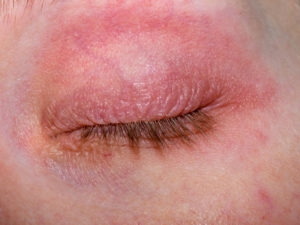
    Eczema, also known as atopic dermatitis, typically manifests as red, dry, itchy patches of skin with fine scaling. Blisters, oozing, and crusting can occur in severe cases.

    The skin may also appear discoloured, with shades varying from pink to brown, depending on your skin tone.

    Sensation

    Eczema is notorious for its intense itching, often worse at night and with scratching. The sensation can be relentless and even disrupt sleep.

    Location

    It typically affects the inner elbows, back of the knees, face, and neck. However, it can appear on any part of the body. In infants, eczema tends to affect the cheeks and scalp.

    Triggers

    Numerous factors can trigger eczema flares, including stress, dry air, harsh soaps, allergies, and certain fabrics. Identifying individual triggers is crucial for effective management.

    Onset

    Most commonly, eczema develops in infanthood between ages 0 and 6 months. According to a study, more than half of surveys indicated that the condition was diagnosed around that age. Many children outgrow the condition, but for 52% of eczema sufferers, it continues into adulthood.

    Treatment options

    Treatment for eczema involves a combination of moisturising creams to hydrate the skin, topical steroids to reduce inflammation during flare-ups, and avoiding known triggers. In severe cases, doctors may prescribe systemic treatments or immunosuppressant medications. They may also recommend phototherapy.

    Psoriasis

    Psoriasis is multi-system disease that can affect the joints, heart, lung and bowels and is not often well understood. 

    Appearance

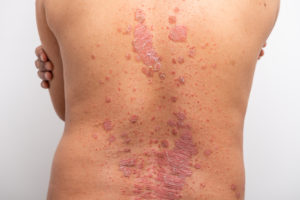
    Psoriasis presents as thick, red, raised patches of skin covered with silvery-white scales. These plaques are distinctive and can cover large areas of the body.

    Sensation

    Psoriasis typically causes less intense itching than eczema, but burning, stinging, and tenderness are common. If psoriasis affects joints, it can lead to painful cracking and bleeding of the skin.

    Location

    Common areas for psoriasis include the scalp, elbows, knees, and lower back, but it can develop anywhere, including the nails and joints.

    Triggers

    Hormones, stress, infections, physical injury to the skin, certain medications, and weather changes can trigger psoriasis flares. But unlike eczema, psoriasis is more closely linked to the immune system, and these triggers can prompt an autoimmune response.

    Onset

    Psoriasis can start at any age, with two common onset periods: one in late adolescence and another in middle age. This is especially true for hormone-caused psoriasis because it’s associated with puberty and menopause.

    Treatment options

    The severity and extent of the condition can vary significantly from person to person, so treatment of psoriasis also varies. It ranges from topical creams and ointments to help reduce inflammation and slow skin cell growth to phototherapy. For more severe cases, systemic medications and biologic drugs target specific parts of the immune system.

    Dermatitis

    Dermatitis encompasses a broad category of skin conditions, each with diverse presentations. So, the specific appearance, sensation, location, and triggers can vary depending on the type of dermatitis. Here are some of them:

    • Atopic dermatitis. This is another term for eczema, which we covered in detail above.
    • Contact dermatitis. This skin problem presents as a red, swollen rash. It may also blister, ooze, or develop crusts. The sensation is often intense itching or burning, especially when the skin comes into contact with allergens or irritants. Common locations include areas directly exposed to the irritant or allergen, such as hands, face, neck, or legs. Triggers range from allergic reactions to substances like nickel, latex, or certain cosmetics to irritants such as soaps, detergents, or chemicals. Contact dermatitis typically occurs soon after exposure to the trigger.
    • Seborrheic dermatitis. It’s characterised by oily, scaly patches on the skin, often appearing with a yellowish or reddish tinge. It can be itchy and slightly sore. This usually occurs on the scalp, face (particularly around the nose and eyebrows), ears, and chest. The exact causes are unclear, but stress, hormonal changes, cold and dry weather, and yeast living on the skin are potential triggers. It is common in infants (as cradle cap) and adults.

    Managing dermatitis involves avoiding known triggers, using emollients to moisten the skin, and applying topical steroids during flare-ups. In some cases, antihistamines are prescribed to control itching.

    Have your skin checked at ENRICH

    If you’re worried you have one of these skin conditions and need help with diagnosis or treatment, contact us.

  • Why is my skin suddenly itching all over?

    Why is my skin suddenly itching all over?

    If you’re wondering, “Why is my skin suddenly itching all over?” You’re not alone. Itchy skin is a condition we’ve all faced at some point. It can range from a mild annoyance to a significant discomfort that disrupts our daily lives. While it’s usually nothing serious, sometimes it can be a sign of a bigger health issue.

    Itchy skin, or ‘pruritus’, can be caused by many different things – from the weather to allergies or even more complex health problems. Understanding what’s behind that itch is vital to finding the right way to treat it.

    Reasons your skin is itchy

    Dermatitis

    Dermatitis is a general term for skin inflammation. It can cause an itchy rash or red, swollen skin. There are different types, like atopic dermatitis (eczema), contact dermatitis (from touching irritants), and seborrheic dermatitis (often affects the scalp). 

    Each type has its triggers, such as hot/cold temperatures, irritants and microbes, but all result in itchy skin. 

    Dry skin

    Dry skin, known as xerosis, happens when your skin lacks moisture. It’s pervasive in areas with low humidity or during the colder winter months when the air is drier both outside and inside due to heating systems. This dry air can strip moisture from your skin, leading to dehydration and itching. 

    Cold temperatures also contribute by reducing the skin’s natural oil production, which is essential for retaining moisture and protecting the skin barrier. 

    The tendency to take hot showers or baths in winter can further remove natural oils from the skin, worsening the dryness.

    Allergic reactions

    Allergies are another common cause of itchy skin. Various allergens like food, medications, latex, nickel, or certain chemicals in cosmetics or personal care products trigger it. 

    When your body encounters an allergen, it can react by releasing histamines, leading to symptoms like inflammation and itchy skin.

    Environmental factors

    Poison Ivy plant, forest floor

    The environment has a significant impact on skin health. In Australia, where the climate and natural surroundings are quite diverse, several environmental factors can cause skin irritation and itchiness.

    Intense UV rays, for example, can dry out our skin, making it itchy and irritated. Insect bites are another common culprit, especially in areas near water or bush. 

    Australia is also home to various plants that can cause skin reactions, like poison ivy. Contact with it can result in an itchy rash.

    Nerve-related issues

    Sometimes, itching sensations can be caused by issues with the nervous system, a condition known as neuropathic itch. This type of itch happens when there’s a problem with the nerves themselves. Nerve irritations, shingles, or peripheral neuropathy due to diabetes are common causes of neuropathic itch.

    Internal diseases

    Certain internal diseases like liver disease, kidney failure, or thyroid problems can cause itching. This itching occurs due to the way these diseases affect the body’s normal processes and lead to a buildup of toxins.

    For instance, when the liver is not functioning properly, it struggles to filter out toxins from the blood. These toxins can accumulate in the body and cause symptoms, including itching.

    Psychological factors

    When you’re dealing with stress or mental health issues like anxiety or depression, these can show up in physical ways, including causing your skin to itch. This is because stress can alert your body to sensations, turning even a tiny itch into something much more noticeable. Sometimes, you might start scratching without even realising it, especially if you’re nervous or anxious, which can worsen the itchiness.

    Depression can also affect your skin. It might change how you care for yourself, including your skincare routine, leading to dry and itchy skin. Plus, some medicines for treating depression and anxiety can have side effects that include making your skin itch.

    Nutrient deficiency

    When you’re not getting enough of certain nutrients, like vitamins, iron, and fatty acids, it can lead to itchiness. Your skin needs a range of nutrients to stay healthy, and a deficiency in these can affect your skin’s health.

    For example, Vitamin A helps repair skin tissue, and a lack of it can lead to dry, itchy skin, while the lack of adequate iron in your diet affects your skin’s oxygen supply, leading to poor health. Fatty acids, especially omega-3 and omega-6, play a vital role in maintaining the health of your skin’s lipid barrier. This barrier helps retain moisture and protect your skin from irritants. A deficiency in these fatty acids can lead to dry skin prone to itching.

    How to identify the possible cause of sudden itchiness

    It can be uncomfortable and puzzling when you suddenly start experiencing itchiness. Here are some steps you can take to determine what might be causing your itchy skin so you can get the proper treatment:

    Observe the area

    First, take a close look at the itchy area. Is the skin dry, red, or swollen? Are there any rashes, bumps, or blisters? The appearance of the skin can give clues about the cause. For example, a red, bumpy rash might suggest an allergic reaction, while dry, flaky skin could indicate xerosis (dry skin).

    Consider recent changes

    Think about any recent changes in your life that could affect your skin. Have you started using new skincare products, detergents, or cosmetics? Have you been exposed to new environments or substances, like chlorine in a swimming pool or a new sunscreen brand? Sometimes, the cause of itchiness can be traced back to a recent change in your environment or products you use.

    Review timing and triggers

    Try to recall when the itchiness started and what you were doing then. Did it begin after you ate a certain food, used a particular product, or visited a specific place? Also, consider if the itchiness worsens at certain times of the day or in particular situations, like after a shower or during the night. Nocturnal pruritus can be caused by either the natural change in our circadian rhythm or bed bugs!

    Monitor other symptoms

    Symptoms like fatigue, weight changes, or digestive issues can be relevant. For example, if you’re also feeling exhausted, it could be a sign of an internal condition like a thyroid problem or iron deficiency.

    Perform a patch test

    If you suspect a particular product is causing the itchiness, you can do a patch test. Apply a small amount of the product to a discreet area of your skin and wait 24 to 48 hours. If the skin becomes itchy or irritated in that spot, you might be allergic or sensitive to the product. Otherwise, your itchy skin is caused by something else.

    Keep a skin diary

    Record what you eat, the products you use, your activities, and when you experience itchiness. Over time, this record can help you and your healthcare provider identify patterns or triggers for your skin reactions.

    When should I be worried about itchy skin?

    Persistent itchiness

    If your itchiness is constant and doesn’t go away with over-the-counter treatments or home remedies, seeing a doctor is a good idea. Persistent itchiness, especially if it’s severe and interferes with your daily activities or sleep, could indicate an underlying health issue like eczema, psoriasis, or internal diseases.

    Accompanying severe symptoms

    If your itchy skin is accompanied by more severe symptoms, such as significant swelling, hives, or difficulty breathing, seek medical attention immediately. These could be signs of a severe allergic reaction, known as anaphylaxis, which is a medical emergency. Other severe symptoms to watch out for include rapid heartbeat, dizziness, or a feeling of tightness in the chest.

    Signs of infection

    If you’ve been scratching the itchy area and notice signs of infection, such as increased redness, swelling, warmth, or tenderness, or if the area starts to ooze pus, it’s important to consult a healthcare professional. An infection may require treatment with antibiotics or other medications.

    How do I stop uncontrollable itching all over my body?

    Dealing with uncontrollable itching all over your body can be extremely uncomfortable and frustrating. Here are some strategies for immediate relief and long-term solutions:

    For immediate relief

    Cold compresses

    woman soothing itchy skin with an ice pack

    Applying a damp cloth to itchy areas can provide quick relief. The cold helps reduce inflammation and numbs the skin, which can lessen the itchy sensation.

    Over-the-counter creams and ointments

    Various creams and ointments are available to help soothe itchy skin. Look for products containing hydrocortisone, calamine, or menthol. 

    Antihistamines

    If your itchiness is due to an allergic reaction, over-the-counter antihistamines can help. They work by blocking the action of histamine, a chemical in the body that contributes to allergic symptoms, including itching.

    Have an oatmeal bath

    Oatmeal contains compounds that have anti-inflammatory and antioxidant properties. These compounds help soothe and reduce redness and inflammation in the skin, alleviating itchiness. It also has a high lipid and protein content, which can help to nourish and moisturise the skin. This is particularly beneficial for dry, itchy skin, as it helps to restore the skin’s natural barrier, preventing further moisture loss and protecting against irritants.

    To create an oatmeal bath, add 1 cup of finely ground whole oats to lukewarm bathwater and soak for 15-20 minutes. Moisturise immediately after bathing.

    Don’t wear tight clothes, and avoid itchy fabrics

    Tight clothing can irritate your skin and make itching worse. Wear loose, comfortable clothes made from soft fabrics like cotton. Avoid wool and synthetic fabrics, as they can be more irritating to the skin.

    Long-term solutions

    Consult a specialist

    If your itching persists or you suspect it’s a symptom of an underlying condition, it’s important to see a healthcare professional. A dermatologist or allergist can help diagnose the cause of your itchiness and recommend appropriate treatments.

    Lifestyle changes

    Altering your daily habits can be effective in controlling and preventing itchy skin. Changes include ensuring you drink plenty of water, using a humidifier to maintain moisture levels in your environment, opting for shorter, cooler showers or baths, and choosing gentle, unscented soaps and laundry detergents.

    Prescription medications

    When remedies available without a prescription don’t bring relief, it might be time to consult your doctor for stronger medication options. Depending on what’s causing your itchiness, they might suggest prescription-strength creams, oral drugs, or other specific treatments.

    Itchy skin? Contact us

    If you’re struggling with itchy skin that just won’t go away, contact us for advice and tailored solutions.
  • Non-invasive face treatments

    Non-invasive face treatments

    At ENRICH Clinic, we have many effective non-invasive facial treatments to suit your budget and skin goals. There are so many, with multiple names, that you may not know where to start. Here we offer you an overview of an excellent way to choose treatments based on your skin goals.


    Before we get into the specifics of the treatments, it’s useful to understand what your specific skin goals are and write them down. There may be a part of your face that is bugging you – redness, pimples, sun damage, dry skin, wrinkles – or you may want to look great for a special event or make an anti-ageing plan. We can also do non-surgical rhinoplasty.

    Your skin goals are the most important thing for us here at ENRICH Clinic, so having a consultation will fast track your discovery process where you will benefit from our experience.

    The internet can be a mind-boggling place, so we recommend making an appointment with one of our specialist cosmetic practitioners to see how we can help you.

    Non-surgical face treatments

    Injectables

    • Dermal fillers
    • Muscle relaxers (anti-wrinkle injections)
    • Liquid facelifts (anti-wrinkle injections and dermal filler)
    • Fat-dissolving injections

    Skin treatments

    • Chemical peels
    • The Secret or Microneedling
    • Microdermabrasion

    Laser and similar procedures

    • Continuous, fractional, ablative and non-ablative lasers
    • IPL and other heat-based devices
    • LED anti-ageing devices
    • Piqo laser
    • China Doll Facial

    Each treatment has a thing or two that it’s really good at, so starting with your skin goals in mind, we can then narrow down the procedures that will most benefit you.

    Here are some great examples of how we help our patients to get you started.

    Anti-ageingPortrait of beautiful mature woman sitting in cafeteria looking away. Cheerful mature woman wearing eyeglasses thinking with finger on chin. Happy woman relaxing at cafe and smiling.

    Anti-ageing is where a cosmetic clinic comes into its own. We love our range of anti-ageing treatments, and so do our clients. There are many to choose from, and it will depend heavily on which element of anti-ageing you are focused.

    Because the ageing process affects the areas of the face differently, we treat each area separately.

    Elements of facial ageing include:

    • The development of fine lines and wrinkles
    • Loss of fat volume creating a sallow look of the cheeks and around the eyes
    • Loss of collagen and elastin contributing to wrinkling and sagging
    • Deepening of grooves

    To combat each of these, we can use a collection of tools that address one or more element. Fine lines and wrinkles can be softened using resurfacing (makes all skin the same ‘height’), filled in with dermal fillers, or collagen boosted with wave-based treatments.

    We can arrest deep grooves and wrinkles as they are forming with anti-wrinkle injections, keeping your face smoother for longer.

    Fat in our face creates a more youthful appearance, so dermal filler has a huge role to play in our anti-ageing strategies. The hollows left due to diminishing fat volume in the cheeks can be plumped back up with dermal filler injections, as can the tear troughs and nasolabial folds (the lines that join your mouth and nose).

    Facial redness

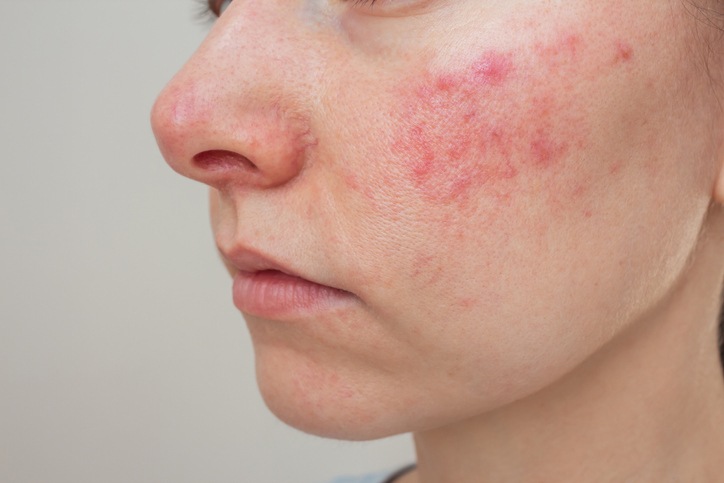
    Redness is the result of blood vessels close to the surface of the skin. There is regular redness – this may be genetic, maybe you run hot – then we have redness caused by inflammation, known as rosacea.

    We have very effective laser treatments that remove the tiny blood vessels, reducing the visible impact of being hot, flushed or generally blotchy or red. This treatment works the same for any blood vessel condition, minor or major.

    If you have red cheeks or a red face all the time,  you may benefit from a consultation with a dermatologist to look into the cause. Sometimes a skin treatment isn’t the most appropriate way forward here.

    Rough or dry skin

    The outer layer of skin is by design made up of hard, dead skin cells – the keratinised layer of skin that protects us from the outside world. Keratinised skin, because it’s dead skin cells, can easily become dry, flakey and rough. Think of elbows, knees and heels.

    These dead skin cells can also lead to face appearing dry, dull and lacklustre. The solution is to get rid of the skin cells. We achieve this with several tools, for example, laser resurfacing, chemical peels and microdermabrasion. The top layer of dull skin is removed, revealing the fresh skin underneath.

    Acne or acne scarring

    Acne and acne scarring are two very distinct problems with individual solutions. Acne is an active skin infection, while acne scarring is the result of a specific skin injury. Acne scars develop due to a space created underneath the skin, in the pore, by the infection, that is then filled in with scar tissue.

    We have several strategies for managing acne, including hormonal management and very targeted skin treatments. Skin treatments include light- and wave-based devices to kill bacteria and promote skin health.

    Acne scar treatments often include collagen remodelling to change how scars appear, but depending on the type of scar, we can also work to resurface the skin.

    We are skin experts who prefer to use non-invasive strategies to achieve your skin goals. We have such an amazing array of tools at our disposal, so come in for a consultation so we can show some of them off to you! We feel confident that we can help you have more beautiful skin, whatever that means to you.

    At ENRICH Clinic, we have three expert dermatologists, including our founder Dr Michael Rich, Dr Lena Ly and Dr Charles Xie

    We are experienced cosmetic dermatologists & phsicians.
    Contact us for an appointment

  • Why two skin treatments can offer 3X the result

    Why two skin treatments can offer 3X the result

    Combining skin treatments may seem like double the effort, but it could offer triple the benefit. There is no single ‘best’ treatment when it comes to your skin. Often a few excellent procedures combine that offer, together, even better results than you’d see with just one treatment alone.

    If you are concerned about signs of ageing (wrinkles, blemishes, brown spots or sallow cheeks), you aren’t going to find one single best treatment. A laser may work well on your skin tone, while an anti-wrinkle injection may be useful to stave off a deep wrinkle.

    Age and sunspots are treated with a laser, chemical peel or another light-based treatment, while sallow cheeks can also be treated with hydration increasing treatments.

    Finding treatments that complement one another is key to getting the 1 + 1 = 3 effect. We love combining treatments because the results can often be three times more effective!

    Ageing is a complicated process

    There is no one-size-fits-all when it comes to how your face is going to age or what concerns you the most. There is an intricate pattern of wrinkles, some that stay static (like a frown line) and those that appear on flatter surfaces of the skin (think forehead and cheeks).

    We lose facial volume, which in turn results in new folds and contours appearing over time. Blood vessels can also become more prominent.

    The multifaceted process of ageing, therefore, is best served with a combination cosmetic approach.

    Treatments that work well in combination

    Needling, lasers, intense pulsed light (IPL), microdermabrasion, chemical peels, hydration treatments and high-quality skincare products can all be used together in various combinations for positve cosmetic outcomes.

    We use these combos a lot at ENRICH Clinic, where Dr Michael Rich is a great proponent of the multi-treatment approach. The treatments can often be performed in one appointment but may be scheduled over several appointments where necessary.

    Classic treatment combos

    • Laser and radiofrequency
    • Hydration and wrinkle reducing treatments
    • Acne medication and topical acne or acne scarring treatments
    • Skin needling (The Secret) and chemical peels
    • Peels & Diodes
    • Ultraformer (HIFU) and lasers

    What is the best cosmetic treatment combination?

    The best cosmetic treatment combination for you depends on your skin concerns. Talk to your cosmetic dermatologist or doctor to see what their thoughts are. Consultations are the key as well as developing a long-term plan for your skin health, and also handy for budgeting!  Combination treatments can be different for everyone and depends on ou skin type, age, diet, gender and genetics.

    A break between treatments may be necessary, so your skin can do its thing

    Some procedures are, by necessity, performed away from others. For example, a robust collagen-boosting treatment requires at least a month, if not more, to reach its maximum potential. There’s not much point in doing more collagen-boosting treatments over the top. Your skin is already maxing itself out. However, this doesn’t mean you can’t do wrinkle-reducing treatment or even a pampering, ultra-hydrating facial.

    Other treatments require a break due to the way they function in the skin. For example, certain needle-based treatments need time to settle before other skin treatments go over the top. This timing is in place because the liquid can migrate, or the skin has been pierced so you have to be careful of infection for at least 24 hours — also, no facial massage after any kind of needling.

    Swelling from some treatments may impede the effect of others, so a break for healing may be useful for the best outcomes for some combined treatments. You don’t have to have them done in the same appointment for the combination treatment effect to come into play.

    Using lasers and other wave-based treatments in combination

    Some cosmetic devices are designed to penetrate more deeply than others, which is why we may utilise the powers of two or more wave-based devices as a combination treatment.

    One such combination may be a radiofrequency device, which penetrates deeper layers, with a laser that works on the skin’s surface. This way, skin gets a deep treatment that stimulates, tightens and strengthens as well as undergoes a smoothing, brightening, resurfacing treatment. Here’s a paper on a study that reviewed how certain combination treatments can be effective.

    Your cosmetic doctor knows the best combination of treatments. 

    If you’re not sure what you need, don’t worry! We do. Come in for a consultation, and we’ll help you figure out the best course of action for your skin.


    Let us get the most out of your skin.
    Contact us for an appointment

    ENRICH Clinic

  • What does a dermatologist do?

    What does a dermatologist do?

    We define a dermatologist is an expert medical professional who works to diagnose, treat and prevent skin, hair and nail conditions. A cosmetic dermatologist specialises in the aesthetics of the skin, and may work on anti-ageing and beautifying skin.

    In Australia, you need a referral from your regular doctor to see a dermatologist, but you do not need a referral for cosmetic dermatology appointments. Many costs may be partially or fully covered by medicare or private health insurance for referred medical treatments, however cosmetic treatments are paid privately, with some exceptions.

    Dermatologist qualifications – how do we define a dermatologist?

    Dermatologists in Australia complete a six-year medical degree, which requires another several years of full-time training and practice as a hospital junior. Then, a doctor must complete four years of specialist training to become qualified as a dermatologist and complete their dermatologist qualifications.

    The Australiasian College of Dermatologists is the only accredited provider of this specialist training and dermatologist qualifications. This College is the only provider who can define ‘dermatologist’ legally in Australia.

    dermstologist in melbourne

    Define dermatologist – what does a dermatologist do?

    Because the skin is the largest organ of the human body, many complaints taken to a doctor are skin-related. Your regular doctor can deal with many minor skin complaints, but a referral may be required if the problem is beyond their scope of practice or ability to diagnose or treat you. This is the domain of the dermatologist.

    Define a dermatologist – who does a dermatologist with the correct qualifications treat?

    Dermatologists treat everyone, from babies to the elderly, for all skin conditions. In Australia, sunspots and skin cancers may play a large part in clinical practice due to our lack of ozone and our love of the outdoors.

    Common conditions a dermatologist treats include:

    Define a dermatologist – what treatments do dermatologists use?

    The treatment you are offered will depend on the problem you present with, but dermatologists have a wide range of tools at their disposal to treat various conditions. This includes lasers, light and wave-based devices, and creams, ointments and drugs.

    dermatology clinic in melbourne

    Define a dermatologist – Does a cosmetic dermatologist need extra dermatologist qualifications?

    While a cosmetic dermatologist is the same as a regular dermatologist, their private practice includes what’s known as aesthetic medicine. A cosmetic dermatologist also treats the regular set of issues of skin, hair and nails, but has an interest in cosmetic outcomes too.

    ‘Cosmetic’ means the look, or aesthetics, of something, but this doesn’t mean cosmetic dermatology is overly focused on ‘superficial beauty’. Being able to put your best face forward to the world matters, and to some people this means treating parts of their face or body the same way we might get braces.

    A cosmetic dermatologist has the expertise and equipment to solve sometimes embarrassing or uncomfortable issues that may affect our day-to-day life. This includes scarring, pigmentation, and the shape of our faces after surgery or trauma. The realm of the cosmetic dermatologist is wide and varied, and helps people feel good about themselves in some way, big or small.

    A dermatologist performing cosmetic procedures is trained in the treatments they apply.

    Define a dermatologist – a cosmetic dermatologist may perform:

    • Non-surgical nose or facial augmentation
    • Anti-ageing treatments such as dermal  or wrinkle reducing treatments
    • Laser and light/wave-based treatments to improve skin quality
    • Treatments for skin tone or texture
    • Removal of visible blood vessels around the nose or cheeks
    • Removal or fading of scarring or pigmentation/birthmarks
    • Hair regrowth strategies after hair loss in men and women
    • Laser hair removal
    • Laser tattoo removal
    • Skin tightening
    • Penile treatments –  papule removal

    Cosmetic dermatologists have a huge range of state-of-the-art technology in their clinics, and are well-placed to treat the aesthetics of skin, hair and nails. At ENRICH, Dr Michael Rich and his team are dedicated dermatologists and doctors, treating all dermatological conditions and providing cosmetic dermatology services.

    The ENRICH team of specialist dermatologists and cosmetic doctors are experienced professionals.

    The team at ENRICH consists of dermatologists and cosmetic doctors each with their own special interests:

    Dr Michael Rich – MBBS, FACD

    Dr Michael Rich, founder and director of the ENRICH Clinic, is a dermatologist specialising in dermatology and cosmetic dermatology and surgery.

    Dr Michael Rich is a specialist dermatologist who practices in clinical dermatology, aesthetic dermatology and surgery. He established the clinical dermatology and cosmetic practice – ENRICH Clinic which is based in Melbourne and has been practising for over 30 years.Dr Rich was the Founder and 2015 and 2016 President of the Skin and Cancer Foundation of Victoria (now Skin Health Institute), a centre of dermatological and skin health and a training facility closely affiliated with the University of Melbourne and St Vincent’s Hospital.

    Dr Priscilla Auyeng – MBBS, FRACP, FRCPA, PHD

    Dr Auyeng has completed specialist training in clinical immunology, allergy and immunopathology, and is ENRICH’s allergy expert. Think hayfever, hives and eczema, and mast-cell disorders, this is where Dr Auyeng can help.

     Dr Maria Milone MBBS, FRACGP, DIP OBS

    Dr Milone is a practising GP and cosmetic practitioner with a special interest in sweat disorders, skin rejuvenation techniques and cosmetic treatments. Dr Milone focuses on cosmetic techniques that minimise patient discomfort and give the most natural outcome.

     Dr Afrah Mazhar MBBS, FRACGP

    Dr Mazhar is one of ENRICH’s cosmetic facial treatment experts, with a keen interest in and a knack for lasers, anti-ageing treatments and other cosmetic treatments. Dr Mazhar firmly believes that every face is beautiful and that this beauty can be enhanced, not created.

     Dr Lena Ly  MBBS, FACD,

    Dr Lena Ly is passionate about Dermatology. Dr Ly’s areas of interest include eczema in children and adults, allergies, hair, nails, skin cancer and sweating disorders.

    We have a dermatologist or cosmetic doctor that could help you 
    Contact ENRICH to make an appointment with our specialists today

  • Manuka honey studied as a treatment for eczema

    Manuka honey studied as a treatment for eczema

    A study has looked closer at manuka honey as a topical treatment for eczema (atopic dermatitis). The Saudi Arabian study was conducted only after patients reported to their doctor that they were finding relief after applying manuka honey to skin affected by the dry, itchy eczema, with impressive results. 

    Manuka honey has long been known to have medicinal qualities, and is regularly used in wound care and as a burns treatment. Some studies have looked into its use in antibiotic resistance, with multiple studies currently underway.

    Dr Abdullah A. Alangari, an allergist, published his study in an issue of Immunity, Inflammation and Disease, a medical journal. The study looked at 16 eczema sufferers, eight women and eight men, however two people had to leave the study because their symptoms became worse and they required a different treatment. This left 14 people in the study. The patients were asked to put manuka honey on one side of their body, where eczema affected both sides equally, for example on the inner elbows or knees. The observation was that the treated side improved more than the untreated side.

    The three-item severity score was significantly lower after one week of treatment, with no significant differences in the scores of control lesions pre and post treatment. The honey was well tolerated, with no adverse events recorded after a week of the study.

    It is understood that Staphylococcus aureus colonises the skin when it is damaged by eczema, however tests before and after treatment saw no differences in skin staphylococci. They did discover that the honey significantly downregulated certain skin secretions in a dose-dependent way, and significantly inhibited mast cell degranulation via histamine release.

    If you want to use manuka honey for your eczema, we advise you to buy the good stuff, with New Zealand manuka honey being more potent than Australian. It costs more, but the active ingredients are abundant, and you’ll see a better outcome than if you buy it off the supermarket shelf. Do not buy pasteurised manuka honey.

    Got eczema that needs treating with more than manuka honey?
    We can help.
    Contact us

  • Actinic (solar) elastosis – understanding and treatment

    Actinic (solar) elastosis – understanding and treatment

    Actinic (solar) elastosisActinic elastosis is a skin condition caused by solar radiation that results in a form of dermatitis. Skin looks rough, thickened and wrinkled (leathery), with a yellowish hue, and possibly papules or discolouration.

    This condition most often appears in an elderly or middle-aged person with a history of long-term sun exposure, but anyone exposed to the sun or UV light over a long period of time can be affected. This might include golfers, tennis players, farmers, those living and working on boats, and those who work outside. Anyone with fair skin is at a greater risk.

    Actinic = caused by light
    Elastosis = fragmented elastin fibres

    Why does actinic elastosis happen?

    It’s believed that after extensive UV exposure, changes in the skin occur that result in new collagen fibres being crowded in with the fragmented elastin fibres, where the elastin becomes coarse, twisted, branched and dense, causing masses in the top of the skin.

    It is still under debate whether the elastic material is produced as part of a degrading process, or abnormal development of new tissue, or a combination of both. There may be a two-phase process occurring whereby normal elastic fibres collect in the dermis (top layer of skin), then elastic tissue degradation occurs. There are also theories that involve immune cells releasing enzymes that breakdown the collagen and elastin, causing the actinic elastosis.

    Regardless, sun exposure causes inflammation which causes the degradation process. The main risks are skin cancer development and for some people, the appearance of it is displeasing.

    Treatments for actinic elastosis

    Actinic elastosis is treated with topical solutions, namely chemical peels. It can also be treated with skin resurfacing treatments such as dermabrasion or microdermabrasion, and other in-clinic dermatological treatments as required.

    Lasers provide an excellent option, but downtime can be a concern, since the goal is to remove the layers of skin that are causing the appearance and cancer risk. A CO2 laser will cause the most downtime (three weeks), with fractional lasers taking about one week of recovery. Chemical peels of the right depth may take two weeks to recover from. The treatments require depths to be reached beyond a normal skin treatment. Photodynamic therapy uses light plus a photosensitiser. Prescription-only topical creams may be applied for rougher skin.

    Got sun damage?
    We have solutions.
    Contact us

  • Treating dandruff in the dermatology clinic

    Treating dandruff in the dermatology clinic

    dermatology dandruff treatment melbourneDandruff – a flaky, itchy scalp – is a bit of a mystery to the medical community, with the exact cause unknown. Just about everyone agrees, however, that dandruff is not caused by being unclean.

    We do know a few things about dandruff, with the causes and some management strategies all part of the puzzle.

    What we know about dandruff:

    • Many people find that their dandruff improves as they age
    • It is believed that around half of those living in Western Europe and North America have dandruff
    • Men get dandruff more often than women
    • People with oily skin get more dandruff than those with drier skin
    • Diet may play a part – too sweet, salty or spicy, plus excess alcohol, may make dandruff worse

    Some known contributing factors to dandruff:

    • Seborrheic dermatitis – oily, irritated skin that is covered with flaky white or yellow scales, closely linked with a fungus (Malassezia) that lives on everyone’s scalp. This fungus uses our natural hair oils to survive, which can get out of control. Dandruff may be the result of irritation that causes extra skin cells to be produced – as these skin cells fall off, they mix with oil and appear as dandruff.
    • Insufficient hair brushing – keeping dead skin cells out of your hair by brushing can help keep hair free from debris.
    • Yeasts – yeast may play a part, in which case dandruff will become worse in winter and feel better in summer. UV light tends to help kill off yeasts.
    • Prone to dry skin – if you often have dry skin, having dandruff becomes more likely. Dry skin itches and flakes anywhere on the body, and this type of dandruff is not oily, but dry.
    • Skin conditions – those with psoriasis and eczema may get more dandruff.
    • Parkinson’s, neurological illness, stroke – some people with neurological and other diseases can be prone to having dandruff and seborrheic dermatitis.
    • Irritation reaction – if you are sensitive to your shampoo or other hair-care products, you may be inadvertently causing dandruff.
    • HIV – just over 10 per cent of those living with HIV will have seborrheic dermatitis.

    Treatments for dandruff

    Treating dandruff typically centres around slowing down the skin-cell turnover or stemming the growth of fungus. Anti-dandruff shampoo is readily available, containing special ingredients that tend to block fungal growth temporarily. Active ingredients include ketoconazole, selenium sulfide, zinc pyrithione, coal tar, salicylic acid, tea tree oil, or green tea extracts. Use of these shampoos every day until the problem gets under control can usually help manage dandruff.

    These shampoos need good scalp surface area connection for several minutes to exert their effect, so don’t wash it off too quickly. Additionally, a trip to a dermatologist to see what the problem might be – and how to treat it with more effective solutions than shampoo – may be in order. Your dermatologist can test your scalp to check what exactly is going on, and provide tailored treatments.

    Treat the cause of your dandruff, not just the symptoms.
    Contact us