Category: Snoring Treatments

  • Can snoring be dangerous? We detail the top 5 problems that might be contributing to your snoring!

    Can snoring be dangerous? We detail the top 5 problems that might be contributing to your snoring!


    men's treatments

    If you or someone you live with snores, you’ll know what a disturbing effect it can have on enjoying a quality night’s sleep! Snorers (or their partners) may feel increasingly tired and unable to obtain restful, deep sleep. If snoring is an issue for you, ENRICH Clinic can help. The Romeo laser we use in treatments is effective and comfortable and can help reduce your snoring. Required treatments range from 1 – 3, depending on the patient.

    Snoring is the sound of the soft tissue in the back of your throat vibrating as you breathe whilst still asleep. Whilst we know the impact it can have on a good night’s sleep, did you know that snoring might be a sign of more serious health issues? Here, we discuss the top four reasons that can cause snoring and outline our clinic’s approach to treatment.

    What causes snoring?

    Snoring can be the result of a combination of different physical factors.

    1. The anatomy of the mouth and nasal airways
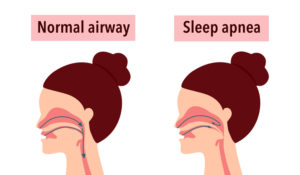
    The anatomy of the mouth and nasal airways can contribute to snoring. If the airways are blocked, a snoring sound will occur. The snoring can be temporary, perhaps due to allergies or infection (think being sick with a cold and struggling to breathe freely overnight!), or more permanent and severe due to the nostrils’ shape and anatomy of the mouth and airways.

    2. Soft tissue

    If the soft palate and uvula are lacking in tone, thus narrowing the airway, snoring can occur due to the contact of the uvula on the throat and soft palate.

    3. Low muscle tone in the tongue and throat muscles

    The mouth and throat are comprised of muscles, and if they are too relaxed, they can collapse and loosen in the airways, resulting in snoring. Muscle relaxation can occur temporarily from alcohol consumption or the use of some medications (you might find you snore after falling asleep after a few too many!), as well as from general muscle laxity as we age.

    4. Being overweight

    If you are overweight, it is likely that you may have excess fat around the neck. This can lead to extra pressure on the airways when sleeping. In addition, oversized tonsils and adenoids can also become an issue, but this is usually only temporary.

    5. Gender

    Causes of snoring in females

    Pregnancy and menopause are two significant life stages that can influence snoring in women through hormonal and physical changes. 

    Snoring during pregnancy is often due to hormonal changes that cause nasal passage swelling, combined with weight gain that narrows the airways in the neck and throat. This issue typically intensifies in the third trimester but usually diminishes after giving birth.

    During and after menopause, a decrease in estrogen and progesterone, hormones that experts believe help protect against snoring, can increase snoring. This, coupled with common post-menopausal weight gain, can narrow the airways and change breathing patterns during sleep, further contributing to snoring.

    Causes of snoring in men

    Snoring in men is often attributed to distinct anatomical and physiological traits. The larger oropharynx in men, resulting from bigger upper airways and a lower larynx, increases the likelihood of airway obstruction during sleep, leading to snoring. 

    Also, men typically accumulate more fat in their upper chest and neck, further narrowing the airways and making snoring more likely. 

    Lastly, the change in the structure of the airways when transitioning from sitting to lying down is more pronounced in men, leading to increased airway obstruction in this position.

    Other factors include:

    • Alcohol or sedative consumption
    • Smoking
    • Allergies or a cold with nasal congestion
    • Sleep position
    • Natural aging processes
    • Decline in collagen

    When should snoring be a concern?

    • Witnessed breathing pauses during sleep
    • Excessive daytime sleepiness
    • Difficulty concentrating
    • Morning headaches
    • Sore throat upon awakening
    • Restless sleep
    • Gasping or choking at night
    • High blood pressure
    • Chest pain at night
    • Your snoring is so loud it’s disrupting your partner’s sleep

    These symptoms are associated with obstructive sleep apnoea.

    Do I have sleep apnoea?
    snoring treatments

    It’s important to note that not all snoring is the result of sleep apnoea. Sleep apnoea occurs when the walls of the throat close together during sleep, blocking off the upper airway. Breathing stops for a while (generally between ten seconds and up to one minute) until the brain registers the lack of breathing or a drop in oxygen levels and sends a small wake-up call to the body. Often, the person suffering from sleep apnoea doesn’t even realise they have woken up. The pattern can repeat itself hundreds of times each night, causing fragmented and disrupted sleep. This can result in excessive daytime sleepiness, poor daytime concentration, and fatigue. Approximately five per cent of Australians suffer from this sleep disorder, with around one in four men over the age of thirty years affected.

    Sleep apnoea is treated differently from snoring and must be investigated and ruled out by the treating doctor. It is quite a serious issue, sleep apnoea and can have some health implications, so please check in with your GP and, if need be, see an Ear, Nose & Throat specialist if you suspect you have sleep apnoea.

    We do not treat sleep apnoea here at ENRICH Clinic.

    How do I stop my snoring?

    Lose weight

    Extra weight, especially around the neck, can compress and narrow the airways. Losing weight can alleviate this pressure and improve airflow during sleep.

    Avoid alcohol close to bedtime

    Avoiding alcoholic beverages a few hours before going to bed can help keep these muscles firm, reducing the likelihood of snoring.

    Treat nasal congestion

    Addressing the cause of congestion, whether allergies, a cold, or a structural issue like a deviated septum, can help improve breathing and reduce snoring. 

    Avoid sleep deprivation

    When you’re sleep-deprived, you tend to sleep more deeply the next time you catch up on sleep, causing the muscles in your throat to relax more than usual, which can worsen snoring.

    Avoid sleeping on your back

    Sleeping on your back can cause the tongue and soft palate to collapse to the back of your throat, blocking the airway and leading to snoring. Sleeping on your side can help keep the airway open.

    Seek medical treatment

    If lifestyle changes aren’t effective, seek medical advice. A healthcare provider can assess for underlying conditions like obstructive sleep apnea, which may require specific treatments such as Continuous Positive Airway Pressure (CPAP) therapy, oral appliances, or, in some cases, surgery.

    Romeo, Romeo wherefore art thou Romeo – Snoring treatments at ENRICH Clinic

    The Romeo procedure is a snoring treatment that delivers laser to the soft palate, which causes stimulation and tightening of collagen that firms up the soft palate. This change results in decreased vibrations and decreased snoring. This leads to a reduction in the vibration of the tissue and snoring when the patient is asleep. The treatment itself is very comfortable for the patient. It is normal to experience a warm sensation at the back of the throat as the laser tightens the tissue, but this is tolerable. Post-treatment recovery is usually quick, and there is no downtime with the Romeo laser – many patients return to work immediately.

    Research has shown that snoring can be reduced by up to 60% after two or three treatments with ENRICH Clinic’s high-tech target lasers designed to tighten the soft palate and stop snoring. The laser has minimal downtime, with doctors suggesting you might have a few days with a sore throat feeling. Following the treatment, we recommend avoiding cold foods, fizzy drinks and no smoking or alcohol for 24-48 hours. For best results, patients will undergo two to three treatments at four-week intervals.

    Contact us for an appointment to stop snoring today.

  • The nose knows

    The nose knows

    Our noses are one of our most prominent facial features, though most people pay little attention to it. If you’ve always had a ‘thing’ about your nose, but the idea of invasive and painful rhinoplasty surgery is daunting, we’ve got nonsurgical rhinoplasty options. 

    Nose treatments we offer include:

    Non-surgical nose job and enhancement options

    In the past, the only pathway to a more attractive nose was a surgical nose job and its attendant pain and extended recovery times. There are now non-surgical treatment options to enhance the appearance of your nose without rhinoplasty surgery. 

    A nose job without surgery – how is that possible?

    Answer: the dermal filler nose job.

    Our non-surgical nose job is performed in-house with minimal discomfort and a much quicker recovery than traditional nose job recovery times – walk out with a new nose thanks to strategically placed dermal filler injections. 

    The dermal filler nose job performed by one of our experienced cosmetic doctors smoothes out irregularities and can make a large nose seem smaller or a bumpy nose seem smooth. In the hands of our expert cosmetic dermatologists, injectable nose filler augments the nose by offering greater symmetry. 

    With a deep understanding of aesthetic principles and anatomy, ENRICH’s cosmetic specialists may recommend a once-off or several treatments over a few months to obtain the best results.

    We know that the secret to a beautiful nose is all about enhancing what nature gave you, sometimes with very little filler. Nose fillers can round out a flat nose bridge or create symmetry where a nose hollows on one side. 

    We can:

    • Reshape the nose bridge
    • Adjust the angle of the nose tip
    • Reduce the appearance of nose length
    • Fill out hollows on either side of the nose to create symmetry
    • Enhance or minimise the space between the end of the nose and the upper lip

    Results can last for up to two years without impacting or damaging nasal passages. Your practitioner will also instruct you on enhancing the effects of your non-surgical procedure with a regime of good hydration, skincare and top-up injections.

    Rhinophyma treatment in Melbourne

    For those living with the disfiguring skin condition rhinophyma, your confidence may have taken a battering. Rhinophyma mainly affects the nose, causing the skin to thicken and appear lumpy due to enlarged pores and open sebaceous glands. Rhinophyma can result in permanent disfigurement if left untreated.

    We offer two rhinophyma treatment options: 

    • Topical medications
    • Laser resurfacing using the ultra pulse CO2 laser and Erbium CO2 laser

    Our dermatologists develop a treatment program just for you. While it may take several months to see results with more invasive laser treatments, these are often very effective and a worthwhile course of treatment. 

    What causes rhinophyma? 

    There are differing theories as to what causes rhinophyma. However, we understand that enlarged blood vessels and a weakening of the vascular systems can cause fluid to leak into nose tissue. 

    Patients with the condition may start to see:

    • Thin, red blood vessels appear on the tip of the nose (telangiectasia)
    • Further enlargement of these blood vessels over time and an increase in a purplish hue (venulectasias)
    • Pitted and thickened skin on the tip of the nose
    • Enlarged sebaceous (oil) glands which may ooze sebum

    Time to get your nose back – rhinophyma treatments

    Our non-surgical treatment options at ENRICH Clinic in Melbourne include topical treatments which may help to reduce the round, bulky growths on the end of the nose in the first instance.

    Where rhinophyma is more advanced, our experienced doctors may recommend laser resurfacing the nose using the CO2 ultra pulse laser first, followed by the Erbium CO2 laser. This laser procedure involves the removal of the damaged outer layers of skin on the nose and may take at least 7-10 days to complete. While redness of the nose may last for some time after the procedure, the results can last much longer than topical applications or an oral medication program.

    Getting serious about snoring

    When snorers go to sleep, the soft tissue at the back of the throat relaxes, producing vibrations with each breath. Snoring is bad for your health and the health of anyone you share a bed with and is an indicator of poor sleep. Snoring can be the trigger for or a symptom of other health issues. 

    It is important to note that obstructive sleep apnoea is a different condition whereby a person stops breathing for short periods during sleep. Your doctor should rule out sleep apnoea before you proceed with snoring treatment. Speak to your doctor about testing. 

    SnoreLess with us 

    The SnoreLess Program at ENRICH Clinic uses lasers and radiofrequency treatments to reduce the soft tissue at the back of the throat and tighten the soft palate, thereby reducing throat vibrations during sleep. 

    In this half-hour procedure, the Romeo laser heats the tissue of the soft palate to tighten it. There is no downtime after the treatment, although you should avoid cold food, drinks, and exercise before and on the day of the surgery. 

    A month after the initial procedure, you may require follow-up treatment, followed by bi-annual or as-needed treatments for optimal results.

    To find out more about our nose treatment options, get in touch.

    ENRICH Clinic

  • Causes and treatments for snoring

    Causes and treatments for snoring

    There are a solid handful of treatment options for snoring, all of which have varying degrees of success. At ENRICH Clinic, we believe that the Romeo laser is one of the most effective snoring treatments available.

    The Romeo laser is a type of laser known as an Erbium: YAG laser, a device that offers fractional laser therapy. Fractional lasers cause deliberate, precise microscopic damage to the mucosal membrane: the soft palate (the roof of your mouth) and the uvula (the little dangly thing at the back of your throat).

    This microscopic damage triggers the tightening of treated tissue, resulting in a marked reduction in the vibrations caused by breathing – snoring. The Romeo laser treatments stabilise the soft palate and thus reduce snoring, sometimes dramatically.snoring treatments melbourne

     The Romeo handpiece – unique amongst handpieces

    Lasers have one or more handpieces that make them suitable to use for different applications, which often means different areas of the body. The Romeo handpiece, custom-designed for the anti-snoring task, has an optic adapter with a single-use sterile cover to maximise hygiene, and the treatments are comfortable, gentle and effective.

    This laser handpiece is the only one like it in the world.

    What does ‘fractional’ mean?

    A fractional laser beam isn’t as complicated as it sounds, so bear with. ‘Fractional’ in this context means ‘some but not all’ – a fraction.

    A fractional laser beam is split up into partial rays, so think of a showerhead setup. You still get the full force of water pressure, but it’s split into partial sections instead of coming out as a tap does in one stream.

    This split-into-bits system makes better use of the rays since the areas of tissue in between the rays are left untreated and thus support the healing of the treated columns.

    The Romeo has 169 partial rays in every 5 x 5 mm grid. When we treat just 169 single columns of tissue within this grid, healing is faster, since we microscopically damage just a fraction of the tissue within the grid.man sleeping snoring

    How does the Romeo tighten the soft palate and reduce snoring?

    Collagen and elastin are the protein fibres that hold our bodies together, keeping our tissue strong and flexible. When the laser rays penetrate and cause microdamage to select areas of the soft palate, collagen and elastin production is triggered.

    In addition to this, the collagen and elastin fibres that already exist contract with the heat energy of the laser, making them instantly tighter.

    Top questions: 

     Does it hurt?

    No, the treatment doesn’t hurt and does not require an anaesthetic.

    Can I go back to work, school, or whatever afterwards?

    Yes, the Romeo snoring treatment has zero downtime. You can get back to your regular activities immediately afterwards. You can expect no side-effects, but there have been reports of a temporary sore throat.

    How long does the treatment take? 

    The Romeo laser treatment where we treat the soft palate is very quick, the whole treatment taking just  20- 30 minutes, patient depending.

    How many treatments do I need for optimal results?

    You’ll need at least two Romeo treatments performed a month apart. Another treatment may be necessary, but that’s a conversation between you and your doctor and depends on your response to the previous two treatments. If two treatments have gotten you great results and you’re happy, there may be no need for another treatment at that point.

    Touch-up treatments are scheduled once per year, so you will need to come back at specific intervals. The natural ageing process means the treatments don’t last forever.

    Is the Romeo snoring treatment only for men?

    No, women who snore also benefit just as much from the Romeo laser treatments. There is a common misconception that women don’t snore or don’t snore as much as men. Women tend to snore more softly than men due to general size differences and the shape of our necks and heads.

    Women’s snoring is a much bigger problem than is recognised, even by the snorers themselves or their bed partners. Snoring of any kind disrupts the breathing, and thus the sleep, of the snorer. Soft snoring is still snoring, and snoring is a sign of unhealthy sleep.

    Women who snore are encouraged to see their GP for a referral to a sleep specialist who can determine the cause of the snoring and identify any underlying medical conditions that may be interfering with healthy sleep.

    So everyone can have the treatment?

    Most people able to have the treatment, but there are some cases where the treatment may not be viable for various reasons. It is important that you have a consult first to determine your suitability.

    Scientific research into the Romeo for snoring

    The pilot study, conducted in 2016, took nine men and one woman with severe snoring and treated them with the Romeo handpiece. There were no adverse events recorded, and the reduction in snoring in all patients was significant.

    Within 4-6 months, there was a reduction in the severity of snoring of between 40 and 60 per cent. Over half the study participants and their bed partners reported ‘excellent improvement’ in problem snoring.

    Another study on 40 snorers found that 85 per cent of participants were ‘very satisfied’ with the treatment. Out of 40 participants, just one person wasn’t satisfied with the treatment.

    Participants also reported much more frequent dreaming during the night, indicating a deeper sleep state. Results were stable at 20 months follow-up.

    Snoring?
    We can help.
    Contact us

    ENRICH Clinic

  • Why you snore and how it’s treated

    Why you snore and how it’s treated

    man who snoresThere is usually only one reason why the airway causes noise during sleep, with the main issue being something – tissue – partially blocking the airway. This causes the air passing to cause the tissue to vibrate. This vibration causes the loud noise of snoring. Snoring is often related to the position or size of the jaw, nasal passages, throat and mouth.

    The most common causes of snoring

    • Nasal congestion (hayfever, cold)
    • Deformed or irregularly-shaped nose and nasal cavity
    • Swollen adenoids or tonsils
    • Sleep position
    • Being overweight
    • Allergies
    • Food intolerances
    • Pregnancy
    • Over-eating at night
    • Some medications

    Typical treatments for snoring

    If snoring is disruptive to sleep (of you or someone else next to you), an overnight sleep study may be undertaken to find out the exact nature of your snoring. A sleep disorder assessment will be made to check for, in particular, obstructive sleep apnoea (OSA). Treatment will depend heavily on the cause of your snoring, your age, body weight, medical history, airway anatomy, and other factors.

    Some common treatments include:

    • Adhesive devices covering the nostrils
    • Sleeping only on your side using special devices
    • Losing weight
    • Quitting smoking
    • Special dental devices to hold the mouth in a certain position
    • For OSA the use of a special air pump
    • Nasal steroids
    • Allergy treatments
    • Nasal sprays
    • Surgery to open passageways
    • Nasal strips
    • Reducing use of alcohol and sedative drugs at bedtime
    • Radiofrequency and laser assisted treatments, which we offer at ENRICH

    Treatment varies depending on the cause, so you need to have your snoring investigated by a specialist to rule out more serious conditions prior to visiting our clinic for assistance with snoring. We have state-of-the-art equipment with a proven track record for helping snorers and their loved ones get a better night’s sleep.

    Got a snoring problem?
    We can help.
    Contact us

  • Solving snoring problems with an RF treatment

    Solving snoring problems with an RF treatment

    woman in bed snoringRadiofrequency can be used on the soft palate to shrink tissue, and help reduce or eliminate snoring. The point of this treatment is ultimately to reduce excess tissue in specific areas – the uvula and the soft palate. Collagen production is also stimulated during this process, which helps to firm up the tissue, lifting and tightening. This action helps reduce snoring, since loose tissue vibrates more easily.

    Radiofrequency is a useful treatment because it causes minimal pain and no bleeding, which can be associated with other techniques. A local anaesthetic is typically used for this treatment, which is quick to perform.

    The procedure

    Radiofrequency snoring treatments use carefully directed and controlled heat to exert an effect on tissue – thermal radiofrequency energy. A tiny electrode is placed in the mouth, with protections in place for other parts of the mouth that we don’t want affected. The tissue is heated without burning, which injures the target cells – these cells are then naturally reabsorbed into the body, thereby reducing the amount of tissue in those areas.

    Radiofrequency for snoring – recovery and results

    The procedure usually causes some swelling and a sore throat afterwards, which can be relieved using over-the-counter painkillers. The treatment takes a few weeks to have its full effect, as the injured cells are reabsorbed and taken away by your body’s garbage collectors. Several treatments may be required, but this is on an individual case-by-case basis.

    Your doctor will discuss with you your individual recovery expectations, including any time off normal activities.

    Got a snoring problem?
    We can help.
    Contact us