Category: Skin Rejuvenation

  • At Home Skin Needling Rollers – Do They Really Work?

    At Home Skin Needling Rollers – Do They Really Work?

    Skin needling has become one of the most talked-about treatments in modern skincare. From at-home dermal rollers to advanced clinical devices, the promise is the same: smoother, brighter, healthier-looking skin.

    But do at-home skin needling rollers actually work—and are they the best option for your skin?

    Let’s break it down

    What Is Skin Needling and What Does It Do to the Skin?
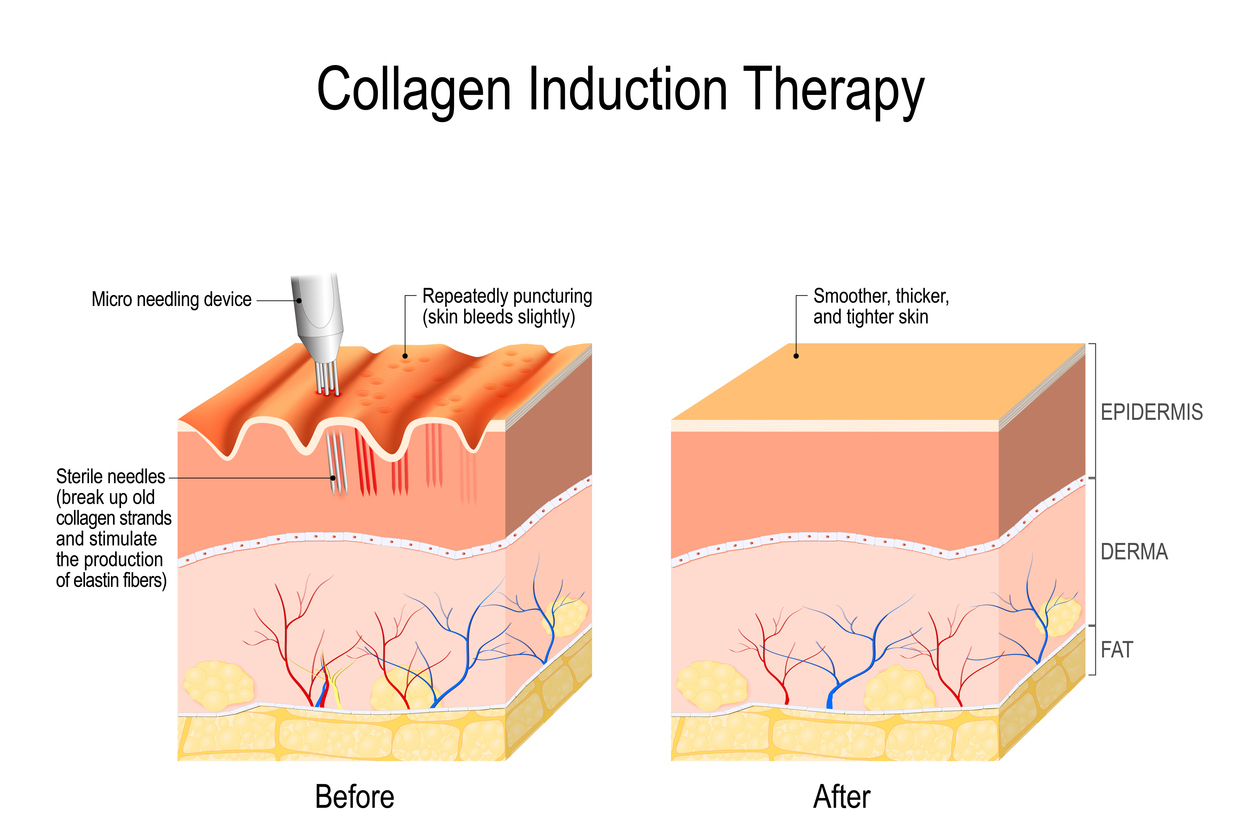
    Skin needling (also known as microneedling or collagen induction therapy) is a process that creates controlled micro-injuries in the skin using fine needles.

    These micro-injuries stimulate the skin’s natural repair process, leading to:

    • Increased collagen and elastin production
    • Improved skin texture and tone
    • Reduction in the appearance of fine lines
    • Support for acne scarring and pigmentation management

    In simple terms, skin needling encourages your skin to behave like it did when it was younger—repairing, renewing, and rebuilding.

    How Do At Home Skin Needling Rollers Work?

    At home dermal rollers use very short needles (typically 0.2mm–0.5mm) that roll across the skin to create superficial microchannels.

    These devices can:

    • Enhance product absorption
    • Gently stimulate the skin surface
    • Improve skin radiance over time

    However, their effects are generally mild and surface-level compared to professional treatments.

    Do Skin Needling Dermal Rollers Really Work?

    The honest answer is: yes—but with limitations.

    At home rollers can:

    ✔ Improve product penetration
    ✔ Support overall skin maintenance
    ✔ Give a temporary “glow” effect

    But they cannot:

    ✘ Reach deeper layers of the skin
    ✘ Significantly remodel collagen
    ✘ Effectively treat deeper acne scarring or wrinkles

    For more noticeable, longer-term skin changes, clinical skin needling treatments are required.

    Should You Use a Serum with a Dermal Roller?

    Yes—but this is where caution is essential.

    Because microneedling creates microchannels in the skin, anything you apply can penetrate more deeply than usual.

    Recommended:

    • Simple, hydrating serums (e.g. hyaluronic acid)
    • Barrier-supporting ingredients

    Avoid:

    • Active ingredients like retinol or strong acids
    • Fragranced or potentially irritating products

    Using the wrong serum can lead to irritation or adverse reactions—especially with repeated use.

    What Are the Risks of At-Home Skin Needling?

    While convenient, at-home devices come with risks if not used correctly:

    • Skin irritation and inflammation
    • Infection from poor hygiene
    • Worsening of pigmentation
    • Damage to the skin barrier

    If you are managing pigmentation or melasma, it’s best to seek professional advice 

    Clinical Skin Needling at ENRICH Clinic & DIV

    At ENRICH Clinic and Dermatology Institute of Victoria (DIV), skin needling is performed using advanced medical-grade devices under the supervision of trained professionals.

    Clinical Microneedling Benefits

    • Targets deeper layers of the skin
    • Stimulates significant collagen production
    • Improves Acne scarring  and texture
    • Supports long-term skin rejuvenation

    What Is the Secret RF Treatment?

    One of our most advanced options is the Secret RF (Radiofrequency Microneedling) treatment.

    This technology combines microneedling with radiofrequency energy to:

    • Deliver heat into deeper skin layers
    • Stimulate collagen more effectively
    • Improve skin firmness and texture
    • Address fine lines, acne scarring, and laxity

    At ENRICH Clinic, we have been performing advanced skin needling treatments, including Secret RF, for many years with consistently positive patient outcomes.

    At Home vs Clinical Skin Needling: What’s the Difference?

    Feature At-Home Rollers Clinical Treatments
    Needle depth Superficial Adjustable, deeper
    Results Mild, gradual More significant
    Safety User-dependent Professionally controlled
    Skin concerns treated General maintenance Scarring, ageing, pigmentation

    So… Should You Use a Dermal Roller at Home?

    At-home skin needling can be a useful addition to your skincare routine, but it should be viewed as maintenance—not treatment. It’s always best to speak with your dermatologist or skin health practitioner before starting to use a dermal roller. 

    If your goals include:

    • Acne scar reduction
    • Wrinkle improvement
    • Skin tightening
    • Pigmentation management

    Then professional treatments at ENRICH Clinic or DIV will deliver more effective and predictable outcomes.

    FAQs – At-Home Skin Needling

    Do dermal rollers work?
    They can improve product absorption and skin texture slightly, but the results are limited.

    How often should you use a dermal roller?
    Typically once every 1–2 weeks, depending on needle length and skin tolerance.

    Can skin needling damage the skin?
    Yes, if overused or used incorrectly, it can cause irritation or barrier damage.

    What serum should I use with microneedling?
    A gentle hydrating serum such as hyaluronic acid is usually recommended.

    Is professional microneedling better than at-home rollers?
    Yes, clinical treatments reach deeper layers and deliver more noticeable results.

    Does microneedling help with acne scars?
    Clinical microneedling may help improve the appearance of acne scarring over time.

     Book a consult or make an enquiry about skin needling today

  • Platysmal Bands & Neck Banding: Causes and Treatment Options

    Platysmal Bands & Neck Banding: Causes and Treatment Options

    Understanding Neck Banding (Platysmal Bands): Causes and Treatment Options

    Vertical neck bands, medically known as platysmal bands, are a common structural change that can develop as the skin and underlying muscles naturally change with age. While platysmal bands are harmless and part of normal ageing, some people choose to explore treatment options to improve the appearance of neck definition or skin texture.

    Both surgical and non-surgical management approaches exist. This article provides general educational information about platysmal bands, including factors that contribute to their development and treatment options that may be discussed with qualified healthcare professionals.

    What Are Platysmal Bands?

    The platysma is a thin sheet-like muscle that runs from the lower face down into the neck and upper chest. It contributes to facial expression, jaw movement and helps support the soft tissues of the neck.

    Over time, changes in the skin and muscle can lead to separation or tightening of muscle fibres, which may become visible as vertical neck bands.

    What Causes Neck Banding?

    Platysmal bands typically develop due to a combination of structural, environmental and genetic factors.

    Natural Ageing Changes

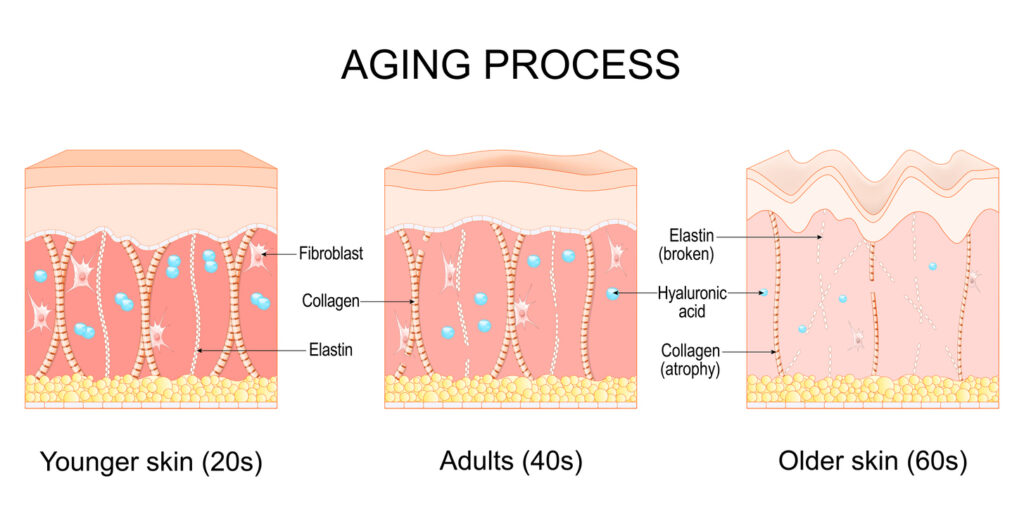
    Ageing causes gradual changes in collagen and elastin, which help maintain skin firmness and elasticity. These changes may make the platysma muscle more visible beneath the skin.

    Genetics

    Some individuals naturally have thinner skin or a more prominent platysma muscle, which may increase the visibility of neck banding.

    Repetitive Muscle Movement

    Regular movements such as jaw clenching, facial expressions and neck tension may contribute to muscle thickening and separation over time.

    Sun Exposure

    Ultraviolet (UV) exposure is known to contribute to collagen breakdown and premature skin ageing, which can influence neck skin quality.

    Weight Fluctuations

    Significant weight changes may stretch the skin and supporting tissues, sometimes increasing the appearance of neck laxity and banding.

    Surgical Management Options

    Surgical procedures are typically performed by specialist plastic surgeons. ENRICH Clinic and the Dermatology Institute of Victoria do not perform surgical neck lifting procedures, but patients may be referred for further surgical consultation when appropriate.

    Neck Lift (Platysmaplasty)

    A neck lift is a surgical procedure designed to reposition muscles and remove excess skin. It is generally considered when significant skin laxity or structural changes are present. As with all surgery, procedures involve recovery time and potential risks. Patients should discuss suitability and potential outcomes directly with a qualified surgeon.

    Other Surgical Techniques

    Less common surgical methods may include muscle modification or nerve-related procedures. Suitability varies between individuals and requires specialist assessment.

    DIV and Enrich Clinic do not perform any of these surgeries.  They are  performed by specialist plastic surgeons and facial plastic surgeons, particularly those with expertise in facial rejuvenation

    Non-Surgical Treatment Options

    Dermatology and cosmetic medicine may offer non-surgical treatments that focus on improving muscle activity, skin support or overall skin quality. Suitability varies between individuals, and outcomes differ depending on anatomy and ageing patterns.At clinics such as Dermatology Institute of Victoria (DIV) and ENRICH Clinic, treatment options may include the following.

    Prescription Muscle-softening  Treatments

    Treatment options that may help reduce muscle activity in the platysma include: This can soften the appearance of neck banding in some patients. Treatment is performed by appropriately trained medical practitioners and usually involves treatment into targeted muscle areas. Results vary between individuals and are temporary, requiring maintenance treatments if ongoing improvement is desired.

    Dermal Volume Support Treatments

    Dermal volume support treatments may be used to improve contour and support surrounding tissues in the neck and jawline region. These treatments may also support skin hydration and structure in selected patients. Suitability depends on skin thickness, tissue support and individual anatomy. Results are temporary and vary between individuals.

    Biostimulatory Skin Treatments

    Biostimulatory treatments such as Rejuran-1  focus on supporting the skin’s natural collagen-producing processes. These treatments are sometimes used to improve skin quality, elasticity and support in the neck and lower face. These treatments may be recommended as part of a personalised skin management plan.

    Treatments That May Support Overall Neck Skin Quality

    While some treatments focus on muscle activity or skin tightening, other dermatology treatments may support overall skin health and appearance.

    Radiofrequency Microneedling

    Radiofrequency (RF) microneedling treatments use controlled heat energy delivered through fine needles to stimulate collagen production and support skin tightening. At ENRICH Clinic, RF microneedling technology such as Secret RF is used to support skin quality, texture and mild laxity in the neck area. Multiple treatment sessions may be recommended, depending on individual goals and skin condition.

    Fractional Laser Skin Rejuvenation

    Fractional laser treatments may be used to improve skin texture, tone and early laxity. These treatments stimulate collagen renewal within the skin and may support overall neck rejuvenation. DIV and ENRICH Clinic provide fractional laser technologies that may be recommended following clinical assessment.

    Ultrasound Skin Tightening

    Ultrasound-based treatments use focused ultrasound energy to stimulate collagen production in deeper layers of tissue. These treatments may support skin firmness and neck contour in selected patients. Suitability depends on the degree of skin laxity and anatomical factors, and treatment recommendations vary following consultation.

    These may also include:

    • Medical-grade skin care
    • Laser rejuvenation treatments
    • Intense pulsed light (IPL) for pigmentation and sun damage
    • Preventative skin health strategies

    These treatments do not directly alter muscle structure but may improve overall neck skin appearance.

    Choosing the Right Treatment Approach

    There is no single treatment suitable for every patient. The most appropriate option depends on factors such as:

    • Skin quality and thickness
    • Degree of muscle activity
    • Presence of volume loss
    • Ageing pattern
    • Individual treatment goals
    • Medical history

    A consultation with a qualified healthcare professional is always recommended to determine appropriate options, expected outcomes and potential risk.

    Clinical Assessment 

    Neck structure, muscle activity and skin quality all play a role. A clinical assessment can help clarify what’s happening beneath the surface and discuss suitable treatment pathways based on your individual concerns. Our ENRICH Clinic team is here to guide you.

    Schedule a consultation or give us a call on  03 9500 9500 to  book and explore your options

  • What Builds Collagen? Why It Matters for Skin & Ageing

    What Builds Collagen? Why It Matters for Skin & Ageing

    What Builds Collagen – Really

    And Why Collagen (and Elastin) Matter More Than You Think

    Collagen is one of the most talked-about ingredients in skincare, supplements and aesthetic treatments. But beyond the marketing, collagen is a vital structural protein that plays an essential role throughout the body — not just in the skin.

    So what actually builds collagen? When does collagen production slow down? Why is collagen important for skin health, and how does it differ from elastin? Let’s look at the science behind collagen — clearly, realistically, and without the hype.

    What Is Collagen?

    Collagen is the most abundant protein in the human body, making up around 30% of total protein content. It functions as a structural framework, providing strength and support to tissues.

    There are at least 28 different types of collagen, but the most relevant include:

    • Type I: skin, bones, tendons, ligaments
    • Type II: cartilage
    • Type III: skin, blood vessels and organs

    In the skin, collagen is found in the dermis, where it forms a supportive network that helps skin maintain strength, structure and resilience.

    Why Is Collagen Important for Skin?

    Collagen plays a central role in:

    • Supporting skin structure and firmness
    • Helping skin withstand daily mechanical stress
    • Maintaining skin thickness and integrity
    • Supporting smooth surface texture

    When collagen levels are well maintained, skin tends to feel more resilient and supported. As collagen gradually declines, changes in texture, firmness and elasticity may become more noticeable — all part of normal skin ageing.

    It’s important to note that collagen doesn’t work alone. It functions alongside elastin, hyaluronic acid and other components of healthy skin.

    When Do You Stop Producing Collagen?

    You don’t stop producing collagen entirely, but collagen production begins to slow from the mid-to-late 20s.

    Research suggests:

    • From around age 30, collagen loss may occur at roughly 1% per year
    • Hormonal changes, including menopause, can accelerate collagen decline
    • Sun exposure, smoking and chronic inflammation can contribute to collagen breakdown

    The rate of collagen loss varies significantly between individuals and is influenced by genetics, lifestyle and environmental factors.

    What Builds Collagen 

    Collagen is made inside the body, not absorbed whole through the skin. The body builds collagen using specific building blocks and supportive nutrients.

    Key contributors to collagen production include:

    Protein and Amino Acids

    Collagen is formed from amino acids such as glycine, proline and hydroxyproline, derived from dietary protein sources.

    Vitamin C

    Vitamin C is essential for collagen synthesis. Without adequate vitamin C, the body cannot properly form collagen fibres.

    Minerals

    Zinc and copper support enzymatic processes involved in collagen formation and tissue repair.

    Sun Protection

    UV radiation accelerates collagen breakdown. Protecting skin from sun exposure helps preserve existing collagen.

    Overall Skin Health

    Chronic inflammation and barrier disruption can interfere with normal collagen balance. Supporting skin health helps maintain natural renewal processes.

    Collagen vs Elastin: What’s the Difference?

    Collagen and elastin are often grouped together, but they serve different roles in skin structure and ageing.

    What Is Collagen?

    Collagen acts like the skin’s scaffolding. It provides strength, structure and support within the dermis and throughout connective tissues in the body.

    What Is Elastin?

    Elastin is responsible for stretch and recoil. It allows skin to move and return to shape — like a rubber band. Elastin fibres are formed early in life and are far less easily replaced than collagen. UV exposure is a major contributor to elastin damage.

    Collagen vs Elastin at a Glance

    Feature Collagen Elastin
    Primary role Strength and structure Stretch and recoil
    Location Dermis Dermis
    Age-related change Gradual decline from late 20s Very limited regeneration
    Most affected by Ageing, UV, inflammation UV exposure, smoking
    Skin impact Loss of support and firmness Reduced elasticity and bounce

    Understanding this difference helps set realistic expectations — no skincare product can “replace” either protein directly.

    Where Else Is Collagen Important in the Body?

    Collagen isn’t just about skin appearance. It is essential for:

    • Bones: tensile strength and structure
    • Joints and cartilage: cushioning and movement
    • Tendons and ligaments: force transmission
    • Blood vessels: structural integrity
    • Organs and connective tissue: support and resilience

    This is why age-related collagen changes can affect multiple systems, not just the skin.

    Collagen, Skincare and Dermatology

    Topical collagen molecules are generally too large to penetrate the skin. However, skincare can still play a supportive role by:

    • Helping protect collagen from environmental damage
    • Supporting the skin barrier
    • Reducing oxidative stress

    Dermatologist-guided treatments may aim to support the skin’s natural repair and renewal pathways, rather than claiming to replace collagen.

    At Enrich Clinic and the Dermatology Institute of Victoria, collagen-related concerns are assessed in the context of overall skin health, ageing and individual needs.

    And Finally

    Collagen isn’t a miracle — but it is fundamental. It provides structure, strength and resilience throughout the body, and its gradual decline is a normal part of ageing. Understanding what collagen is, how it’s formed, and how it differs from elastin helps cut through marketing noise and supports informed, realistic skincare decisions. If changes in skin texture or firmness are a concern, a dermatologist can assess your skin holistically and discuss evidence-based options suited to you.

    Call us and book a consultation with one of our dermatologists to talk about your skin health. There are several treatment options designed to support collagen production and skin quality. A clinical assessment helps determine which options may be suitable for your skin.

    Book with ENRICH Clinic Here 

  • Freckles, Sunspots & Age Spots | Understanding Skin Pigmentation

    Freckles, Sunspots & Age Spots | Understanding Skin Pigmentation

    Understanding Pigmentation: Freckles, Sunspots and Age Spots

    Pigmentation is one of the most common skin concerns seen in dermatology and cosmetic skin clinics. While freckles, sunspots and age spots can look similar, they have distinct causes and behaviours. Understanding the differences helps you protect your skin and make informed choices about care and treatment.

    At ENRICH Clinic Melbourne, we regularly see patients seeking information about freckles, sun damage and uneven skin tone. Here’s what you should know.

    What Are Freckles?

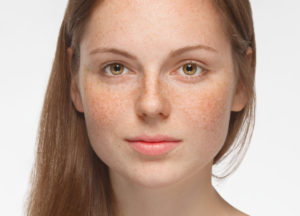
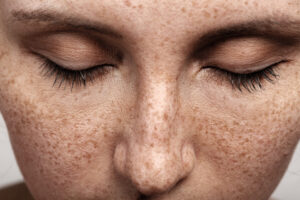
    Freckles are small, flat spots on the skin, usually less than 5 mm across. They form when clusters of skin cells produce extra melanin, the pigment that gives skin and hair their colour. Freckles are evenly coloured and harmless, though they are always darker than the surrounding skin.

    They can range in colour from light tan to deep brown or even reddish and often appear on areas that catch the sun—like the cheeks, nose, shoulders and arms.

    Why Do Freckles Form?

    Freckles are mostly genetic, influenced by the MC1R gene, sometimes nicknamed the freckle gene. If your parents are freckly, you probably will be too. But freckles only appear when UV exposure triggers pigment-producing cells to make more melanin.

    If you don’t carry the gene, no amount of sunshine will create freckles. Protecting your skin from UV rays will help reduce the formation and darkening of freckles over time.

    Freckles: The Skin’s Tiny Umbrellas

    Melanin acts like a natural sunscreen by absorbing and scattering UV radiation. Freckles can therefore be thought of as the skin’s way of shielding itself—tiny “umbrellas” of melanin helping to protect against UV damage.

    However, more freckles often mean more UV exposure than ideal. They’re your skin’s early-warning system: time for SPF 50+ or shade.

    Freckles often fade during winter as UV levels drop, but they can darken again when the sun returns.

    Freckles vs Sunspots vs Age Spots

    Sunspots (Solar Lentigines)

    Sunspots are usually larger—sometimes up to 2 cm—and appear on areas that see regular sun exposure, such as the face, arms, shoulders and backs of hands. They’re caused by cumulative UV exposure and are more common in adults than children.

    The term “liver spots” is an old misnomer; these marks come from sunlight, not liver issues. Unlike freckles, sunspots don’t fade in winter and may darken further with time.

    Age Spots

    Age spots are essentially the same as sunspots, with the name referring more to when they appear—later in life, after years of sun exposure. They are flat, brownish marks that remain stable over time.

    Freckles fade; age spots do not.

    Recognising Sun Damage

    Sun damage builds up gradually. Early signs include:

    • Uneven pigmentation or dark patches
    • Fine lines and wrinkles
    • Dry, rough or leathery skin texture
    • Dull or uneven skin tone
    • Redness or blotchiness

    Serious warning signs include spots that change shape, colour, or texture, or new moles that appear suddenly. Regular professional skin checks are essential for identifying potential skin cancers early.

    Preventing Pigmentation

    Prevention is always best:

    • Apply broad-spectrum SPF 50+ every day, even in winter.
    • Reapply every two hours outdoors or after swimming.
    • Wear protective clothing, hats and sunglasses.
    • Avoid peak UV hours (10 am – 3 pm).
    • Support skin health with antioxidants and moisturisers.

    Managing Pigmentation and Uneven Skin Tone

    If pigmentation is an issue, a range of non-surgical, evidence-based treatments can help improve the appearance of the skin. At ENRICH Clinic, our qualified medical practitioners use treatments tailored to each person’s needs, skin type and budget. Here are some options to consider.

    Laser and Light-Based Therapies

    Certain laser and Intense Pulsed Light (IPL) devices can target pigment in the upper skin layers. They work by breaking down clusters of melanin so the body can gradually clear them. These treatments may also stimulate collagen, helping with skin tone and texture.

    Chemical Peels and Exfoliation

    Supervised chemical peels and microdermabrasion gently remove surface layers of dead skin, promoting new cell turnover and revealing brighter skin beneath.

    Microneedling and Topical Options

    Microneedling uses fine needles to prompt the skin’s repair process, improving overall tone and firmness. Specific topical creams or serums prescribed by a medical practitioner may also assist in fading pigmentation gradually.

    Every person’s skin is different, so your practitioner will assess your skin type, pigmentation depth, and desired outcome before recommending a treatment plan.

    A Balanced Perspective

    Freckles, sunspots and age spots are common and usually harmless. Some people embrace them as part of their individuality; others prefer to reduce their visibility. Both choices are perfectly valid.

    At ENRICH Clinic, all cosmetic treatments are doctor-led, evidence-based and focused on informed decision-making. We don’t promise results—every skin responds differently—but we do provide clear information so you can make confident, informed choices about your care.

    When to Seek Medical Advice

    Book a professional review if you notice:

    • A freckle or mole that changes colour, shape or texture
    • A new spot that looks irregular or grows rapidly
    • Pigmentation that bleeds, crusts or feels sore


    Your doctor may recommend a full skin check or refer you to a dermatologist for further assessment if needed.

    The Takeaway

    Freckles, sunspots and age spots each tell a story about your skin’s relationship with the sun. Freckles often fade and are genetic, while sunspots and age spots develop from accumulated UV exposure.

    The best protection is prevention—consistent sunscreen SPF 50+, protective clothing and mindful sun habits. If you’d like to discuss professional options for improving uneven pigmentation, the experienced dermatologists and doctors at ENRICH Clinic Melbourne can guide you through evidence-based treatments tailored to your skin.

    Contact Us for a Consultation  or call 03 9500 9500

  • From Wrinkle Treatments to Dermal Care—Why Skin Procedures Need Medical Experts

    From Wrinkle Treatments to Dermal Care—Why Skin Procedures Need Medical Experts

    Why Skin Procedures Need Medical Experts

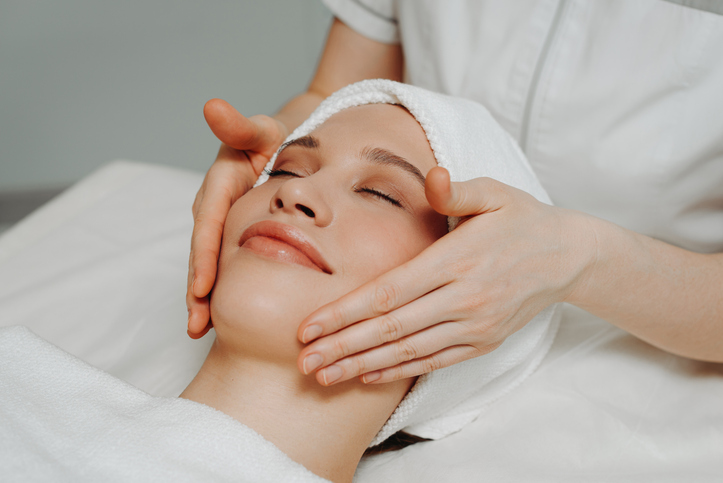
    Why Wouldn’t You Go to a Skin Expert? facial massage

    You go to a gym or a trainer for your body. You go to a professional hairdresser for your hair. So why trust your skin—the body’s largest and most visible organ—to someone unqualified?

    Your skin is not just about aesthetics; it plays a vital role in your health and well-being. Whether you’re considering certain wrinkle-reducing treatments, dermal care, or laser procedures, one thing is clear: cosmetic treatments are medical grade treatments. They require training, precision, and safety oversight.

    Why Expertise Matters in Skin Care

    Cosmetic skin treatments, including certain wrinkle-reducing treatments, laser therapies, and medical-grade skincare, aren’t simply beauty trends—they’re clinical procedures.

    When performed by medical professionals such as dermatologists, doctors, or registered nurses, these treatments combine a safety profile with efficacy. In contrast, when administered by untrained or underqualified providers, these same treatments can be dangerous.

    According to the Australasian College of Dermatologists, improper application of needle-based applications and lasers can result in infections, burns, nerve damage, or even blindness. These risks are not theoretical—they’re real and preventable.

    “Backyard injectables can be fatal—some Australians don’t even realise they’re receiving them,” reports The Guardian.

    Why You Should Choose a Qualified Australian Provider

    Here in Australia, there are stringent health regulations and professional standards for cosmetic practitioners. The safest choice is always to go with a provider who:

    • Is registered with AHPRA (Australian Health Practitioner Regulation Agency)
    • Works under medical oversight (e.g., in a doctor-led clinic)
    • Uses only TGA-approved products and devices
    • Offers consultation, follow-up, and complication support

    The Dangers of Non-Medical Cosmetic Providers

    Choosing someone who isn’t a qualified health practitioner to administer cosmetic treatments can lead to:

    • Lumpy or uneven results
    • Allergic reactions
    • Infections and swelling
    • Tissue death or vascular complications
    • Permanent scarring
    • No immediate access to medical care

    Worse still, News.com.au has revealed the ease of importing counterfeit products into Australia. Without proper regulation, these products can contain harmful or unknown ingredients.

    Going professional: what does it look like?

    • Dermatologists: Fully trained specialists with full medical qualifications, certified by the Australasian College of Dermatologists 
    • GPs and Registered Nurses: Many now specialise in cosmetic and skin-health treatments, with accredited training in anatomy, infection control, and procedure management. Look up AHPRA 
    • Accreditation is key: Aftercare pathways, reporting frameworks, and legal frameworks all depend on proper registration.

    What you can do: smart and safe skincare

    1. Book with certified professionals – Check AHPRA registration and membership with the Australasian College of Dermatologists.
    2. Research the provider’s qualifications – Are they a FRACP Dermatologist, GP with cosmetic training, or registered nurse?
    3. Don’t chase bargains – Cheaper doesn’t equal safer. Price gaps often mean corners cut. 
    4. Ask questions – What are the risks? Side effects? Emergency contacts?
    5. Check follow-up care – Ensure there’s post-treatment support locally, including corrections or referrals.
    6. Report poor practices – If you suspect unqualified work or counterfeit products, report it to TGA or AHPRA.

    Overseas Procedures: A Growing, Risky Trend

    i

    The appeal of cheaper treatments abroad is understandable, but the risks often outweigh the savings. Australian patients are travelling for cosmetic procedures in countries where regulations, hygiene, and training don’t match local standards.

    The Australian Society of Aesthetic Plastic Surgeons warns that complications are common in medical tourism—and when you return to Australia, many health professionals may be unable (or unwilling) to help.

    Here’s why: if an Australian doctor treats complications from an overseas procedure, they could become legally liable for the outcome, despite not performing the original treatment.

    Even if an overseas clinic claims to offer “board-certified” care, their standards may differ significantly from Australian medical training and governance.

    Plastic Surgery Australia has issued safety warnings for those considering going abroad for treatments.

    So medical tourism can appear appealing—but consider:

    1. Regulations differ: Overseas clinics may lack TGA oversight or proper sterilisation. 
    2. Inadequate pre-procedure consultations: You may sign up without seeing the actual doctor, or due to language barriers  Society of Plastic Surgeons.
    3. Follow-up challenges: Aftercare distance, post-flight complications (like deep-vein thrombosis), and foreign medical standards increase health risks 
    4. Rising corrective cases: 38% more Australian patients needing help post-overseas cosmetic surgery 


    ⚠️ A hidden legal risk

    If complications arise after an overseas procedure, local health practitioners often cannot help—you may be left with no legal recourse because the original provider is offshore. Public hospitals may be forced to intervene in emergencies, but follow-up and corrective care falls squarely on your shoulders.

    Your Skin Deserves Expert Care

    When it comes to your health and appearance, there are no shortcuts. A cheap treatment today can result in permanent damage tomorrow.

    Don’t leave your skin in the hands of someone who lacks the training or credentials. Whether it’s a specific wrinkle-reducing treatment, laser resurfacing, or medical-grade skin care, consult a professional.

    You wouldn’t trust a random person with your teeth or your heart—why do it with your skin?

    At ENRICH Clinic, we specialise in advanced skin treatments & consultations performed by experienced dermatologist, doctors, nurses, and dermal clinicians. Our team offers:

  • Why You Shouldn’t Put Off Setting Up a Skin Treatment Plan (Even if you think you don’t need one)

    Why You Shouldn’t Put Off Setting Up a Skin Treatment Plan (Even if you think you don’t need one)

    You have regular hairstyling and dental appointments to keep your hair and teeth looking pristine, so why not give your skin the same treatment? As skin experts, we’ve seen firsthand the impact of a lack of skin care on a person’s overall health and confidence.

    Skincare treatment plans are a proactive outline for keeping your skin healthy and looking its best. But what is a treatment plan, and why should you have one?

    What is a treatment plan?

    A treatment plan is a tailored skin program based on your skin health needs. It’s designed to help you achieve the desired results effectively with consideration of minimal downtime, budget and disruption of your daily routine.

    The treatment plan describes the recommended treatments and products to help you reach your goals. Our dermatologists, aesthetic physicians and nurses can help you create a tailored plan depending on your specific objectives and your skin’s current health. 

    It’s important to note that plans change over time as your skin changes, so reviewing and updating your treatment plan regularly is essential.

    What are the benefits of skin treatment plans?

    Helps your skin stay in good shape

    Having a treatment plan enables you to maintain your skin health and achieve the best results. The treatment plan is tailored to your specific skin type, goals and lifestyle. It may include a combination of in-office treatments, such as chemical peelslaser treatments and injectables,  and home care regimens.

    Your treatment plan can help you address common skin concerns such as acne, hyperpigmentation and wrinkles. It can also help prevent skin issues from occurring in the future.

    It helps you organise your skin treatments into your lifestyle

    Skin treatment plans are also designed to help you integrate skin treatments into your daily routine. This means that the treatment plan can be tailored around your lifestyle and free time so that you can choose treatments suitable for your work or leisure activities. If planning a beach holiday, it is best not to tackle a heavy downtime treatment, as your skin shouldn’t be exposed to the intense sun immediately after.  If you’re busy, you can opt for no-downtime treatments.  Treatment plans also enable you to keep skin treatments organised so you don’t miss any therapy or fail to follow the treatment plan.

    Helps to list and prioritise treatment required for any skin issues you may have

    Prioritising allows you to focus on the most urgent treatment first. For example, if you have acne, the treatment may focus on clearing up the active breakouts before addressing any longer-term skin concerns.

    By prioritising treatment this way, you can ensure that your treatment plan is more effective and that you get the most out of each treatment. You can then move on to the other treatment options only when necessary or have time.

    In an aesthetic situation, we often ask, “What bothers you the most?” and start from there. 

    Plan your schedule to help with budgeting.

    Your plan will also include as related to each suggested treatment, which can help you budget for skin treatments. This is especially important for long-term plans that involve multiple treatments, such as laser treatment and microdermabrasion.

    By budgeting for treatment costs ahead of time, you can make sure that you don’t overspend and also plan in advance for any treatment costs that may arise later.

    What influences the treatments involved in your plan?

    Age

    Your age can influence the treatment plan that is right for you. As we age, our skin becomes more prone to wrinkles and sun damage and may require treatment to correct these problems.

    If you’re in your twenties, your treatment plan may focus on preventive care such as sun protection and exfoliation. If you’re in your thirties, treatment may focus on anti-ageing, such as wrinkle reducing treatments or dermal treatments.

    Skin type

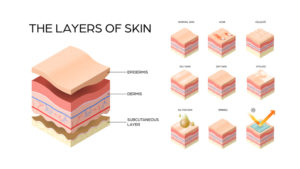
    Your skin type can also influence your treatment plan. For example, people with oily skin may benefit from treatments thatlayers of skin infographic reduce oiliness, while people with dry skin may need treatment that moisturises and hydrates their skin.
    Our skin specialists also consider your skin sensitivity, as some treatment options may be too harsh or irritating for sensitive skin.

    Skin issues

    It’s important to consider any skin issues you may have when creating your treatment plan. 

    What bothers you most about your skin? Is it a medical issue or cosmetic? Could it be a well-known issue like psoriasis or acne?  

    You should also review your treatment plan regularly to ensure it is still suited to your skin needs.

    Ethnicity

    Your treatment plan should also take into account your ethnicity and skin tone. Different treatment options may be more or less effective on certain skin tones, so discussing this with a skin specialist before starting treatment is important. For example, laser hair removals for a darker skin tone may be difficult if the laser uses only one wavelength.

    It’s also important to note that some treatment options, including particular lasers or strong chemical peels, may not be suitable for all skin tones.

    Gender identity

    Lastly, treatment plans should take into account your gender identity. Both men’s and women’s skin has different needs, so treatment plans should be customised to these needs. 

    For example, treatment plans for men may need to prioritise skin problems, such as hair loss or pearly penile papules. For women, treatment plans may need to focus on hormonal acne or something similar.

    How to create a treatment plan that works for you

    Consult with a professional

    The first step in creating your treatment plan is to consult with a skin specialist or dermatologist. Our skin experts will help you determine what treatment options are best suited for your skin and help you develop a plan that works for you.

    Don’t be afraid to ask questions and voice any concerns about treatment options, as this will help the skin specialist tailor the treatment plan to your needs.

    Assess your goals, lifestyle and budget

    Once you have consulted with a skin specialist, it’s time to assess your treatment goals and needs. Think about what you want to achieve with treatment and what treatments you can realistically do within your budget.

    You may also want to consider any lifestyle factors, such as diet and exercise, that could impact your treatment plan.

    Implement the plan

    Once you have created a treatment plan that works for you, it’s time to start implementing it. Start off slowly and gradually increase the treatment steps as your skin becomes accustomed to them.

    Be sure to stay consistent with treatments and make sure that you follow the treatment plan closely.

    Monitor your progress

    It’s important to monitor your treatment progress regularly. This will help you track any changes in your skin condition and assess if the treatment plan works.

    If you are experiencing any skin irritation or discomfort, be sure to discuss this with your skin specialist and adjust the treatment plan if necessary.

    How to stick to your treatment plan when things get tough

    It can be easy to fall off the treatment plan wagon and give up on treatment when things get tough. However, here are some tips to help you stay on track:

    • Set achievable goals and reward yourself for meeting them
    • Remind yourself why you started treatment in the first place (remember this is about your skin health)
    • Don’t be afraid to ask for help if you’re feeling overwhelmed
    • Find a treatment buddy to help you stay motivated
    • Make treatment part of your daily routine and set reminders for yourself when treatment is due

    Taking care of your skin is important and should not be something you put off. Creating a treatment plan that works for you, based on your skin type and lifestyle needs, is the best way to ensure you achieve the skin results you want. With the right plan and a little dedication, you can be on your way to healthy, glowing skin in no time.

    If you are unsure where to start, book an appointment with one of our skin experts today.

  • Is collagen important?

    Is collagen important?

    Collagen is a buzzword in the health and wellness industry, with many people turning to supplements and skincare products that contain this protein in the hopes of improving their skin, joints, and overall health. 

    But is collagen important for our bodies and what exactly is it? 

    We’ll take a closer look at what collagen is, where it’s found in the body, and what it does. We’ll also explore the evidence for and against collagen supplements and whether they’re necessary for maintaining good health. 

    Hopefully, you’ll have a better understanding of collagen and whether or not it’s something you should be incorporating into your own wellness routine.

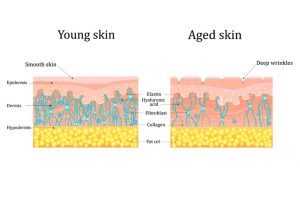
    Decrease in collagen production with age

    layers of skin infographic - young skin vs old skin

    Collagen is an important structural protein that plays a vital role in ensuring the integrity and strength of our skin, hair, nails, bones, and joints. Without adequate amounts of collagen, these structures may become weaker and more prone to injury or illness. 

    The healing process for our wounds or injuries may also take longer since the lack of collagen impairs the ability of cells to repair themselves.

    It also affects our skin texture, causing dryness and wrinkles due to reduced elasticity and hydration levels. 

    Our bones and joints are also affected, as collagen helps maintain their normal strength and flexibility, which diminishes when there isn’t enough collagen. 

    Besides ageing, other factors that contribute to low levels of collagen in our bodies include a lack of protein-rich foods–such as fish, eggs and dairy products–poor lifestyle habits such as smoking or excessive sun exposure.

    What can boost collagen production?

    There are a few ways to enhance our body’s collagen production, with some providing instant results and others having more prolonged effects. 

    Dermal procedures

    Cosmetic treatments such as lasers, PDO threads, skin needling and dermal treatments can help to  plump our face in areas where we have lost collagen. These treatments work by stimulating our body’s natural collagen production processes, which increase collagen over time.

    Lasers can be used to heat up our skin’s surface and target deeper layers of tissue to stimulate collagen growth. 

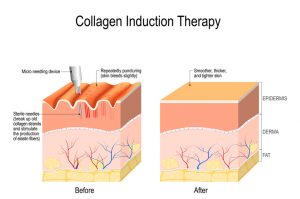
    collagen induction therapy infographic - before and after

    PDO threads, which stand for polydioxanone, help provide structure and strength to our skin by creating a scaffold for new collagen formation. 

    Skin needling is another option that involves using tiny needles on our skin’s surface to create micro-injuries that promote healing and stimulates new cell growth. 

    Diet

    If you want to start small, you can begin by changing your diet. Eating food that is rich in certain vitamins and minerals can help to boost collagen production.

    Vitamin C, for example, helps to promote collagen synthesis and can be found in many fruits and vegetables, such as oranges, red peppers, strawberries, kale and spinach.

    Iron is also essential for producing collagen. Red meat, dark green leafy vegetables like spinach or kale, eggs and legumes are all excellent sources of iron. 

    Zinc is essential for skin health, including the production of collagen. Good sources of zinc include oysters, beef and fortified cereals. 

    Copper also plays a vital role in producing collagen; you can find it in foods such as oysters, nuts and legumes. 

    Eating fatty fish like salmon regularly can provide beneficial omega-3 fatty acids that help support healthy skin cells. 

    Additionally, hydration is critical when it comes to keeping skin healthy; drinking plenty of water throughout the day can keep your body hydrated, which will help promote healthy skin cells.

    Besides eating collagen-friendly food, you should also avoid foods that can damage collagen. Some foods and drinks, such as sugar, excessive alcohol consumption and processed food, can increase inflammation in the body and damage collagen fibres.

    Note that a healthy diet should include a variety of nutrient-dense foods and should be balanced. Consult with a nutritionist or dietitian to ensure you get the right balance of nutrients to support collagen production and overall health.

    Skincare products

    Topical skincare products can also help with collagen production by providing our skin with ingredients that stimulate collagen synthesis, protect collagen fibres from damage, or both. Here are a few examples:

    • Retinoids. These are derivatives of vitamin A that have been shown to stimulate collagen synthesis and increase the thickness of our epidermis (the top layer of the skin). They also help to increase cell turnover and improve our skin texture, fine lines and wrinkles.
    • Vitamin C is an antioxidant that helps to protect our collagen fibres from damage caused by free radicals.
    • Peptides are small proteins that can help stimulate collagen production in our skin. You can find these in many anti-aging skincare products.
    • Hyaluronic acid is a naturally occurring substance in our skin that can help plump and hydrate the skin, making it look smoother and more youthful.
    • Other antioxidants such as Vitamin E, green tea extract, and grape seed extract can also protect collagen fibres from damage caused by free radicals.

    Keep in mind that not all skincare products are created equal, and some may not be as effective as others. Consult with our skincare professionals before starting any new skincare regimen, and be aware of the ingredients in the products you use.

    Lifestyle changes

    Several lifestyle factors could contribute towards increased collagen production levels, including regular exercise, getting adequate sleep each night, spending time in the sun and avoiding smoking as well as dehydration by drinking plenty of water throughout the day.

    Exercise is particularly beneficial, as increased physical activity leads to increased circulation, which could stimulate collagen synthesis within the body. Additionally, regular exercise helps to reduce stress levels, which is vital for collagen production since excessive amounts of stress hormones can interfere with the synthesis of new proteins. 

    Getting adequate sleep has also been associated with higher levels of collagen production. During sleep, our bodies naturally produce more growth hormones which help support our bodies’ natural ability to create and maintain healthy skin cells. 

    Spending time in the sun is also beneficial for collagen production, as exposure to ultraviolet light stimulates vitamin D production and encourages skin cell regeneration. But make sure you don’t overdo it. Climate change has adverse effects on our skin. Make sure you always use 50+ sunscreen when exposed to the sun. 

    Smoking, however, has the opposite impact – smoking damages cells and suppresses collagen formation leading to wrinkles and premature aging. 

    Similarly, dehydration can lead to a decline in skin elasticity due to its dehydrating effect on cells and connective tissue fibres such as collagen and elastin. As such, staying hydrated is essential for maintaining optimal collagen production; drinking plenty of water throughout the day ensures that our body is adequately hydrated to produce sufficient amounts of this vital protein.

    Remember that a healthy lifestyle includes a balance of different activities and practices. Collagen production is a complex process that can be influenced by multiple factors, so focus on overall health and well-being rather than a single aspect.

    Does ingesting collagen help skin and hair?

    When it comes to this question, research results are promising. 

    Several studies have suggested that a collagen supplement could provide a range of benefits for skin health and hair growth. For example, one study published in the journal Nutrients found that taking a collagen supplement for four weeks reduced wrinkles and improved skin elasticity in women 35 years old and up. 

    Despite the body of research on collagen supplements, Harvard expert claims potential conflicts of interest exist since most of the studies are either funded or partially funded by industries that could benefit from positive results. 

    Also, even if it does work, its effect is not immediately visible. It may take months or years for you to notice any difference.

    How to get immediate results

    While obtaining collagen through diet, lifestyle changes and supplementation is possible, you may achieve faster results via our dermal treatments. This can help boost collagen production in your body, leading to immediate improvements in skin texture, tone and appearance. Book an appointment with us today.

  • How Climate Change May Affect Our Skin Health

    How Climate Change May Affect Our Skin Health

    Our skin is the largest organ of our body and performs many vital functions. It protects us from the sun, wind, cold, and other environmental elements. It also helps us regulate our body temperature and eliminates toxins from our system. As one expert said, “it keeps the inside world in and the outside world out.”

    But with the changing climate, our skin faces more threats than ever before. Rising temperatures, air pollution, and UV radiation contribute to an increased risk of skin problems. Below is a list of some of the ways climate change is impacting our skin health.

    Climate change effects on people’s skin

    Air pollution

    Climate change is a severe threat to global health, and one of its most immediate consequences is the rise in air pollution. As the Earth’s temperature increases, certain pollutants like carbon dioxide, methane, and ozone become more prominent in the atmosphere. These pollutants–in particular, polycyclic hydrocarbons from burning fossil fuels–can settle on our exposed skin or be inhaled and absorbed through the pores.

    Once these pollutants are inside our bodies, they can cause inflammation and damage the cells responsible for generating new skin tissue. These can result in premature ageing and pigmentation changes, atopic dermatitis, eczema, and acne flares.

    Sunlight

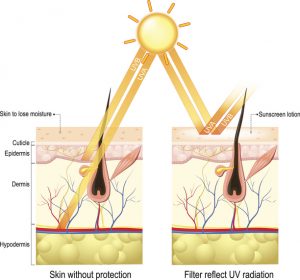
    skin with and without protection infographicClimate change has also resulted in an alarming increase in the Earth’s average temperature, which has allowed for larger amounts of ultraviolet radiation from the sun to penetrate our atmosphere and reach our skin. This UV radiation is known to cause a plethora of long-term dermatological issues, including wrinkling, premature ageing and, most notably, skin cancer.
    This is because the longer we are exposed to the sun, the weaker our antioxidant defences are. These defences are meant to protect the skin from these harmful radiation sources. This can be due to increased levels of ozone pollution and other air pollutants that come into contact with the skin’s surface area.

    In addition, higher temperatures brought on by climate change can impair our skin’s sweat functions. This could lead to heatstroke if prolonged exposure occurs without any break from the sun’s rays.

    Changing ecosystems and extreme weather conditions

    The global climate crisis is also having a major impact on the world’s ecosystems and weather conditions, which in turn has damaging consequences for our skin. With extreme temperatures, increased flooding, and droughts becoming more common, the environment is changing in ways that allow previously confined diseases to spread to new areas.

    In particular, mosquito-borne illnesses such as dengue fever and Zika virus rapidly spread due to warmer climates that allow their vectors to survive longer through their breeding cycles.

    Not only can these illnesses cause nasty skin infections, but they can also have other long-term health effects on exposed individuals.

    Extreme weather conditions like heat waves and cold snaps may also affect the skin. This is because air humidity can lead to skin dryness, psoriasis and increased sensitivity, while cold weather can strip away the skin’s natural oil barrier.

    How to protect your skin from climate change

    With climate change leading to longer summer days and hotter temperatures, it’s more important than ever to take these steps to protect ourselves from harmful UV radiation.

    Sunscreen

    Sunscreen has been proven to be incredibly effective in protecting skin from the sun’s harmful rays. This is because its active ingredients, such as zinc oxide and titanium dioxide, absorb and reflect dangerous UV rays before they reach the skin.

    But not all sunscreens are created equal. Investing in a quality sunscreen that blocks UVA and UVB rays and has an SPF of 30 or higher is important.

    Apply sunscreen to all exposed areas, including your face, neck, arms, legs and other areas of the body, at least 20 minutes before going outdoors and reapply every two hours or after any swimming or sweating.

    When asked what the best anti-ageing cream is, Dr Rich always replies, “50+ sunscreen, especially on the face, in every season”.

    Appropriate clothing

    In addition to sunscreen, clothing can effectively protect from the sun’s rays. Loose and lightweight clothing with a tight weave that covers as much skin as possible can act as a barrier between your skin and the sun.

    Long-sleeved shirts, pants, hats, and sunglasses are all key items to bring along with you when spending time outdoors. Additionally, darker colours are more effective at blocking sunlight than lighter shades.

    Shade

    dermatologist doing a skin checkStaying in the shade is another great way to protect your skin from the sun’s rays. Try to seek out shady spots that are covered by trees or canvas umbrellas when spending time outdoors.

    Additionally, UV-protective window films can be used to reduce the amount of ultraviolet radiation entering your home, office or vehicle, allowing you to enjoy the outside without exposing yourself to too much direct sunlight.

    Regular skin checks

    Finally, it is important to remain vigilant and have your skin checked regularly by a qualified healthcare professional. This will help you identify any concerning changes in your skin that may be indicative of something more serious, such as skin cancer.

    How Enrich Clinic can help

    Climate change is having a major impact on our skin’s health and should be taken seriously. It is important now, more than ever, to take steps to reduce our carbon footprint and protect ourselves from the sun’s harmful rays. Also, if you have any concerns about your skin or looking for skin cancer treatment, it is best to seek out advice only from trusted dermatologists.

    Contact Enrich Clinic for professional advice.

  • What happens to your skin as you age?

    What happens to your skin as you age?

    As we age, our skin ages with us. This is an unavoidable reality, and embracing this fact can make the ageing process easier to accept. Over time, there are different ways your skin will change, and therefore different ways to treat your skin to ensure you are always looking your best.

    In this article, we will look at the different stages of skin ageing, what you can expect depending on your age, and some great treatment options you might like to consider. These observations are for both male and female skin – no one misses out on the ageing process! 

    Birth – 10-year-old skin

    baby

    It has often been observed that children, especially babies, have extremely smooth skin. In the case of babies, they come out of the womb having been protected by something known as the vernix coating, which “protects the epidermis from water exposure and creates a drier condition”, according to Visscher et al.

    But babies aren’t just protected from moisture while in the womb. Their skin is also ready for the world if they are full-term. Visscher et al. explain that a “well-developed epidermal barrier is fully competent to execute its primary functions of preventing water loss”.

    So the youngest amongst us generally start out with flawless skin, which generally continues through early childhood and is very smooth before adolescence.

    11- 20-year-old skin

    teenager with acneBroadly speaking, adolescence is the first time we are presented with any skin issues. During puberty, the body goes through a lot of changes, and these have an impact on the skin.


    During puberty, acne often appears on the back neck, and, most prominently, the face, as this area has more pores than the rest of our body. This is when the first major skin care appears in our lives. Sometimes that can be simply by resisting the urge to squeeze a pimple or to scrub your face too hard.

    For more extreme acne, it is important to wash, but gently. You don’t want to use irritating scrubs but a soft cloth and gentle cleanser. There are also medical treatments that can help with extreme acne. At ENRICH, we see many acne and acne scar patients. 

    21-30-year-old skin

    This is the period you need to start preparing your skin for long-term ageing. During this period, especially toward the back end of people’s twenties, your skin starts to show the first signs of aging or skin damage.

    This is due to many different factors, such as a lack of sleep or stress. The reality of ageing is the extra responsibility we take on, and most of us have more adult responsibilities, such as families, by this age. Additionally, by this time, sun damage may have built up over time to the point it is beginning to show.

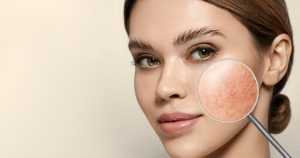
    magnifying glass showing skin on cheek up close

    For this reason, this is the age you want to develop a good skincare routine. This includes using sunscreen on those bad UV days (not just when the temperature is high), exfoliating and moisturising regularly.

    This also might be the time that you start to explore laser treatments or glycolic peels to add to your skincare routine. Our no-downtime treatments give your skin the perfect clean and pep-up.

    The good news is that at this age, your skin is in a strong “collagen-producing” phase so it renews and rebuilds almost constantly.

    Starting your skin routine early, in the habit of taking care of your skin, can be an investment for the future. Good skin health is just as important as all the other tasks you undertake for your general well-being. We have several great skin care products in our ENRICH Clinic Shop.

    31-40-year-old skin

    As you approach middle age, managing your skin becomes more of a focus. As your skin moves into a more mature phase, there is usually a need for a more structured approach to skin care.

    woman and close ups of her eye and smile lines

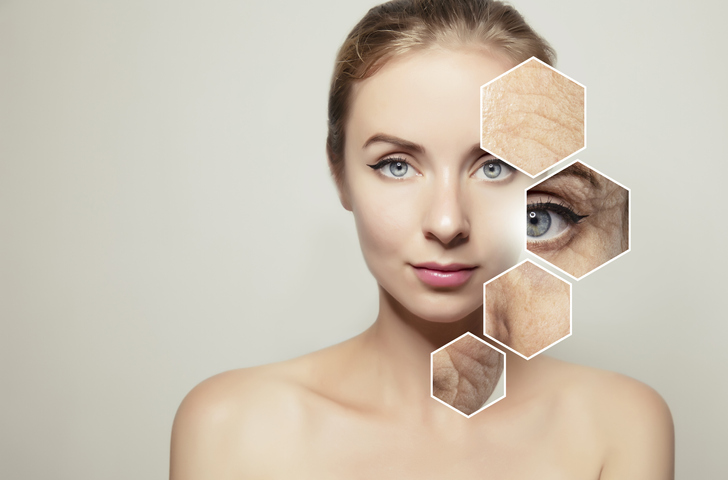
    Generally speaking, your thirties are when you start to see some fine lines appearing around your eyes and a loss of volume in your cheeks. It’s usually not too dramatic unless you have spent too many days sunning yourself, however, it is something to keep an eye on. 

    Why does this happen? Your skin can no longer repair itself as well as it once did, which often means it can lack the once super youthful look. Decreases in collagen mean your skin is not as plump as it once was. We also start to produce less collagen as we age, so there is some sense in promoting collagen production by treatment means. This is also the age when dermatology treatments start to become more necessary. It’s even worth looking at the more cosmetic side of skincare, such as dermal treatments & wrinkle reducing treatments. The longer you leave wrinkles to form on your skin, the longer it takes for them to decrease. 

    41-50-year-old skin

    Throughout your forties, your skin starts to lose firmness. A loss of elasticity and volume can lead to a lack of volume, skin starts to lose its laxity and wrinkles become clearer.

    woman checking her skin in a mirror

    At this point, you want to have a strong skincare process and routine. In addition to your daily routine, however, you might consider other treatment options, such as Facial Rejuvenation.

    These days skin treatments, especially with lasers have become a lot more common, so there is no need to feel like you’re the only one. Lasers can be extremely beneficial for the production of collagen and to help promote skin tightening. We have a broad range of laser and other face treatments at ENRICH clinic that can benefit maturing skin. 

    51-60-year-old skin

    For women, this is generally the menopausal to post-menopausal age, and declining estrogen levels can significantly impact the skin. It becomes thinner and drier, and there is a loss of volume as natural collagen production reduces again. Menopause can even lead to acne, which may not have appeared since adolescence. 

    mature woman with hand on face

    This is also often the time those “cute freckles” are now realised as age or sun spots.  Looking and feeling good is key at this age to both self-esteem and well-being. Spending time on your skin’s health is not vanity; it’s a health necessity, and all of these issues can have some relief. 

    For men, whilst not subjected to menopause, male skin too loses volume and skin wrinkling increases. Male skin is often subjected to elements, especially prone to sun damage and age spots. Skin checks at this age are also key as pre-skin cancers and basal cells tend to crop up around this time. 

    While many people start their plumping journey earlier, some treaments  can help at this age as they plump the skin and add volume where it is often lost. Using wrinkle-reducing treatments to help reduce those wrinkles is certainly quick, a feel-good fix and refreshing. Collagen also needs a boost, and at ENRICH, we have a number of these treatments, including some of the more hard-core skin resurfacing treatments.  Investing in a  regular treatment plan is also a bonus. We strongly encourage you to talk to an expert before making any commitments. You can call us on 03 9500 9500 to speak to our friendly team.

    61-70-year-old skin

    By this point, all the markers of ageing simply can get more extreme. Wrinkles become more pronounced, scars appear more easily, the skin becomes even drier and collagen production lessens even more.

    It’s not all bad news. If you have started your skin journey early in life, much of this “natural”  ageing may have been circumvented to an extent. If you have worn 50+ sunscreen every day for most of your life–the best anti-aging cream–according to Dr Rich, your skin will certainly be reaping the benefits of this now. And very likely, your skin will look much better than those of your contemporaries who haven’t. 

    mature woman smilingWe have several Skin Tightening treatments to help you retain that skin laxity.  These treatments include laser and skin needling, which also impact collagen production. It’s important to know that no one treatment or skin topical can give you back the 20-year-old skin. Managing your own expectations is very important in this process. 

    By this age, it is a good idea to have a regular 6 monthly appointment with your dermatologist, which includes a regular skin check every year and a skin health plan in place. Investing in a skin treatment plan that sees you having regular no-downtime laser treatments ( depending on your needs) &/or skin peels is also incredibly helpful to skin health. Ultimately, we want to find you the best option to tighten, clear and care for your skin and have you comfortable with your own very unique and beautiful look. 

    You can contact us by filling out a form and see how we can help with your skin health through all the ages.

  • Why you should invest in your skin health

    Why you should invest in your skin health

    Skin health can be a complicated thing. For those who take regular care of their skin, there is always new research and updates to the best practices for skin care routines. But it is not always easy to separate science from the fads or establish the best new trends when they pop up.

    As with most trends, some gather momentum because a lot of people are doing them, and others are going to stick around. In this article, we explore some of the new trends in skin care, skincare and analytical approaches, which ones are worth considering, and which ones should be ignored.

    We also provide some thoughts on skin treatment that might work for you and explain just why you should invest in your skin health.

    Plan your cosmetic and skin health journeydoctors hands in gloves inspecting mans face

    It can be time-consuming to settle on the proper skincare routine. And let’s face it, most of us aren’t skin care experts. For this

    reason, it can be a good idea to talk to one of our dermatologists. We will be able to provide you with excellent assessments and advice and help establish a strong skin care plan.

    We offer many different face treatments and skin treatments and we know we can get the right plan for your skin type and concerns.

    We have laser treatments for your skin.

    You can’t go past a laser to increase your skin health and collagen while at the same time cleaning the skin. For the uninitiated, our no-downtime treatments are the best way to start. They are a gentle way to begin the introduction to laser skin care. These treatments are for both men and women, and depending on your skin requirements, these may be the treatments you decide to incorporate into your regular routine without going any further. 

    Of course, we have some hardcore options, such as the CO2 Laser and other resurfacing options, that can solve some of your tougher skin issues. We also offer a facial rejuvenation treatment that can refresh your face in an incredibly effective way.

    Universal skin care techniques

    There are also a number of things you can do that will immediately improve the look of your skin.

    skin care products

    Have a simple skincare routine

    Your skincare routine doesn’t have to be complicated to be effective. In fact, sometimes simpler is better. Of course, there will be times when you need to exfoliate or use a mask, but for the most part, a simple skincare routine of cleansing, moisturising and protecting will do the trick. Just make sure you use products with simple formulations and are fragrance-free.

    Use products designed for your skin

    Just because a skin care product is trending doesn’t mean it’s the right one for you. It’s important to use products that are designed for your skin type. If you have oily skin, look for products that are oil-free or non-comedogenic. If you have dry skin, look for products that are hydrating or contain ingredients like hyaluronic acid. And if you have sensitive skin, look for fragrance-free and hypoallergenic products.

    Protect your skin from the sun 

    We all know how ultraviolet (UV) rays can damage your skin, causing premature ageing and increasing your risk of skin cancer, so ensuring your skin is protected from the sun’s harmful rays is a must. Our curated effective 50+  sunscreens can do just that.

    Be kind to your skin

    When things appear on our face, it is very tempting to pick or even pop them. But this only does bad for our skin. For example, by popping a pimple, you expose the pore to more bacteria, which includes the bacteria on your hands. Additionally, picking at other marks and bumps can be tempting, but the more you do this, the more you risk scarring. It simply isn’t worth it.

    Practice healthy habits 

    Eating too much sugar can have detrimental effects on our skin, which is yet another great reason to cut down on it. And smoking cigarettes, in addition to all the other awful ways they affect our bodies, also can give you bad acne.

    Manage stress 

    Anyone who’s ever had a skin flare-up knows that stress and skin go hand-in-hand. When we’re stressed, we experience dryness, inflammation or breakouts. This is because stress can disrupt the top layer of our skin, designed to keep moisture in and harmful microbes out.

    Don’t get sucked into silly trendswoman applying coffee scrub mask to face

    We think it’s important to acknowledge there are some trends out there that you might be aware of, and identify some that you should absolutely avoid:

    Pore strips 

    They might be extraordinarily satisfying, but pore strips aren’t actually good for your skin. Yes, you can remove a lot of blackheads in a very short space of time, but they often open our pores up much wider than we would advise, which leaves them open to bacteria.

    Toothpaste on pimples 

    This is another terrible idea. Whatever antibacterial agents might be in your toothpaste will be more than counterbalanced by all the other ingredients in toothpaste. You could end up with chemical burns, which seems like a terrible trade.

    Coffee & sea salt scrubs 

    Quite simply, not a good idea. Ground coffee and salt can be coarse, and as such, can do damage to your skin.

    “Natural “ oils

    Using natural oils that perhaps come from your pantry, as a moisturiser, is not a good idea. Often they can cause clogging or breakouts as they are not designed or made for skin care rather they are specifically for cooking. 

    Taking advice from influencers

    Thousands of “ influencers” now profess to be skincare specialists or advisors. Dermatologists are skin, hair and nail care specialists with extensive medical & specialist training. Their advice is based on experience, expertise and medical training – possibly a better source of info and skin health advice.

    There are a seemingly endless array of bad treatments people put their skin through. The thing to remember about all of them is the need to actually be improving your skin health. If it isn’t dermatologist-approved, it likely isn’t good for your skin. To get clarity on the types of products you should use on your skin, you can give us a call on 03 9500 9500. We also have a range of skincare topicals in our shop.

    Healthy skin can translate as beauty

    When it comes to skin health, we naturally look for it as a sign of beauty, whether this is a conscious thing or not. We are naturally attracted to distinctly healthy glowing faces, even if we cannot define what makes them beautiful. Regardless, having lovely skin can make you feel good, mentally and physically. 

    Even if our faces have perfectly natural skin conditions, we can still find we are very self-conscious. Youth is often associated with beauty, and skin that appears to be ageing can define a person’s age and even make them look older. Beauty is definitely in the eye of the beholder however skin health is something everyone can have with a little help to find the best strategies to improve and maintain your skin.

    Want help with your skin health?

    Contact us

  • A- Z of Eye Treatments

    A- Z of Eye Treatments

    Very delicate skin surrounds the eyes, showing your age faster than other skin on our faces or bodies. The eye area skin is thin and prone to sagging and wrinkles. If you’re concerned about the look of your eye area, there are plenty of remedies, with some clear cosmetic winners. 

    Wrinkle Reducing Treatments

    A stand-out favourite, wrinkle reducing treatments can take a simple wrinkle and make it go away. Wrinkle reducing treatments work by relaxing the muscles that draw your skin together, forming a crease. This crease then turns into a wrinkle over time and with repeated action; smiling, frowning, laughing or squinting all contribute. 

    Every face has a unique wrinkle profile, so treatments will differ based on your unique facial structure. 

    We use wrinkle reducing treatments to prevent eye wrinkle treatment before a wrinkle forms or to stop it from progressing. Of course, if you have very wrinkled skin, wrinkle reducing treatments aren’t much use, but in that case, you will love some of our other eye wrinkle treatments. 

    eye wrinkle treatments


    Dermal fillers for under eyes

    Dermal filler injections are an eye’s best friend, softening wrinkles and filling in fine lines. A good dermal filler treatment can shave years off the face. The ingredient in our favourite dermal fillers is a molecule naturally found in the skin that absorbs 1,000 times its weight in water. That means maximum hydration and plumpness. 

    For example, we can treat crow’s feet with dermal filler, and over time and repeated treatments, improve the underlying skin – the filler is also a transporter for nutrients. Cellular performance is enhanced, making our dermal filler not just a pretty face. 

    We can also use filler under the eyes to smooth out under-eye bags and dark shadows. 

    Dermal filler is a plumping and filling tool that we use in multiple ways. We can enhance lips, cheeks, wrinkles, and even do a nonsurgical nose job. Modern dermal filler is absorbable, so you’re never stuck with just one look, and we can adapt your treatment goals and strategies as you age. 

    When applied by a trained, experienced doctor, you can expect great results and maximum longevity from fillers under the eyes. However, some areas will absorb filler faster than others, so for example, a non-surgical rhinoplasty should last up to 18 months, while lip filler will only last a few months due to movement of the mouth. Your metabolism also makes a difference in how long your filler lasts, with some patients absorbing the ingredients quicker than others. 

    Dermal filler injections come with some minor redness and swelling, but this lasts just a short time. 

    fillers for under the eyes

    Eye cream for dark circles and maintenance

    Eye cream is one of the beauty industry’s bestsellers, but quality matters. Cream on top of the skin cannot penetrate to the cells beneath due to our very effective skin barrier – otherwise, we’d absorb just about everything we touched and be very unwell as a result. 

    Eye cream’s job is to hold moisture and nourishing ingredients in the skin and ensure cells remain as plump as possible and retain their structure and function. Plump, hydrated cells are larger, thus don’t wrinkle or dry out as quickly. Encouraging hydration and high performance of the skin around the eyes is vital to help manage signs of ageing.

    It’s best where possible to get your skincare regime from your dermatologist, who will tailor the products to your skin type and advise you on what’s most beneficial for your anti-ageing and skincare treatment plan. For example, eye cream for dark circles might be appropriate for your circumstances. 

    Eye creams should be part of your regular skincare routine to enhance your skin. There is no downtime associated with eye cream. 

    Laser, ultrasound or plasma resurfacing and rejuvenation

    If your eye area is very wrinkled, perhaps resurfacing is more appropriate. Laser or plasma resurfacing is what it sounds like – we remove the top layers of skin, and the sun damage, wrinkles, and fine lines go with it. For severe wrinkling, resurfacing can make a dramatic difference to the appearance of the skin. 

    We use the Portrait, Ultraformer and ThermiSmooth state-of-the-art technology for effective eye treatments. 

    Deeper resurfacing comes with sometimes significant downtime, with the skin requiring extra care and protection during healing. Speak to your dermatologist about expectations regarding recovery and results. 

    Eye rejuvenation

    Eye rejuvenation is an umbrella term that can mean any of the above treatments combined or alone. It means the eye area appearance is freshened and revitalised. 

    Eye treatments can make a huge difference to the appearance of the face, brightness of the eyes and overall aesthetic. If your eye area is starting to bother you, there are plenty of options, so get in touch

    ENRICH Clinic

  • Acne treatment Melbourne – acne scarring at ENRICH Clinic

    Acne treatment Melbourne – acne scarring at ENRICH Clinic

    acne treatment melbourne

    Acne is an inflammatory skin condition resulting in whiteheads, blackheads & pimples appearing predominantly on the face, forehead, chest, upper back & shoulders.

    Dr Michael Rich leads a team of experienced cosmetic doctors & dermatologists in Melbourne, highly trained in advanced lasers & treatments for acne and acne scarring. If acne or acne scarring is an issue for you, contact us to arrange a consultation. 

    Types of Acne Scars

    • Rolling scars – broad, sloped-edge depressions in the skin
    • Ice-pick scarring – pitted, deep, thin slit-like scars
    • Box-car scars – defined-edge depressions
    • Atrophic scarring – thin, flat scars
    • Keloid (hypertrophic) scars – thick, lumpy scarring

    Treatments for acne scarring – Acne treatment Melbourne

    ENRICH Clinic is home to several effective laser treatments for acne scarring. Radio frequency devices & lasers can be used to target skin cells at a deeper level, working to strengthen and support skin cells & structure. This reduces the appearance of scars and marks that acne can cause.

    Radio frequency treatments have the added benefit of killing bacteria and improving overall skin tone & texture. Laser treatments work by either stimulating collagen producing cells & collagen or ablating the skin surrounding the scar, evening out the surface of the skin.

    Other effective and minimally invasive treatments include:

    Deep acne scars

    Of course, there are some very extreme cases of deep acne scarring and they will be too deep for ablative laser treatments to work alone. A combination of medicated creams, medication, lasers, light treatments & lasers and of course time may be the best route to clear, smooth skin. 

    Contact us to secure an appointment for acne scarring consult or treatment at ENRICH Clinic

  • Laser Facials vs. Topical Facials

    Laser Facials vs. Topical Facials

    There are some key differences between a laser facial and a topical facial. A topical facial uses cleansers, exfoliants and creams to provide skin suppleness and smoothness. A laser facial, by contrast, uses energy to stimulate skin cells while also removing the top layer of dull, dry skin cells.

    The main difference between a laser facial and a topical facial is the mode of treatment, but then, importantly, results. 

    At ENRICH Clinic in Melbourne, we prefer laser facials because we get much better results both in the short and long term. 

    A laser facial gets to the core of skin rejuvenation.

    When you consider that no ingredient in a topical cream can penetrate very deeply into the skin, you see that topical treatments can only do so much. It might feel and smell delightful – which is all part of the experience of pampering – but if you want your skin to look and feel better for more than a day, a laser facial is a better choice. 

    What’s so great about lasers?

    When the energy from a laser hits the skin, it vaporises the top layer or dry, dull skin cells, while also triggering the cells underneath to ramp up collagen and elastin production. 

    Skin cells naturally produce some collagen and elastin to keep skin firm and supple, but without a little encouragement, new collagen and elastin aren’t produced in any skin-rejuvenating or visible quantities. The laser facial sends a clear message to the skin via thermal energy that cells should ramp up collagen and elastin production. 

    Because this process of new collagen production takes several months, after a laser facial, first, you’ll see fresher, brighter skin. Then with regular treatments, you’ll see the anti-ageing benefits too. 

    Understanding a topical facial

    While a topical facial is a lovely experience, it is not designed to offer any lasting benefit to skin. Additionally, topical facial ingredients may ultimately block pores or be of questionable quality. 

    We do a number of effective one-off facial treatments at ENRICH, but we rarely ever just use a topical cream treatment: we have too many fantastic state-of-the-art skin rejuvenation devices! 

    Our HydroActive Facial, for example, is a non-invasive hydrating treatment that will get skin looking plump and well hydrated almost immediately. This treatment uses a gentle skin resurfacing element to get these great results as well as high-quality topicals. Many of the ingredients we use in the HydroActive Facial are nourishing, hydrating antioxidants and peptides, with deep penetration facilitated by the special resurfacing handpiece. 

    Resurfacing as part of the laser facial

    One of the main benefits of laser facials is the removal of the topmost layer of dry, dull skin cells, with all laser facial treatments achieving some level of resurfacing as a core strategy. Each specialised laser facial has its own benefits and systems, for example, the China Doll Facial. 

    The China Doll laser facial

    The China Doll Facial is a standout laser facial and one of our favourites. This non-invasive laser treatment uses our state-of-the-art picosecond laser, the PiQ04, on a mask of carbon serum. 

    The serum strongly attracts the laser energy, which intensifies the effect on the top layer of skin, removing debris and vaporising dull, dry skin cells. The results are immediately apparent – a fresher, brighter complexion, with a little drama from the (pain-free) carbon fireworks as the laser hits it. 

    Anti-ageing benefits of the laser facial

    Improving the appearance of skin when you walk out the door is one of the goals of a facial, but what a topical facial can’t ever hope to achieve is an anti-ageing effect. A laser stimulates the fibroblasts, special skin cells that produce collagen, to increase their activities. 

    Laser treatments vary in strength, depending on what is required for the individual. For example, a young person with plenty of collagen and supple skin doesn’t need anti-ageing benefits but can expect a refreshed complexion from a laser facial. Anyone whose skin is starting to sag or crinkle can enjoy both a fresher complexion and, with regular treatments, anti-ageing benefits. 

    Laser facials are best repeated at regular intervals and can be combined with other targeted cosmetic treatments to get the best out of your skin. Laser facials pair well with anti-wrinkle injections and dermal fillers, but almost any combination is possible to achieve your aesthetic goals. 

    Getting the most out of your laser facials

    One of the things we do best at ENRICH is laser facials, with some of the most advanced skin rejuvenation techniques and equipment in Australia. When you visit our clinic, we’ll make you a complete and comprehensive treatment plan to get your skin looking and feeling fresh now and into the future. 

    Contact us for a consultation at ENRICH Clinic


  • Wrinkle prevention: is there such a thing as too early to start?

    Wrinkle prevention: is there such a thing as too early to start?

    When considering the future of your face, many of you may be wondering if there is such a thing as ‘too early’ to start an anti-ageing regime.

    To answer this question, we need to understand a little bit about how the skin ages, and thus what is worth spending time and money on and at what age and stage.

    It is not unreasonable – if you’re into that sort of thing – to start an anti-ageing plan in one’s 20s, but it’s also just as feasible to work on your skin as issues arise.

    Prevention isn’t necessarily the goal for everyone, though it’s true that it works well as part of an anti-ageing strategy when started at the right time.

    Cosmetic treatments cost money and take time, and while it’d be marvellous if we all have nothing but time on our hands, that’s not the reality. We have to carefully choose our plan based on the resources we have available to us. It’s therefore worth having a consultation with your chosen clinic to discuss your goals and make a plan, rather than following fads and fighting cosmetic fires.

    Important note about teenagers and anti-ageing routines

    It’s important to note upfront that here at ENRICH Clinic, we do not believe teenagers should be considering anti-ageing treatments. It’s not your time, teenager!

    Anti-ageing treatments in teenagers are a potentially damaging pointless exercise – the skin is healthy and supple and not at risk of developing wrinkles, fine lines or creases just yet.

    The only anti-ageing routine that teenagers – and everyone else – should be undertaking is wearing high-SPF sunscreen every day and taking measures to protect skin from damaging UV rays.

    Of course, if there are problems such as acne, psoriasis or dermatitis, that is different altogether and a job for a dermatologist. That’s not what we are talking about here.

    The ageing process and when we ‘should’ start caring

    We are constantly getting older, from the minute we are born, which may seem obvious, but we don’t start talking about ‘ageing’ until we think about wrinkles, fine lines and creases in our face.

    These start to appear en masse during our late twenties and thirties, making themselves at home in our forties and fifties and beyond.

    An anti-ageing regime is designed to keep the skin looking smooth and supple for as long as possible, which may mean starting before the cracks start to appear.anti-ageing regime

    The most common way to start an anti-ageing routine in younger people is with wrinkle reducing treatment that relax certain muscles and prevent the development of wrinkles in key areas, but many approaches are just as useful, for example, regular laser treatments.

    How should I start my anti-ageing plan?

    At what point someone decides to start an anti-aging routine and what they start with varies depending on many factors: care factor, budget, time and skin type.

    For example, many Asians look 15 years younger than they are, which can be extremely annoying when trying to get into a bar but means many anti-ageing treatments can wait. Skin-beautifying can, therefore, be the focus, rather than wrinkle treatments.

    Caucasians tend to suffer a great deal of sun damage throughout life, particularly in Australia, and thus may age faster and less gracefully than darker skin tones. Reducing the impacts of sun damage may be a primary focus, for example, removing pigmented spots and softening fine lines and wrinkles.

    Young people have far more fat in their cheeks than older people. You’ll notice in older people that the cheekbones become prominent because the cheeks have lost fat volume.

    Chubby cheeks are very much related to youth. This loss of fat volume in the cheeks can have an impact on the eyes, dragging the skin down and contributing to looking tired. Strategically placed filler can create subtle – but impactful – changes to how aged the face appears.

    Making the most of your beautiful face

    An ageing face has so much character and beauty to it, so when we consider your anti-ageing plan, we aren’t aiming for an expressionless, frozen face that never creates a line.anti aging treatments

    Your face will always age; you will never look 25 when you are 55, no matter how hard you or we try or how much money you spend. And nor should you. That’s not the point.

    You want to look like yourself, at whatever age you are. At ENRICH Clinic, we always aim to enhance your natural assets, not change them. You have a great face and more to the point it’s unique to you! We help you make the most of it.

    Having beautiful skin will never go out of fashion

    There are some effective, non-invasive skin treatments that anyone can start their anti-ageing journey with: 
    • Non-invasive no-downtime treatments
    • Laser microdermabrasion
    • Facials – laser facials, HydroActive facials China Doll carbon serum facials
    • Skin peels
    When you get a little more experienced or know what you’re after, the treatment range includes: 
    • Deeper facial treatments that may include some downtime
    • Wrinkle reducing  & targetted dermal treatments
    • Non-surgical rhinoplasty (nose job)
    When you’re really on top of what you can expect, including deeper treatments that come with some downtime, the treatment range includes:
    • The Portrait – deep skin resurfacing
    • The Secret RF – skin needling and radiofrequency all-in-one for skin tightening and rejuvenation
    • Deeper laser microdermabrasion – deeper skin resurfacing

    Not sure what you need or where to start? Come in for a consultation, and we’ll help you. We understand that ‘looking good’ means different things to different people. For some of you just waking up without red cheeks would make a world of difference. For others, lifting the skin and softening wrinkles is the goal.

    Caring for your changing face is a unique journey for each of us. We at ENRICH Clinic are here to help you look your best self.

    Want more beautiful skin?
    We can help.
    Contact us

  • Some helpful options to tighten belly skin after pregnancy

    Some helpful options to tighten belly skin after pregnancy

    Loose, sagging skin after a baby’s birth can take the shine off your once proud, full belly. Mild to moderate skin laxity around the tummy is normal for many women after pregnancy, but you may feel a little body despondent despite your body having performed a rather amazing feat in growing your baby.

    If your belly hasn’t bounced back after a year or so post-pregnancy, you may want a little help to tighten and tone your mid-section.

    At ENRICH Clinic, we have a range of skin-tightening, fat-removal and stretch-mark-fading technology and treatments to stimulate your body’s natural skin-tighteners, collagen and elastin. Our treatments can help improve texture and even the tone of your abdominal skin.

    Young mother, holding tenderly her newborn baby boy, close portrait

    Our favourite post-baby tummy skin treatments include: 

    • The Ultraformer for skin tightening
    • The Secret radiofrequency skin needling device for tightening skin and fading stretch marks
    • Liposuction combined with the Ultraformer or the Secret for overall reshaping and toning
    • Stretch mark treatments (depending on stretch mark size, colour and severity) which may include laser treatments or the Secret

    How these skin tightening treatments work

    Most of our skin tightening treatments use thermal heat energy to tighten and remodel collagen fibres and stimulate new collagen production.

    Tightening the existing collagen fibres provides an instant tightening effect, while the production of new collagen takes a few months to show visible results.

    group of women of various shapes and skin tones stand together in underwear

    Which treatments should you use?

    Each of your post-pregnancy bodies is unique; therefore, there is no one-size-fits-all for post-partum skin tightening or body contouring treatments. You may or may not have stretch marks or stubborn fat pockets, and the location of your problem areas will vary.

    Not every treatment is suitable for each person, so we’d love to meet with you, discuss your body goals and have an in-person assessment. A consultation ensures we’re all on the same page in terms of possibilities and expectations.

    In saying that, it’s great to know what’s available and how it works. While a consultation will lay out what treatments would best suit your skin type, body and budget, here we explain our favourite post-partum skin tightening treatments.

    We often recommend a multi-treatment approach – a pinch of this and a spoon of that – for best results. At ENRICH Clinic, we find that two different but complementary treatments offer a better result compared with just one type of treatment.

    We call this the ‘one plus one equals three’ cosmetic equation meaning two companion treatments done in a certain time period can add up to the result of three.

    The Ultraformer for tummy skin tightening

    The Ultraformer is a leading skin-tightening treatment device that uses a technology known as HIFU (high intensity focused ultrasound) to stimulate the production of new collagen and elastin to promote firmer, more elastic skin.

    The Ultraformer can reach seven different depths, each useful depending on what area of skin we are treating. Tightening can be felt immediately after your treatment, and you’ll continue to see improvements in the appearance and feel of your skin for up to six months.

    This ongoing effect is due to the slow, natural production of collagen. Into science? Check out HIFU research for skin laxity.

    The Secret RF skin needling for post-partum belly

    We love the Secret. It’s a versatile machine that works cosmetically on many areas of the body, from sagging skin and scarring on the face to stretch marks on the thighs.

    The Secret has a wave-based energy component, effectively utilising two of our best collagen and elastin-stimulating treatments: radiofrequency and skin needling.

    The Secret stimulates the production of and remodels collagen. We can adjust the Secret needles to deliver energy to various depths, allowing us to tailor the treatment to your skin’s needs anywhere on the body.

    How liposuction can benefit post-partum tummy sagging

    Sometimes a pocket of stubborn fat around the belly doesn’t respond to exercise or diet modifications. These pockets of fat often stay put due to hormonal signals, being jam-packed full of receptors that tell the fat cell to retain the fat for a rainy day, emergency use only.

    When a fat cell is told to stay put, it makes it very difficult to get rid of via the usual routes.

    Liposuction – with or without skin tightening treatments – has proved successful if traditional fat-loss methods aren’t working, especially after a pregnancy. Liposuction can remove fat cells in  the abdomen, shifting stubborn post-baby belly fat pockets.

    Post-partum stretch mark treatments

    It’s an unfortunate reality, that stretch marks tend to be with us for life. We can reduce their appearance in some instances so that they are virtually invisible, but we can’t remove them.

    Stretch marks are not a scar – they are the result of the skin stretching beyond its capabilities. The mark is a filler, as opposed to a scar, though stretch marks do resemble scars. Scars and stretch marks come from the same material: collagen.

    Stretch marks develop when the skin stretches faster than it can adapt, causing a ‘rip’. This rip is filled in as best your skin can, but the result is white, pink or red skids; shiny or scar-like curved, raised or flat stretch marks. There may be many; there may only be a few.

    Pregnancy causes this type of stretching and stretch marks, depending on your skin type and genetics. Stretch marks may be severe or barely visible, with treatments being more successful the smaller and lighter the marks originally. Time fades stretch marks, but they never disappear without treatments.

    We can often fade stretch marks significantly using several different methods, which will largely depend on the original state of the marks. The sooner we get to them, the better the results since stretch marks are collagenous.

    Collagen is pliable to a point, but the longer a mark has to ‘set’, the more work it takes to remodel it.

    Manage your expectations

    Your body is amazing and has been through an incredible experience giving birth. Managing your expectations of how much the skin can tighten or retract after such an experience, even with the help of treatments, is very important. Our experienced team can talk you through what is possible and help you achieve the right result for you.

    Contact us

    ENRICH Clinic

  • Non-invasive face treatments

    Non-invasive face treatments

    At ENRICH Clinic, we have many effective non-invasive facial treatments to suit your budget and skin goals. There are so many, with multiple names, that you may not know where to start. Here we offer you an overview of an excellent way to choose treatments based on your skin goals.


    Before we get into the specifics of the treatments, it’s useful to understand what your specific skin goals are and write them down. There may be a part of your face that is bugging you – redness, pimples, sun damage, dry skin, wrinkles – or you may want to look great for a special event or make an anti-ageing plan. We can also do non-surgical rhinoplasty.

    Your skin goals are the most important thing for us here at ENRICH Clinic, so having a consultation will fast track your discovery process where you will benefit from our experience.

    The internet can be a mind-boggling place, so we recommend making an appointment with one of our specialist cosmetic practitioners to see how we can help you.

    Non-surgical face treatments

    Injectables

    • Dermal fillers
    • Muscle relaxers (anti-wrinkle injections)
    • Liquid facelifts (anti-wrinkle injections and dermal filler)
    • Fat-dissolving injections

    Skin treatments

    • Chemical peels
    • The Secret or Microneedling
    • Microdermabrasion

    Laser and similar procedures

    • Continuous, fractional, ablative and non-ablative lasers
    • IPL and other heat-based devices
    • LED anti-ageing devices
    • Piqo laser
    • China Doll Facial

    Each treatment has a thing or two that it’s really good at, so starting with your skin goals in mind, we can then narrow down the procedures that will most benefit you.

    Here are some great examples of how we help our patients to get you started.

    Anti-ageingPortrait of beautiful mature woman sitting in cafeteria looking away. Cheerful mature woman wearing eyeglasses thinking with finger on chin. Happy woman relaxing at cafe and smiling.

    Anti-ageing is where a cosmetic clinic comes into its own. We love our range of anti-ageing treatments, and so do our clients. There are many to choose from, and it will depend heavily on which element of anti-ageing you are focused.

    Because the ageing process affects the areas of the face differently, we treat each area separately.

    Elements of facial ageing include:

    • The development of fine lines and wrinkles
    • Loss of fat volume creating a sallow look of the cheeks and around the eyes
    • Loss of collagen and elastin contributing to wrinkling and sagging
    • Deepening of grooves

    To combat each of these, we can use a collection of tools that address one or more element. Fine lines and wrinkles can be softened using resurfacing (makes all skin the same ‘height’), filled in with dermal fillers, or collagen boosted with wave-based treatments.

    We can arrest deep grooves and wrinkles as they are forming with anti-wrinkle injections, keeping your face smoother for longer.

    Fat in our face creates a more youthful appearance, so dermal filler has a huge role to play in our anti-ageing strategies. The hollows left due to diminishing fat volume in the cheeks can be plumped back up with dermal filler injections, as can the tear troughs and nasolabial folds (the lines that join your mouth and nose).

    Facial redness

    Redness is the result of blood vessels close to the surface of the skin. There is regular redness – this may be genetic, maybe you run hot – then we have redness caused by inflammation, known as rosacea.

    We have very effective laser treatments that remove the tiny blood vessels, reducing the visible impact of being hot, flushed or generally blotchy or red. This treatment works the same for any blood vessel condition, minor or major.

    If you have red cheeks or a red face all the time,  you may benefit from a consultation with a dermatologist to look into the cause. Sometimes a skin treatment isn’t the most appropriate way forward here.

    Rough or dry skin

    The outer layer of skin is by design made up of hard, dead skin cells – the keratinised layer of skin that protects us from the outside world. Keratinised skin, because it’s dead skin cells, can easily become dry, flakey and rough. Think of elbows, knees and heels.

    These dead skin cells can also lead to face appearing dry, dull and lacklustre. The solution is to get rid of the skin cells. We achieve this with several tools, for example, laser resurfacing, chemical peels and microdermabrasion. The top layer of dull skin is removed, revealing the fresh skin underneath.

    Acne or acne scarring

    Acne and acne scarring are two very distinct problems with individual solutions. Acne is an active skin infection, while acne scarring is the result of a specific skin injury. Acne scars develop due to a space created underneath the skin, in the pore, by the infection, that is then filled in with scar tissue.

    We have several strategies for managing acne, including hormonal management and very targeted skin treatments. Skin treatments include light- and wave-based devices to kill bacteria and promote skin health.

    Acne scar treatments often include collagen remodelling to change how scars appear, but depending on the type of scar, we can also work to resurface the skin.

    We are skin experts who prefer to use non-invasive strategies to achieve your skin goals. We have such an amazing array of tools at our disposal, so come in for a consultation so we can show some of them off to you! We feel confident that we can help you have more beautiful skin, whatever that means to you.

    At ENRICH Clinic, we have three expert dermatologists, including our founder Dr Michael Rich, Dr Lena Ly and Dr Charles Xie

    We are experienced cosmetic dermatologists & phsicians.
    Contact us for an appointment