Category: Toenail Fungus

  • What to do about toenail fungus

    What to do about toenail fungus

    Toenail fungus tends to develop slowly over time, so what seems like no big deal can turn into an embarrassing foot problem.

    Having horrible-looking toenails when summer rolls around means you might hide your feet. Instead of hiding your poor toenails, visit us at ENRICH Clinic and let’s see what’s wrong with your toenails. If you have toenail fungus, don’t try to treat it at home – if it hasn’t worked by now, then it’s not going to.

    toenail fungus treatments

    What is toenail fungus?

    A fungal infection of the nails means the nailbed has become infected with a type of fungus, which might be yeast, mould or tinea.

    Signs you have a toenail fungus

    You might think you knocked your toe on something and it’ll heal up. While this may be true, damage to the nail or nailbed is a prime opportunity for a pathogenic fungus to move in and make itself at home.

    Nails take a long time to grow back, especially toenails, so it might be a year or more before you realise whatever it is, it’s not going away. That’s the insidious nature of toenail fungus. It creeps up on you.

    The visible signs of toenail fungus are coloured areas or streaks, flaking or crumbling, and misshapen nails. Your nails may be pitted or have yellow spots in the half-moons, or nails may thicken.

    When a toenail fungus comes from foot tinea

    Tinea can infect spaces between the toes, an infection otherwise known as athlete’s foot. This fungus can then spread to the toenails, especially if you damage your nail or nailbed while you have tinea.

    If you have foot tinea, you need to treat the tinea to reduce reinfection once we’ve successfully treated your toenail fungus.

    Toenail yeast infections

    Yeast infection of the nails usually starts close to the cuticle (the area where your toenail connects to the foot). The skin at the nail edge may become swollen and red and start to lift off the nail. Coloured marks can begin to appear on the nail and spread outwards, while the nail may lift off its bed and be sore when you push on it.

    Toenail mould infections

    Mould can also grow around or underneath the nail, and appear similar to tinea infections.

    What else could it be? Other nail disorders

    Many problems can affect the toenails, which is why it’s important to get a proper diagnosis from a dermatologist.

    • Bacterial infection
    • Psoriasis
    • Eczema
    • Dermatitis
    • Warts
    • Nail thickening

    At ENRICH Clinic, we’re experts in toenail fungus and have a range of high-tech treatments to solve your nail problems once and for all.

    If you are looking for the latest in toenail fungus from the scientific community, look no further than this scientific review.

    Treating toenail fungus

    Once we’ve confirmed the diagnosis, we can choose the best treatment. Toenail fungus can sometimes be incredibly challenging to treat due to the nature of the nailbed and getting treatments into the space between the nail and the nailbed.
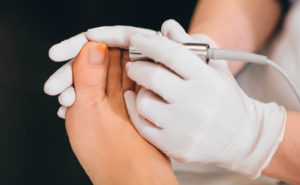
    Lasers treatments for toenail fungus

    A combination of treatments may work very well, but don’t expect a quick fix. Treating toenail fungus can take some time.

    Don’t forget that nail fungus is contagious! Don’t share nail tools, shoes, socks or slippers.

    Topical antifungal treatment

    Topical treatment of toenail fungus with an antifungal cream is often a long-term commitment. The cream requires frequent application, but if used correctly, can be very successful in eradicating stubborn toenail fungus.

    Topical antifungals are a suitable treatment in many cases, but we may opt to use our state-of-the-art lasers.

    Lasers treatments for toenail fungus

    Laser beams emit radiation that can kill fungus via heat inside an affected nail. Laser treatments for toenail fungus are comfortable, and 1-3 sessions are usually all that’s required.

    toes and feet treatments in melbourne

    Skip the home remedies – you need the strong stuff

    Most of you would have already tried treating toenail fungus at home with home remedies – and failed. If this has worked for you, then bravo, but for most of you, toenail fungus will follow you around, slowly destroying the lovely smooth, pale surface of your toenail without mercy.

    Traditional home remedies for toenail fungus include vinegar, baking soda, essential oils, garlic and mouthwash. These ingredients are proven bug killers, but there are limitations to their reach.

    You can treat the fungus with the areas of your toenail that you can reach, but the hidden reservoir of fungus is what keeps it sticking around. Unless you can get under the toenail or into the crevices, your attempts will fall flat.

    Save yourself some time and effort and head to the dermatologist to solve your toenail fungus problems.

    Set your feet free!
    Contact us for a consultation

    ENRICH Clinic
  • What does a dermatologist do?

    What does a dermatologist do?

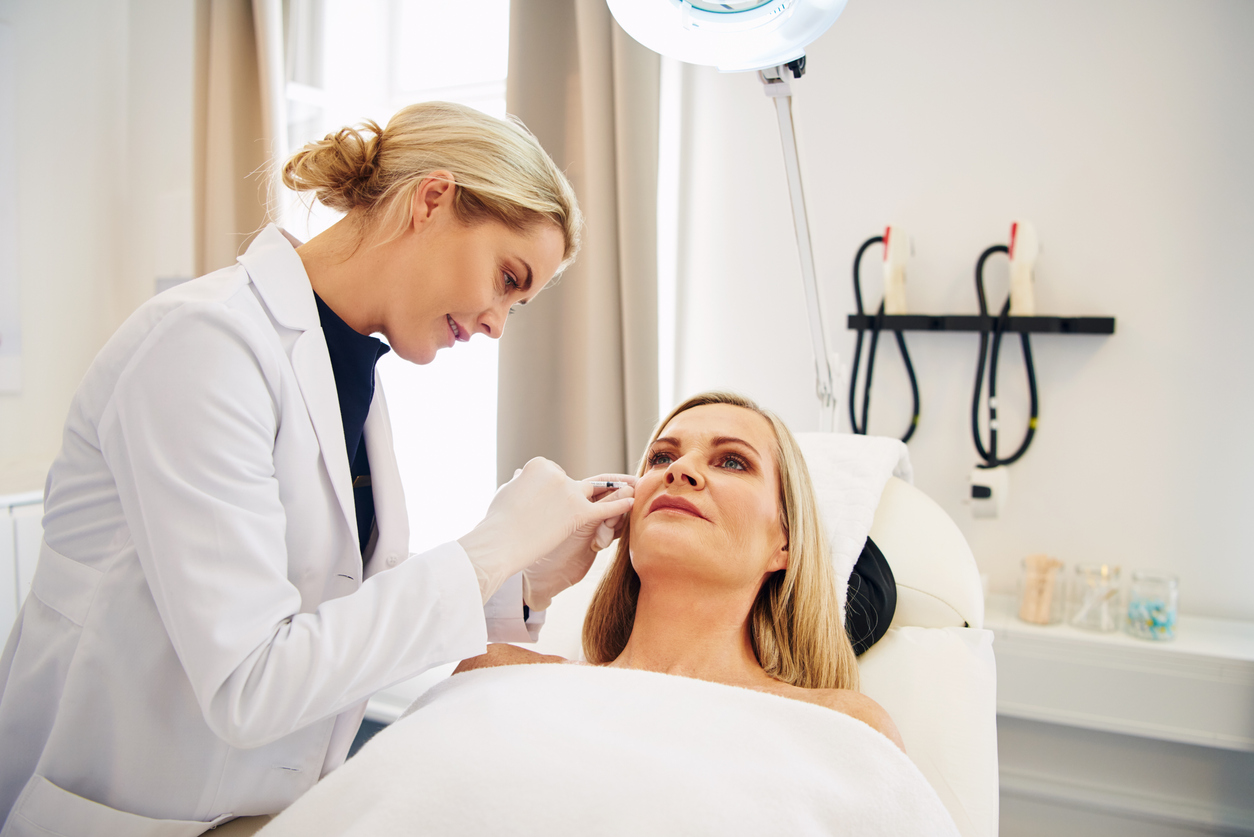
    We define a dermatologist is an expert medical professional who works to diagnose, treat and prevent skin, hair and nail conditions. A cosmetic dermatologist specialises in the aesthetics of the skin, and may work on anti-ageing and beautifying skin.

    In Australia, you need a referral from your regular doctor to see a dermatologist, but you do not need a referral for cosmetic dermatology appointments. Many costs may be partially or fully covered by medicare or private health insurance for referred medical treatments, however cosmetic treatments are paid privately, with some exceptions.

    Dermatologist qualifications – how do we define a dermatologist?

    Dermatologists in Australia complete a six-year medical degree, which requires another several years of full-time training and practice as a hospital junior. Then, a doctor must complete four years of specialist training to become qualified as a dermatologist and complete their dermatologist qualifications.

    The Australiasian College of Dermatologists is the only accredited provider of this specialist training and dermatologist qualifications. This College is the only provider who can define ‘dermatologist’ legally in Australia.

    dermstologist in melbourne

    Define dermatologist – what does a dermatologist do?

    Because the skin is the largest organ of the human body, many complaints taken to a doctor are skin-related. Your regular doctor can deal with many minor skin complaints, but a referral may be required if the problem is beyond their scope of practice or ability to diagnose or treat you. This is the domain of the dermatologist.

    Define a dermatologist – who does a dermatologist with the correct qualifications treat?

    Dermatologists treat everyone, from babies to the elderly, for all skin conditions. In Australia, sunspots and skin cancers may play a large part in clinical practice due to our lack of ozone and our love of the outdoors.

    Common conditions a dermatologist treats include:

    Define a dermatologist – what treatments do dermatologists use?

    The treatment you are offered will depend on the problem you present with, but dermatologists have a wide range of tools at their disposal to treat various conditions. This includes lasers, light and wave-based devices, and creams, ointments and drugs.

    dermatology clinic in melbourne

    Define a dermatologist – Does a cosmetic dermatologist need extra dermatologist qualifications?

    While a cosmetic dermatologist is the same as a regular dermatologist, their private practice includes what’s known as aesthetic medicine. A cosmetic dermatologist also treats the regular set of issues of skin, hair and nails, but has an interest in cosmetic outcomes too.

    ‘Cosmetic’ means the look, or aesthetics, of something, but this doesn’t mean cosmetic dermatology is overly focused on ‘superficial beauty’. Being able to put your best face forward to the world matters, and to some people this means treating parts of their face or body the same way we might get braces.

    A cosmetic dermatologist has the expertise and equipment to solve sometimes embarrassing or uncomfortable issues that may affect our day-to-day life. This includes scarring, pigmentation, and the shape of our faces after surgery or trauma. The realm of the cosmetic dermatologist is wide and varied, and helps people feel good about themselves in some way, big or small.

    A dermatologist performing cosmetic procedures is trained in the treatments they apply.

    Define a dermatologist – a cosmetic dermatologist may perform:

    • Non-surgical nose or facial augmentation
    • Anti-ageing treatments such as dermal  or wrinkle reducing treatments
    • Laser and light/wave-based treatments to improve skin quality
    • Treatments for skin tone or texture
    • Removal of visible blood vessels around the nose or cheeks
    • Removal or fading of scarring or pigmentation/birthmarks
    • Hair regrowth strategies after hair loss in men and women
    • Laser hair removal
    • Laser tattoo removal
    • Skin tightening
    • Penile treatments –  papule removal

    Cosmetic dermatologists have a huge range of state-of-the-art technology in their clinics, and are well-placed to treat the aesthetics of skin, hair and nails. At ENRICH, Dr Michael Rich and his team are dedicated dermatologists and doctors, treating all dermatological conditions and providing cosmetic dermatology services.

    The ENRICH team of specialist dermatologists and cosmetic doctors are experienced professionals.

    The team at ENRICH consists of dermatologists and cosmetic doctors each with their own special interests:

    Dr Michael Rich – MBBS, FACD

    Dr Michael Rich, founder and director of the ENRICH Clinic, is a dermatologist specialising in dermatology and cosmetic dermatology and surgery.

    Dr Michael Rich is a specialist dermatologist who practices in clinical dermatology, aesthetic dermatology and surgery. He established the clinical dermatology and cosmetic practice – ENRICH Clinic which is based in Melbourne and has been practising for over 30 years.Dr Rich was the Founder and 2015 and 2016 President of the Skin and Cancer Foundation of Victoria (now Skin Health Institute), a centre of dermatological and skin health and a training facility closely affiliated with the University of Melbourne and St Vincent’s Hospital.

    Dr Priscilla Auyeng – MBBS, FRACP, FRCPA, PHD

    Dr Auyeng has completed specialist training in clinical immunology, allergy and immunopathology, and is ENRICH’s allergy expert. Think hayfever, hives and eczema, and mast-cell disorders, this is where Dr Auyeng can help.

     Dr Maria Milone MBBS, FRACGP, DIP OBS

    Dr Milone is a practising GP and cosmetic practitioner with a special interest in sweat disorders, skin rejuvenation techniques and cosmetic treatments. Dr Milone focuses on cosmetic techniques that minimise patient discomfort and give the most natural outcome.

     Dr Afrah Mazhar MBBS, FRACGP

    Dr Mazhar is one of ENRICH’s cosmetic facial treatment experts, with a keen interest in and a knack for lasers, anti-ageing treatments and other cosmetic treatments. Dr Mazhar firmly believes that every face is beautiful and that this beauty can be enhanced, not created.

     Dr Lena Ly  MBBS, FACD,

    Dr Lena Ly is passionate about Dermatology. Dr Ly’s areas of interest include eczema in children and adults, allergies, hair, nails, skin cancer and sweating disorders.

    We have a dermatologist or cosmetic doctor that could help you 
    Contact ENRICH to make an appointment with our specialists today