Category: Advanced Technologies

  • Why there isn’t one laser for all treatments

    Why there isn’t one laser for all treatments

    To understand why there isn’t one laser for all treatments, you need to understand what each laser does during a treatment. You’ll soon see why one is better for specific jobs than another.

    What does a laser do?

    A laser is a single wavelength – a colour – of high-energy light focused into a tiny, single beam.

    Uses of lasers in everyday life

    • A teacher or professor may have a laser pointer in a classroom
    • The remote control on your TV uses a laser
    • A light show during a show may use lasers

    A laser beam, laser precision, laser light – the point of a laser is that it is a single beam of focused light energy. Laser beams come in varying strengths, for example, your remote control laser beam is very weak, transmits only over a short distance, and won’t do any damage if you shine it in your eyes.

    Stronger lasers, however, can get hot and burn, penetrate solid objects, and can transmit signals over a long distance. You do not want those going in your eyes.

    How a laser beam works

    Lasers can only emit one wavelength – colour – at a time. When we use lasers in cosmetic treatments, we are utilising a process known as ‘selective photothermolysis’.

    Photothermolysis
    Photo means light
    Thermo means heat
    Lysis means to destroy

    In cosmetic treatments that use thermolysis, we, therefore, use light to produce heat to destroy tissue.

    The wavelength – like the colour – of whatever we are targeting must be the same as the wavelength – like the colour – of the laser beam. This is how we selectively target blood vessels, brown spots, or remove tattoo ink with laser treatments.

    Many laser treatments target the water in tissue, which has its own wavelength (as opposed to a ‘colour’ as we know it).

    Each laser is generally able to produce just the one wavelength at a time, but up to four different wavelengths (using different settings) in total, limiting each of them to whatever wavelength(s) they were built for. A laser can’t produce two wavelengths at the same time.

    Starting to get it now?

    Each laser has its particular wavelength(s) that are attracted to different elements in our skin. This selectivity is why lasers are so precise and don’t affect the tissue that does not match the colour (wavelength) of choice. The laser can’t ‘see’ these colours (wavelengths) and so can’t affect them.

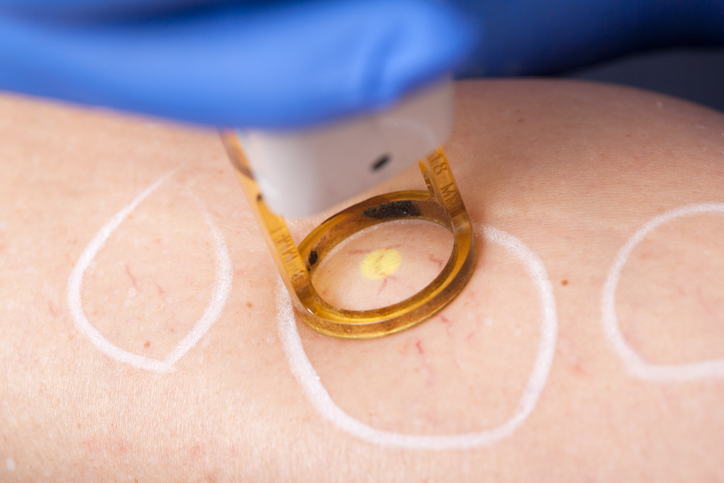
    If you have a brown spot (melanin) you want vapourising, the ablative brown-wavelength laser is your tool of choice.Young beautiful freckles woman face portrait with healthy skin
    Similarly, laser hair removal uses the same system: darker hair pigments attract the laser beam.

    Spider veins on your cheeks? The red-wavelength laser is your tool of choice to target haemoglobin.

    Some lasers have a long-range, while others have a short range. If you want to target a spider vein under the skin, for example, you need a laser that can reach that distance into your tissue but doesn’t affect outer skin or nearby skin. So, a non-ablative laser treatment targeting the red colour wavelength would be the choice.

    But, it’s also a matter of heating the target tissue quickly enough to cause damage to it. This is where the power and depth capacity of the laser treatment comes into play.

    The word laser is an acronym:

    Light
    Amplification by
    Stimulation
    Emission of
    Radiation

    Types of lasers – ablative versus non-ablative lasers

    There are two general types of lasers used in cosmetics: the ablative and the non-ablative laser.

    • Ablative lasers vapourise the top layers of skin, causing varying degrees of downtime and visible results on the topmost skin
    • Non-ablative lasers keep the top layer of skin intact, affecting deeper layers of tissue – no visible damage, no downtime

    From there, we have a vast array of brands and variations in the power and settings of each laser. The main difference between machines is the wavelength (colour) the device produces, which directly affects what sorts of skin conditions you might use it for.

    Different types of skin tightening lasers for fine lines and wrinkles

    When using a laser treatment to remove or reduce fine lines and wrinkles, we’d likely start with a skin resurfacing (ablative) laser. We would use this to remove the hills and valleys of the wrinkle. That is, to even out the skin, so it is all the same level, softening the contrast between the dips and creases a little. This reduces the appearance of wrinkles and can erase fine lines.

    These lasers also stimulate collagen production, so over time, help increase the strength and firmness of the skin.

    The carbon dioxide (CO2) laser or Erbium YAG are the most common laser treatments for fine lines and wrinkles. The CO2 laser treatment is often used for more in-depth skin treatments but also to remove skin tags and warts or for laser-assisted surgeries that require precision.

    At ENRICH, we have a vast array of state-of-the-art lasers !

    Different types of skin tightening lasers

    Skin tightening is achieved by applying the laser treatment to the skin, which produces a controlled injury to the collagen-producing layer, the dermis. Existing collagen is contracted, and new collagen production is ramped up.
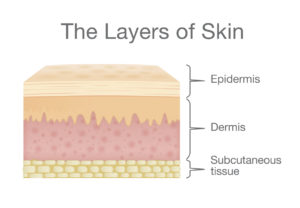
    Collagen is your skin’s infrastructure, the matrix that holds you together. When you contract and stimulate collagen, it has a tightening and  toning effect on your tissue, resulting in a visible skin tightening effect.

    We have many devices for skin tightening, depending on your individual needs.

    Different types of lasers for skin pigmentation

    Pigmentation (melanin) is produced in the epidermis – the top layer of skin – by melanocytes. The lasers most appropriate tend to be ablative devices that are matched for brown colouring. Sunspots, liver spots, age spots, melasma and hyperpigmentation, can be successfully vapourised.

    Different types of lasers for removing precancerous lesions

    Indeed, a skin cancer is usually surgically removed by a doctor to ensure the full cancer is removed. However, when a lesion is not yet cancerous, it can be quickly and easily removed with a laser treatment before it has a chance to develop into a malignancy.

    This works much like pigmentation, and we vapourise the lesion with an ablative laser.

    Different types of lasers for blood vessel conditions (spider veins, birthmarks, etc.)

    Vascular lesions such as broken blood vessels, spider veins, spider nevi, hemangiomas and port-wine birthmarks (which contain a vast blood supply) can be successfully treated with a laser treatment that targets haemoglobin-red – red. The laser ignores the tissue around the red so that a blood vessel can be destroyed without harm to other tissue.

    Different types of  tattoo removal lasers

    Tattoo removal can be done with a CO2, Q-switched laser or Nd:YAG laser, but our laser treatment of choice is the very fast, effective PiQ04 picosecond laser.

    Our picosecond laser has four different wavelengths that actively target many different colours typical in tattoos. When we combine all our lasers, we have the best selection for any tattoo to be removed, no matter the colours, including trickier cosmetic tattoo pigments. The picosecond laser is exceptionally efficient when it comes to tattoo removal.

    Different types of hair removal lasers

    Hair removal lasers have been restrictive in the past because they relied so heavily on light skin and dark hair; however, advancements in lasers have all but eliminated this. In laser hair removal, the laser needs something to be attracted to, which tends to mean a slightly darker, pigmented hair shaft.

    The laser energy travels down the hair shaft, transferring its heat to the surrounding follicle, damaging it so that it cannot produce a hair. This is how laser hair removal works.

    Visit us for laser hair removal in Melbourne

    Different types of lasers for acne and acne scars

    Deeper acne scarring can be treated using the CO2 laser, but this depends on the state of the skin and the depth of the scarring. Acne scarring may be addressed by remodelling the collagen that makes up the scarring or by resurfacing the skin, and your doctor will decide which laser is best for your skin.

    A combination of both ablative and nonablative lasers may be used, along with some of our non-laser devices.

    We have a large range of lasers to tackle your skin issues
    Contact us to see how we can help you

    ENRICH Clinic

  • Is HIFU safe for the face?

    Is HIFU safe for the face?

    High-intensity focused ultrasound (HIFU) is considered no downtime, anti-ageing treatment for the face. HIFU is a cosmetic treatment that boosts collagen production and results in tightening deep beneath the skin to provide a visible lift to facial skin.

    The HIFU Treatment

    A HIFU facial at ENRICH is performed by our nurses using the Ultraformer III,  this high-intensity ultrasound device. We use HIFU on the face to achieve non-invasive facial tissue lifting and to improve skin texture and tone. One of our newer treatment options for non-surgical skin tightening, Ultraformer HIFU treatments result in an unmatched boost for sagging facial tissue.

    With any treatment, there is always a certain risk & side effects.  It is important to read your consent and discuss it with your nurse so you understand all the details, manage your expectations, and understand the risk factors. You can expect some minor signs of inflammation at first, which means the treatment has worked. Deeper layers of collagen fibres are tightened, and collagen production is increased. The treatment results become much clearer at the three-month mark since collagen takes time to be naturally produced.

    Ultraformer (HIFU) face treatment benefits

    • Visibly tighter facial skin
    • Smoother complexion
    • More even skin tone
    • Reduces visible signs of ageing
    • Increases skin elasticity
    • Brightens skin
    • Improves the appearance of scarring
    • Deep collagen tightened
    • New collagen production stimulated
    • Underlying facial muscles tightened
    • Safe treatment

    Safety of the Ultraformer (HIFU) facials

    With Ultraformer (HIFU) facial treatments – as with any treatment, there may be risks, and those risks are patient-dependent.  We will talk any risk issue through with you before your treatment.  You can expect some side effects immediately after a treatment, which should dissipate within 24-48 hours. You may experience:

    • Redness
    • Slight swelling
    • Tingling or minor discomfort during treatments (if necessary, eased with pain medication)
    • Some people experience tingling for a few days to a week after treatments
    • Rarely, bruising or numbness, which dissipates within days

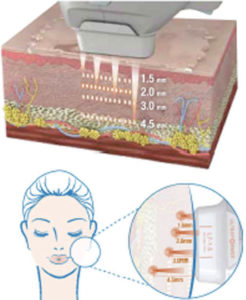
    Ultrasound energy-equipped multi-depth cartridges of the ULTRAFORMER Ⅲ only target specific layers of skin without damaging nearby tissue.

    Best candidates for Ultraformer (HIFU) face treatments

    Almost anyone can try an Ultrafomer (HIFU) face treatment at ENRICH, but some people cannot be treated due to the nature of this high-tech skin treatment. There are no barriers based on gender, skin colour, skin type or age. However, those with ageing skin tend to see the most obvious results.

    People who can’t get HIFU skin treatments include anyone with an active skin infection, open wounds or visible acne lesions in the treatment area. People with pacemakers or other electronic implants cannot undergo this type of treatment, and those who are pregnant are also excluded.

    Results can also be less visible in those with extensive sun damage and people who smoke.

    If you cannot naturally heal in a reasonable timeframe, HIFU may not be your best treatment. The skin must perform at a basic level to repair and regenerate.

    What does HIFU do to the skin?

    HIFU laser facial treatment infographicHIFU treatments work by applying high-energy ultrasound energy underneath the skin. The ultrasound works on deeper skin and collagen levels, without harming other tissue or the outer skin. This is one of the reasons HIFU treatments are so effective: they go deep, leaving untreated skin untouched. This is in comparison to other anti-ageing skin treatments, such as laser resurfacing or chemical peels, which act on the skin’s surface.
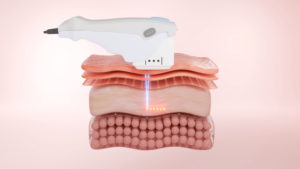
    The Ultraformer has four multi-depth cartridges directly transfer ultrasound energy into multiple layers of the face to trigger collagen renewal for a tighter, younger complexion.

    Can Ultraformer HIFU treatments be performed on other areas of the body?

    HIFU treatments can be applied anywhere on the body, with some outstanding results on cellulite, collagen production and skin tightening on the upper arms, thighs, knees, and abdomen. HIFU treatments work exactly the same wherever they are applied, tightening collagen and muscle for the overall tighter appearance of skin. Different areas can achieve different results, so its important to manage expectations. Loose skin after significant weight loss can be non-surgically tightened with HIFU treatments, especially for those who are not keen on the surgical removal of excess skin.

    How often will I need Ultraformer (HIFU) face treatments?

    Most people can start with one Ultraformer HIFU treatment to start with however, in some cases, two may be performed three or four months apart. For maintenance, treatments may be scheduled annually. However, the frequency will be determined by your cosmetic practitioner. At ENRICH, we have the mantra that 1 +1 =3, so two treatments reasonably close together will give you the benefit of three.

    The Ultraformer ( HIFU) treatment is one of those treatments that you tend to see the full benefit months up the track. It is the nature of the treatment and the depth at which the ultrasound energy goes into the layers of the skin.

    What does the research say about the safety of HIFU facial treatments?

    A 2015 study (Park et al) published in the Annals of Dermatology looked into how well the HIFU treatments worked and how satisfied the patients were after their treatments. The study was conducted on 20 Korean people with facial wrinkles and laxity (sagging) after just one treatment.

    The study employed two independent clinicians to evaluate the results across seven areas of the face using before and after photos. Photos were taken once before the treatment, then immediately after, and at the three- and six-month marks.

    Both the patients and the doctors had similar views on how well the treatment worked, with visible improvements to facial skin tightness noted. Most patients were very satisfied, particularly at the three-month mark.

    The researchers observed that the most noticeable improvements were seen around the eyes, jawline and cheeks. The only adverse effects noted were redness and swelling in six of the 20 patients and two cases of blood spots and bruising. These effects were noted as mild and short-lived.

    A 2016 study (Zandvakili et al) saw similar overall results across 25 Iranian patients. In this case, most physicians and patients rated the treatment results as ‘normal’ or ‘good’, with just one person saying the treatment was ‘weak’. The researchers noted that HIFU was a safe and effective treatment for facial skin tightening, reducing the appearance of facial wrinkles, and improving skin tone and facial contours.

    A 2012 study (Alster and Tanzi) published by the American Society for Dermatologic Surgery showed that HIFU is effective and safe to use for improving skin texture and contours on the knees, inner thighs and upper arms.

    Try Ultraformer (HIFU) at ENRICH 
    Contact our friendly staff for an appointment

    ENRICH Clinic


  • Laser and vaser liposuction: what’s the difference?

    Laser and vaser liposuction: what’s the difference?

    The difference between Vaser, laser, and regular tumescent liposuction is all in the tools used. All liposuction uses tumescent liposuction as its base, with Vaser liposuction using ultrasonic energy and a laser using a thermal laser beam to assist the practitioner in the procedure.

    Tumescent liposuction is now the medical-grade standard in liposuction and is regarded globally as the technique used for all liposuction procedures.

    Dr Michael Rich,  is a dermatologist that performs Liposuction. He founded ENRICH Clinic and has been performing Liposuction for over 30 years. Dr Rich was trained by tumescent liposuction pioneer Dr Jeffrey Klein in the United States, the doctor who founded the tumescent liposuction technique. It is Dr Rich’s opinion that tumescent liposuction alone provides results and is where patient care is central. While Vaser may be the new buzzword, it is not the gold standard in liposuction techniques.

    “Using laser to tighten skin after liposuction can be done, but I don’t believe it’s optimal for both to be done in the same procedure,” says Dr Rich regarding laser-assisted liposuction. In Dr Rich’s opinion, combining laser or “vaser” into the procedure simultaneously could also compromise patient care.

    Why is tumescent liposuction ideal for optimal results?

    The use of tumescent fluid means tiny incisions, smoother results, reduced likelihood of bruising, and faster recovery times. Vaser liposuction requires larger incisions, which means more likelihood of visible scarring and tissue damage.

    Vaser or laser liposuction changes the state of fatty tissue prior to suction, while tumescent liposuction removes fat from your body intact. Fat cells are targeted with modern liposuction techniques, leaving blood vessels, nerves, and other connective tissue largely unharmed. This reduces recovery time compared to older techniques.

    We do not perform Vaser or laser liposuction at ENRICH – we perform the tumescent technique only.

    Understanding vaser-assisted liposuction

    Vaser liposuction is performed using a special probe that emits ultrasonic waves from both the end and the sides uniformly. The probe is inserted just under the skin into the treatment area and moved gently around to treat the fat cells. The ultrasonic waves (vibrations) and heat combine the fat cells with a special saline solution that is injected into the area prior to treatment. This emulsifies the fat, which means the fat and the fluid become a liquid mixture, which is then suctioned out of the treatment area.

    Fat cells removed during vaser liposuction can be used on other areas of the body using a fat transfer or fat grafting technique ( we do not perform fat transfers or grafting at ENRICH Clinic). This is also possible with regular liposuction techniques. Vaser liposuction and tumescent liposuction are both very good for treating fat in fibrous areas of the body, such as the upper abdomen and back. Vaser tends to be more expensive than laser-assisted or regular liposuction. Vaser liposuction may be performed under general or local anaesthetic

    Understanding laser-assisted liposuction

    Laser liposuction uses a thermal laser beam to destroy fat cells, and unlike vaser, bursts the cells, emptying the contents – ‘liquefying’ fat. This liquid content is suctioned away at the same time as the laser is applied. With laser-assisted liposuction, the laser beam is only emitted from the end of the probe, not the sides.

    Blood vessels inside the treatment area are cauterised by the laser beam, which reduces bleeding. The special tumescent fluid injected into the treatment area also contains lidocaine, which not only numbs the area fully, but acts to seal off blood vessels. This means very limited bruising and bleeding, resulting in quick recovery times.

    Laser liposuction can result in some skin tightening at the same time as liposuction, with the heat tightening the collagen fibres how ever in Dr Rich’s opinion laser & liposuction combined can result in more risk for the patient.

    There is a greater risk of burns using laser liposuction compared with vaser liposuction, however in the wrong hands, the vaser probe has a history of burns too. Laser techniques are not quite as useful when treating fibrous areas of the body, but are useful for smaller areas. Laser liposuction may be performed under general or local anaesthetic.

    Key points of vaser, laser and tumescent liposuction:

    • Both vaser and laser liposuction use heat
    • Vaser uses ultrasonic vibrations and heat to mix fat with the saline solution for easy removal
    • Vaser and tumescent liposuction are suitable for keeping fat cells intact for subsequent fat transfers
    • Vaser and laser both use regular tumescent liposuction techniques, with the addition of specialised probes
    • Using an experienced tumescent liposuction specialist is the best way to get good results for any liposuction treatment
    • Tumescent, vaser and laser liposuction all have their pros and cons
    • Always do your research. Liposuction is a surgical procedure and its essential for anyone embarking on any procedure to be informed.

    What is the difference between vaser lipo and tumescent liposuction?

    Tumescent liposuction is the gold standard of liposuction techniques, while laser and vaser are trendy procedures that all use tumescent liposuction as their base. Tumescent liposuction uses a special fluid injected into the treatment area, which numbs it and stops excess bleeding. The fluid makes the treatment area firm for easier fat removal, and the liposuction practitioner then uses a tiny tube to carefully and precisely suction fat out.

    The processes are very similar between vaser, laser, and tumescent liposuction overall, but Vaser and laser may come with extra risks. The extra probe with the energy beam (ultrasound or laser beam) is useful in some circumstances but has little to do with a successful outcome. An experienced, expert liposuction practitioner is always your best bet for good results .

    Read more on the science behind tumescent liposuction.

    What’s the difference between Smartlipo and liposuction?

    As mentioned above, Smartlipo (laser-assisted liposuction) and tumescent liposuction are different only in that with Smartlipo; a laser is used to break up the fat before it is suctioned out.

    Looking for long-lasting fat removal?
    Contact ENRICH for informed and experienced liposuction and fat removal treatments

  • HIFU and the Ultraformer – are they the same?

    HIFU and the Ultraformer – are they the same?

    HIFU – high intensity focused ultrasound – is a newer, non-surgical method of lifting facial tissue. HIFU is the technology that underpins the Ultraformer: HIFU and the Ultraformer are the same, with the Ultraformer being a high-performing brand of HIFU machine.

    The Ultraformer is one of the more advanced treatment devices in its class, which is why we use it at ENRICH over other, lower-energy machines. The Ultraformer targets three different layers under the skin, while other machines may only target one. This means with the Ultraformer, you need fewer treatments for better results.

    HIFU is used for skin tightening and fat-removal, with visible improvements at their best about three months post-treatment. The treatments take this long to show results, since collagen production takes about this long, as does the natural removal of damaged fat cells.

    According to research, the areas that best respond to HIFU treatments are the jawline, around the mouth, and cheeks. Positive effects include improvements in skin tone, facial contour and skin tightness. HIFU can be used in conjunction with other cosmetic treatments like anti-wrinkle injections and dermal fillers.

    Read more about our HIFU and Ultraformer treatments and make an appointment

    What is a HIFU treatment best for?

    • Lifts and firms the jawline/jowls and cheeks
    • Reduces/softens nasolabial folds
    • Tightens neck area
    • Stimulates skin’s natural healing process
    • Improves skin tone
    • Improves skin elasticity
    • Improves the appearance of crepey skin
    • Reduce the appearance of acne scars, stretch marks, and loose skin
    • Improves the appearance of cellulite

    What is a HIFU treatment?

    HIFU uses high-intensity ultrasonic waves to exert an effect on underlying cells, without damaging the outer layer of skin or other nearby tissue. Ultrasound is an anti-ageing and fat-removal treatment, with the first demonstration of ultrasound’s powers on facial tissue seen in 2008. Is commonly used as a facial rejuvenation tool to lift, tighten and smooth skin and for body contouring.

    HIFU causes microdamage to cells deeper in tissue, which triggers the production and contraction of collagen. This is known as collagen remodelling. Muscles can start to loosen and sag over time – HIFU works to tighten loose muscle too, for the overall tightening effect.

    HIFU can be applied anywhere on the body, and works well for cellulite, loose skin after weight loss, and facial rejuvenation.

    Like science? Read more about how HIFU works from the researchers themselves.

    What a HIFU facial treatment looks like

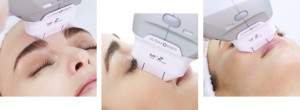
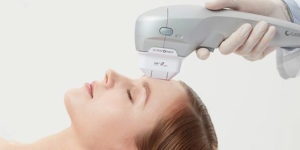
    Your face will be cleansed, and if required for your treatment, an anaesthetic applied if required. An ultrasound gel will be applied to the face, enhancing the device’s action, while allowing smooth gliding over skin. The treatment is then applied with care and precision to the desired areas.

    The HIFU treatments start off with a pinprick heating sensation, like a sweat prickle. Some discomfort may be experienced as the ultrasound energy is delivered to your deeper tissue layers, but this is temporary. We will advise you of any pain relief you may require to alleviate discomfort.

    After your treatments, there may be some slight swelling, redness or tenderness, which is due to the effect of the treatment and means it’s working. The treatment triggers a healing response in your body, producing a temporary inflammatory response in tissue. This effect should last no longer than 24-48 hours.

    You can expect to put aside an hour for a full facial treatment plus another half an hour for consents and pre-discussion & post-treatment instructions.

    Results of Ultraformer and HIFU treatments – what to expect

    You will immediately notice tighter skin, since collagen fibres are contracted via heat during the treatment. The results take about three months to fully appear, since collagen must be produced and this takes time. Because we continue to age normally, HIFU and Ultraformer results don’t last past a year, so repeat treatments are applied as needed.

    You don’t need to do anything differently after treatment – you can wear make-up, exercise, and go about your normal day. We always recommend using a high-protection sunscreen to protect your face from sun damage, particularly after any skin treatment.

    Ultraformer and HIFU treatments are best suited to:

    • Those seeking anti-ageing solutions for the face or body
    • Anyone wanting a non-surgical facelift or skin tightening
    • HIFU and Ultraformer treatments will not be performed on anyone who is pregnant or breastfeeding

    Benefits of HIFU treatments

    • HIFU is non-invasive and non-surgical
    • No downtime (some mild swelling or tenderness may occur in some cases)
    • Gentle but powerful
    • Safe
    • Customised treatments
    • Skin tightening via deep layers of tissue
    • Three different settings for different skin depths
    • Anyone can benefit from HIFU or Ultraformer treatments
    • Usually only one treatment required at a time, however this depends on individual needs

    HIFU therapy for the face at ENRICH

    There are many benefits of HIFU therapy for the face, with the main outcome being skin tightening and an improvement in skin quality. This tightening starts in the deep layers of collagen, with this reflected in the outer facial skin.

    HIFU therapy for the face is useful for sagging jowls around the eyes, neck, chest, and arms. HIFU treatments can help delay further signs of ageing while also maintaining results with repeat treatments six-monthly to annually.

    We have the Ultraformer and offer non-surgical skin tightening.
    Contact our friendly clinic staff for an appointment

  • What’s up down there? Are penis bumps harmful?

    What’s up down there? Are penis bumps harmful?

    pearly penile papules treatment

    Pearly penile papules are a small ring of flesh-coloured (or slightly lighter-coloured) dome-shaped bumps in an organised row around the head of the penis. Pearly penile papules are common, especially amongst men in their twenties and thirties. The good news? They are not dangerous and are very easily treated, should they be of concern.

    As ENRICH Clinic’s founding dermatologist, Dr Michael Rich is one of few doctors who has treated hundreds of men with pearly penile papules who have come from both locally and overseas to seek treatment. Contact us today to secure an appointment.

    What are pearly penile papules? 

    Pearly penile papules are a small ring of, usually, flesh coloured, dome-shaped bumps that collect around the head of the penis. These bumps are considered a normal characteristic of many penises and are non-infectious, benign growths. They are most common in men in their twenties or thirties. It’s estimated that around 8%-43% of men will develop pearly penile papules in their lifetime. In many cases, pearly penile papules will appear and resolve on their own. 

    What causes pearly penile papules?

    Pearly penile papules are a normal characteristic of the penis and are the result of an overgrowth of dilated blood vessels, fibroblasts and collagen (the cells and supporting tissue of the skin) in a localised area. The trigger for pearly penile papules is unknown. They are not infectious and cannot be passed on to other people.

    ppp treatment melbourne

    Are pearly penile papules harmful?

    You might be wondering, ‘are pearly penile papules bad or harmful?’ The answer is no. Pearly penile papules are not harmful or contagious, and aside from psychological or social reasons, are generally not a cause for concern. They are not a sign of another more serious or underlying condition. They are not related to sexual activity, although they are commonly mistaken for a sexually transmitted disease with similar-looking symptoms, such as genital warts. If you are unsure or have any queries about whether you have pearly penile papules or something more, you should always consult your doctor for clarification. Additionally, the bumps should not be picked at or squeezed excessively to try to remove them – this can cause the skin to break and might increase the risk of infection or pain and discomfort.

    Your doctor will assist you in coming to a correct diagnosis.

    Want to banish your bumps? ENRICH Clinic has the answers

    Pearly penile papules generally have no negative side effects, aside from the potential for increased sensitivity in the area. However, many patients report that the bumps make them self-conscious. Patients may choose to engage in treatment for pearly penile papules in order to alleviate anxiety.

    If this is the case, ENRICH Clinic’s Erbium laser can be used to quickly and precisely remove pearly penile papules. Generally, only one laser treatment is required for lasting results.

    How does the Erbium laser work?

    The Erbium laser ablates the skin using a carbon dioxide laser, removing the papules effectively. This laser is preferred for the removal of pearly penile papules due to its ability to ablate and remove any textural irregularities such as the white, dome-shaped bumps associated with pearly penile papules. The treatment is relatively quick and requires minimal downtime. In the days following the procedure, the area will scab over and heal within two weeks. A small amount of swelling or bleeding is common in the first one to two days post-treatment. A dressing will be applied to the area that should remain in place for about a week after your procedure.

    Does the treatment hurt?

    At ENRICH Clinic, your comfort during and after your procedure is our number one priority. Numbing creams can be applied in the lead up to the appointment to minimise discomfort without the need for local anaesthetic injections in the treatment area. 

    How long after the treatment can you have sexual relations?

    The recommended abstinence is about 2 weeks from the procedure date. This is to allow the treated area to heal and yes, it includes all types of sexual contact.

    Contact us to secure an appointment. 

  • Teen acne treatments

    Teen acne treatments

    teen with acne

    Acne is an inflammatory skin condition that is most common amongst teenagers and adolescents, but can affect people of all ages. We can help with acne treatment in Melbourne.

    Suffering from acne? Contact ENRICH Clinic for a consultation with one of our friendly and experienced doctors. We are experts in acne treatments in Armadale, Melbourne.

    What causes acne?

    Acne is generally the result of a number of factors. It is predominantly genetic and hormonal, but may also be the result of:

    • Bacteria
    • Genetic predisposal
    • Hormonal changes – an increase in the androgen hormone can result in acne
    • Immune system
    • Blocked hair follicles
    • Lifestyle factors such as excessive stress, poor diet or stress and anxiety

    Risk factors for the development of acne include menstrual cycle, anxiety and stress, hot and humid climates, and some forms of oil-based make up and skin care.

    What are the side effects of acne?

    Acne can be a disabling and often times disfiguring skin condition, with a number of associated potential physical and mental side effects. Acne may have wider-ranging effects than some skin cancers. A recent study published in the British Journal of Dermatology examined a group of participants both with and without acne found that the probability of developing major depression was 18.5% amongst patients with acne and 12% amongst those without. Similarly, research suggests that following a diagnosis of acne the risk of diagnosis of major depressive disorder can spike by up to 60% in comparison to the general population.

    At ENRICH, we understand the wide-ranging implications acne can have and work with you to treat all aspects of acne.

    Acne can also have associated side effects relating to:

    • Self-esteem and body image
    • Social withdrawal and relationship building
    • Education and work

    Common physical side effects of acne include scarring and pigmentation in previously inflamed areas. At ENRICH Clinic, we have a number of treatments that can help with the physical side effects of acne, such as laser treatments, chemical peels and skin care consultations.

    Acne treatment at ENRICH Clinic in Melbourne 

    Treatment will be dependent on the severity and persistence of each individual case of acne and the patient’s own symptoms. There are a variety of treatments available to assist in reducing and resolving acne. These include:

    • Chemical peels and light therapy
    • Topical creams and anti-biotic creams
    • Oral prescription medication 

    Contact ENRICH Clinic Melbourne to secure an appointment with one of our dedicated and experienced cosmetic doctors to start treating acne.

    Check out Dr Michael Rich’s comments on the treatment of acne in this recent BeautyCrew.com.au article.

  • Vaginal rejuvenation – ENRICH Clinic’s Intimate Program

    Vaginal rejuvenation – ENRICH Clinic’s Intimate Program

    vaginal rejuvenation intimiate program

    Laser and radio frequency treatments for vaginal rejuvenation are becoming increasingly popular procedures. ENRICH Clinic is the only clinic in Victoria home to Juliet laser treatment and Thermiva radio frequency treatments for vaginal rejuvenation. These new technologies make treatments safe, effective and quick. This unique, combined approach maximises potential results for every client. Treatments can be individualised and adapted to suit to your specifics needs. Patients will generally require 1-4 treatments, but this will be managed in consultation with your doctor. One to two treatments are typically required for pre-menopausal women and three to four treatments for post-menopausal women. The number of treatments will be discussed with your doctor.

    The procedure itself involves approximately half an hour of lasering with more time allowed for preparation and quick recovery. You are able to resume normal activities straight after the treatment. No down time is required.

    Why ENRICH Clinic?

    ENRICH Clinic’s Intimate Program is a dedicated treatment regime focusing on the vagina, vulva and urinary tract cells using non-invasive non-surgical vaginal rejuvenation techniques.This unique program can help solve and alleviate some of your most private concerns, including vaginal laxity and stress urinary incontinence. There is now more discussion and awareness of the unpleasant and uncomfortable symptoms women can suffer and more inclination to seek treatment to improve these symptoms.

    Our skilled and experienced doctors are trained to discuss all your concerns in these areas. Coming to discuss these symptoms with a doctor can be embarrassing for many women. Doctors at ENRICH Clinic are specifically trained to understand the nature of these concerns. Our team will develop an individualised treatment plan that is specific to your needs.

    Intimate Program ENRICH Clinic Melbourne

    • Radiofrequency treatments using the state of the art ThermiVa device
    • Safe and comfortable Juliet laser treatments

    What does ENRICH’s Intimate Program treat?

    • Vaginal laxity
    • Dryness
    • Urinary incontinence
    • Genitourinary syndrome of menopause (GSM)

    Learn more about ENRICH Clinic’s Intimate Program here.

    Contact ENRICH Clinic to make an appointment with one of our friendly and experienced doctors.

  • Ultraformer III for Skin Tightening

    Ultraformer III for Skin Tightening

    The Ultraformer III is the latest addition to our range of skin tightening devices. 

    The Ultraformer III is an innovative treatment using precise, micro-focused ultrasound waves concentrating on the soft tissue of the neck, chin, face and some areas of the body.

    These high-intensity focused ultrasonic (HIFU) waves stimulate tightening and strengthening of the supporting tissue for a more youthful appearance. Ultraformer treatments are non-invasive and come with no downtime. In fact, Ultraformer offers a non-surgical, non-injection facelift.

    Understanding from whence it came – and into the future

    The first ultrasound device of this kind on the market was Ulthera. It was a breakthrough and initially unique, but, in Dr Rich’s opinion, it is now not only second generation. The Ultraformer is much more effective and can treat many more areas of the body. 

    Clinical evaluation has shown that after the treatment, there is perceivable tissue lifting over the next three to six months, without any downtime.

    The recovery process of HIFU

    • Skin is usually red immediately following the treatment, usually lasting for a few hours
    • Mild bruising and swelling can occur for several days after the procedure
    • The skin may feel slightly numb for up to a few weeks
    • A tingling sensation may be experienced for a few weeks

    Understanding high-intensity focused ultrasound (HIFU)

    HIFU is a non-surgical facial tissue lifting procedure that can also remove small amounts unwanted fat. We love our Ultraformer because it’s got such power. The Ultraformer targets three layers of tissue, outperforming its peers, which only target one layer. You, therefore, need fewer treatments to get much better results.

    You’ll see visible improvements to skin after about three months. Collagen production takes weeks and weeks to develop, and always takes this long. The natural removal of damaged fat cells also takes a little while, so you do have to wait a little while to see results.

    Areas we love for the Ultraformer at our Melbourne clinic

    • Jawline
    • Around the mouth
    • Cheeks
    • Jowls
    • Softening nasolabial folds
    • Acne scarring
    • Browlift
    • Cellulite
    • Tummy for loose or stretched skin

    We see an improvement in skin tone, contour and strength. The procedure can work on most skin types with no known long-term side-effects from treatment. We can also utilise our other cosmetic no-downtime procedures such as anti-wrinkle injections or dermal fillers.

    Read more about our HIFU and Ultraformer treatments and make an appointment

    What is a therapeutic ultrasonic wave?

    The Ultraformer makes the most of high-intensity ultrasound waves, which penetrate and are absorbed by the tissue. A therapeutic ultrasound causes  therapeutic benefit, used in several forms, with HIFU being but one.

    An ultrasonic wave is a sound wave that can’t be heard by us humans, running at between 800,000 Hz and 2,000,000 Hz. That is, way beyond what we can hear, which is in the range of 20 Hz and 20,000 Hz. While that might make you wonder what is going on around us that we can’t hear, we can use these sound waves to effect change in cells.

    The effect is both thermal and nonthermal in nature, which increases blood flow to the treatment area, reducing pain and swelling, and a gentle ‘massage’ of tissue. No strain is added, with scar tissue softening.

    The thermal effects are due to the absorption of sound waves, while nonthermal effects are from what’s known as cavitation, meaning the formation of bubbles in liquid that stimulates the cell membrane. This stimulation impacts and enhances the cell’s repair capacities and anti-inflammatory response. Ultrasonic waves increase the flow of fluids between body structures.

    We also use both focused and unfocused ultrasonic waves in:

    • Lithotripsy (targeted ultrasonic waves that break up kidney stones or other calcified body deposits)
    • Drug delivery via the skin
    • Stemming bleeding (ultrasound haemostasis)
    • Cancer or tumour therapy (heating up a cancerous growth to kill cells, delivering drugs to brain cancers)
    • Breaking up blood clots (thrombolysis)
    • Sorting cells or particles for research
    • Cleaning plaque off teeth
    • Cataract treatments
    • Varicose vein treatments
    • Assisting liposuction treatments

    How was ultrasound developed?

    In World War II, sonar systems were found to heat up and kill fish, leading to research on the impacts of sonic waves on tissue. We’ve been using ultrasound since 1940 in physical and occupational therapy.

    The tissue that absorbs the most ultrasonic energy is connective tissue: tendons, joints, ligaments, fascia and scar tissue. This makes ultrasonic waves great for treating issues with connective tissue such as sprains, inflammation, arthritis and scar tissue.

    When used in anti-ageing and for skin rejuvenation, the same principles are applied to improve skin.

    Like science? Read more about how HIFU works from the researchers themselves.

    svg%3E

    How we do a HIFU facial treatment

    We first cleanse your face and if necessary apply an anaesthetic. We then apply ultrasound gel, which increases the efficacy of the device and allows the smooth application across the skin.

    You’ll first notice a pinprick sensation, and warmth, akin to a prickle of sweat. It may feel a little uncomfortable as the energy is applied to underlying layers, however, the discomfort isn’t lasting.

    You may have swelling, redness or tenderness after the treatment as your body kicks into gear and heals your tissue. The redness and slight swelling will dissipate.

    You will immediately notice a distinct tightening effect. This tightening is due to collagen fibres – protein – being heated and shrunk, the way an egg or sausage shrinks when you heat it. Protein shrinks when it’s heated, retracting it. You’ll need to wait three months to see the full effects, but it’s worth the wait. Ultraformer treatments are fantastic!

    We have the Ultraformer and offer non-surgical skin tightening.
    Contact our friendly clinic staff for an appointment

    *Results may vary from person to person

  • Juliet Laser for vaginal rejuvenation

    Juliet Laser for vaginal rejuvenation

    Internal Laser Vaginal Rejuvenation

    The Juliet with V Spot Erbium: YAG laser is the latest technology in fractional laser systems for gentle, effective vaginal rejuvenation and improving urinary stress incontinence. The special structure of the laser pulse allows penetration deep into the tissue, precisely where it is most required.

    The first laser to offer this benefit was the Mona Lisa. As the first in its class, the concept and technology were well conceived. In Dr Michael Rich’s opinion, the Juliet, which is a newer technology, achieves good results but can in most cases achieve better result than the Mona Lisa in less than half the number of treatments.

    What does the Juliet Laser treat?

    With menopause or due to hormonal treatments related to conditions like breast cancer, the vaginal lining becomes thin and atrophic, and can result in painful intercourse due to dryness, itch, discharge and spotting. The Juliet Laser rejuvenates the lining of the vagina resulting in a more hydrated, better quality and thicker lining with improved lubrication and less discomfort.

    Pregnancy, childbirth and ageing often cause vaginal wall laxity and urinary stress incontinence when involuntary loss of urine occurs during coughing, sneezing or physical exertion. The Juliet Laser tightens the vaginal canal and supporting structures around the bladder, improving sensation with intercourse (for both you and your partner) and reduces urine leakage with physical activity, sneezing or coughing.

    The external labia majora and labia minora can also be rejuvenated with the Juliet Laser, plumping up the outer labia and tightening and retracting the inner labia.

    The Juliet is only for mild to medium vaginal issues.

    Can everyone have the procedure?

    Treatment is not performed during pregnancy if there is any undiagnosed vaginal bleeding and if there is a current urine or genital tract infection. We require the patient to have had a recent PAP smear test with a normal result.

    Does the treatment hurt?

    To minimise discomfort, oral analgesia tablets (Panadeine) is given prior to the treatment, and local anaesthetic cream is applied to the external areas if they will be treated. Discomfort during treatment usually  minimal, although some patients feel a mild, warm sensation during the procedure and soem discomfort.

    What happens during treatment?

    1. Juliet with V Spot Erbium laser vaginal rejuvenation is carried out only by our highly trained doctors at ENRICH.
    2. Positioning during treatment is similar to having a PAP smear, with a sheet placed over the groin for modesty.
    3. A speculum examination is performed after which the local anaesthetic cream, applied previously, is removed.
    4. The laser treatment is then carried out.

    Recovery Process

    • There may be mild discomfort immediately after the treatment.
    • There is some downtime from the treatment –  abstaining from intercourse for 7 days is advised.
    • A sanitary pad or panty liner can be worn for the light vaginal discharge that lasts for up to 5 days after treatment.

    How many treatments are required?

    For ladies who have not reached menopause, one treatment is usually sufficient. However, postmenopausal patients benefit from a second treatment, one month later. Treatments annually can also be beneficial.

    How quickly is improvement noticed?

    Benefits are observed almost immediately, although maximal tightening due to new collagen formation will take up to a month to occur.

    What makes the Juliet laser different from other lasers that perform vaginal rejuvenation?

    • Juliet has a small hand-piece meaning greater comfort compared with some of the bulkier devices on the market.
    • The Juliet has a target-specific laser beam using sophisticated technology resulting in more precise treatment and less damage to surrounding areas, making it ideal for delicate tissue such as the vagina.

    Why have the procedure at ENRICH?

    At ENRICH, we only have experienced doctors performing the assessment of and the treatment for vaginal rejuvenation. Our doctors understand the personal and intimate nature of your concerns. Their specialist knowledge and compassion ensure that you achieve the best possible results for conditions that are often very difficult to talk about, let alone have treated.

    Contact us to arrange a personal consultation to find out whether Juliet can assist in addressing your most intimate needs.


  • Excel V Laser for Blood Vessels

    Excel V Laser for Blood Vessels

    What is the Excel V laser?

    The Excel V laser is the latest laser technology in the fight to treat unsightly blood vessels, unwanted redness and flushing, as well as many other vascular lesions, particularly on the face, neck and chest. Although primarily a vascular laser, it may also be used to treat pigmented lesions, and, in particular,  can be used on darker skin types, which may be problematic with other lasers.

    How does the Excel V laser work?

    The Excel V laser is extremely versatile, with virtually 3 lasers in 1, with a 532nm wavelength, a 1064nm wavelength and a Genesis component.

    • The 532 nm wavelength targets the superficial network of vessels.
    • The 1064nm wavelength targets the deep plexus of vessels.

    Combined with a unique skin cooling system, and an inbuilt mechanism to vary the amount of energy delivered and the speed of energy delivery, the Excel V can be tailored exactly to individual skin needs. This allows for better delivery of energy to the skin and more precise penetration of unwanted blemishes compared with previous lasers. This means less risk of scarring and other laser complications, as well as better results.

    The Genesis component of the Excel V laser allows for treatment of the minute, unseen blood vessels that cause background redness and flushing.

    What is involved with an Excel V treatment?

    Excel V treatments are carried out by our doctors at ENRICH, and Genesis by our nursing team

    • The face is gently cleaned to remove any surface residue.
    • A thin gel coat is applied to the skin to allow the laser handpiece to glide over the skin.
    • Opaque goggles are placed over the eyes to protect them from the laser’s intense light.
    • Mild discomfort is felt from the pulses of the laser, akin to being flicked with a rubber band.
    • Afterwards, soothing cool air and ice may be applied to the skin to reduce swelling and bruising.
    • Treatment may be followed up with time under the LED Diode to aid healing.
    • Swelling or bruising can occur for several days after treatment.

    Got blood vessels in the wrong places?
    We can help.
    Contact us