Category: Dermatology

  • Understanding rough nails (trachyonychia)

    Understanding rough nails (trachyonychia)

    rough nails (trachyonychia)Rough nails are associated with a handful of dermatological conditions, and thus diagnosing the cause requires some good investigative skills on the part of your dermatologist.

    The first thing you may have been treated for is a fungal nail infection, but antifungals may not have resolved the issue. This brings on the next phase of investigations, which might include looking into any history of lichen planus, psoriasis or alopecia areata.

    Rough nails have two variations: opaque trachyonychia (ridges that run longways down the rough, sandpapery nail) and shiny trachyonychia (shiny pitted nail in lengthways and sideways lines).

    Trachyonychia is usually associated with another dermatological condition, so expect some investigations. Lichen planus, psoriasis and alopecia areata are the main suspects, but these conditions typically appear elsewhere on the body in other forms, making diagnosis a bit easier. Trachyonychia can be difficult to figure out if only the nails are affected, so a test for fungus may be taken if it hasn’t already.

    Other conditions that trachyonychia has been associated with:

    • Eczema
    • Graft-vs-host disease
    • Dry, scaly, thickened skin conditions (ichthyosis vulgaris)
    • Immunoglobulin A deficiency
    • A genetic disorder (incontinentia pigmenti)
    • ‘Spoon nails’ (koilonychia)
    • Skin blistering disease (pemphigus)
    • Cirrhosis of the liver
    • Trauma to the skin
    • Vitiligo
    • Long-term pain syndrome (reflex sympathetic dystrophy)

    The cause of trachyonychia is inflammation, with the shiny, pitted version seeing only intermittent inflammation.

    Treatment of trachyonychia

    Rough nails do not scar and treatment is not necessary, since a lot of the time trachyonychia will resolve by itself. No intervention is necessary, though steroids and some topical creams may help. In shiny trachyonychia, nail polish can be used if desired. Your dermatologist will be possibly treating you for your other conditions, in which case the nail problems will disappear as treatment progresses for any other underlying conditions.

    We are expert dermatologists. 
    Contact us

  • Treating alopecia areata (autoimmune hair loss)

    Treating alopecia areata (autoimmune hair loss)

    Alopecia areataAlopecia areata simply means ‘hair loss’, and is a condition whereby hair is lost from any area on the body, typically in bald patches.

    This condition might also be called autoimmune alopecia, since it is believed to be an autoimmune condition. Alopecia areata can affect hair anywhere on the body, including the scalp, eyebrows, eyelashes and facial hair.

    Most people have no other symptoms, but start to notice a bald patch appearing somewhere, perhaps at the hairdresser. There may be a sensation of prickling or discomfort in the affected area, known as trichodynia. Alopecia areata may appear with nail symptoms, known as trachyonychia.

    What we know about alopecia areata: 

    • Anyone of any age from any country can develop alopecia areata, with about half of all cases starting in childhood, and about 80 per cent starting prior to age 40.
    • A family history of alopecia areata or another autoimmune condition exists in up to 25 per cent of those with alopecia areata.
    • Up to eight susceptibility genes have been found.
    • Those with alopecia areata have higher than average rates of vitiligo, eczema and thyroid conditions.
    • People with Down’s syndrome have alopecia areata more often.
    • Some medication can trigger alopecia areata.
    • A virus, trauma, hormonal change or emotional or physical stress may trigger onset or recurrence of alopecia areata.
    • This is what can cause ‘going white overnight’ due to shock or trauma (see more about going grey here).

    Why does the hair fall out and stop growing?

    The T cells in the hair follicles release inflammatory molecules that reject the hair in the follicle, but we’re not sure why.

    Hair-loss treatments for alopecia areata

    Hair-loss treatments are evolving, with a new treatment looking very promising. Traditional treatments include:

    • Topical treatments that can improve hair growth in some people, but hair falls out when treatment ends (topical steroids and prescription ointments)
    • Corticosteroid injections into the bald areas, which helps speed up hair growth, but is temporary
    • Systemic corticosteroids via intravenous injection can temporarily regrow hair, however this treatment cannot be justified long term due to adverse effects
    • Immunotherapy, such as causing contact allergic dermatitis in affected areas to deliberately irritate the skin to stimulate the hair follicle
    • Lipid-lowering treatments that may have immune effects
    • JAK inhibitors – latest new treatments that look promising

    Counselling is recommended, since losing one’s hair in patches without a cure in sight can be quite terrifying. Camouflage is therefore a suitable goal, and can be achieved via various mechanisms. Typically the eyebrows, eyelashes and head hair are the most missed areas of hair, which can be replaced with a wig or hairpiece, false eyelashes (including for men), and eyebrows drawn on or even tattooed on. Each of these solutions comes with its own issues, so speak to your cosmetic dermatologist for more solutions.

    In 80 per cent of people with a single bald patch, the hair grows back spontaneously within a year. Most people, even with severe alopecia areata, see either a full or partial recovery.

    Let us delve into your alopecia areata. 
    We’re expert dermatologists.
    Contact us

  • Treating dandruff in the dermatology clinic

    Treating dandruff in the dermatology clinic

    dermatology dandruff treatment melbourneDandruff – a flaky, itchy scalp – is a bit of a mystery to the medical community, with the exact cause unknown. Just about everyone agrees, however, that dandruff is not caused by being unclean.

    We do know a few things about dandruff, with the causes and some management strategies all part of the puzzle.

    What we know about dandruff:

    • Many people find that their dandruff improves as they age
    • It is believed that around half of those living in Western Europe and North America have dandruff
    • Men get dandruff more often than women
    • People with oily skin get more dandruff than those with drier skin
    • Diet may play a part – too sweet, salty or spicy, plus excess alcohol, may make dandruff worse

    Some known contributing factors to dandruff:

    • Seborrheic dermatitis – oily, irritated skin that is covered with flaky white or yellow scales, closely linked with a fungus (Malassezia) that lives on everyone’s scalp. This fungus uses our natural hair oils to survive, which can get out of control. Dandruff may be the result of irritation that causes extra skin cells to be produced – as these skin cells fall off, they mix with oil and appear as dandruff.
    • Insufficient hair brushing – keeping dead skin cells out of your hair by brushing can help keep hair free from debris.
    • Yeasts – yeast may play a part, in which case dandruff will become worse in winter and feel better in summer. UV light tends to help kill off yeasts.
    • Prone to dry skin – if you often have dry skin, having dandruff becomes more likely. Dry skin itches and flakes anywhere on the body, and this type of dandruff is not oily, but dry.
    • Skin conditions – those with psoriasis and eczema may get more dandruff.
    • Parkinson’s, neurological illness, stroke – some people with neurological and other diseases can be prone to having dandruff and seborrheic dermatitis.
    • Irritation reaction – if you are sensitive to your shampoo or other hair-care products, you may be inadvertently causing dandruff.
    • HIV – just over 10 per cent of those living with HIV will have seborrheic dermatitis.

    Treatments for dandruff

    Treating dandruff typically centres around slowing down the skin-cell turnover or stemming the growth of fungus. Anti-dandruff shampoo is readily available, containing special ingredients that tend to block fungal growth temporarily. Active ingredients include ketoconazole, selenium sulfide, zinc pyrithione, coal tar, salicylic acid, tea tree oil, or green tea extracts. Use of these shampoos every day until the problem gets under control can usually help manage dandruff.

    These shampoos need good scalp surface area connection for several minutes to exert their effect, so don’t wash it off too quickly. Additionally, a trip to a dermatologist to see what the problem might be – and how to treat it with more effective solutions than shampoo – may be in order. Your dermatologist can test your scalp to check what exactly is going on, and provide tailored treatments.

    Treat the cause of your dandruff, not just the symptoms.
    Contact us

  • Top 10 uses of dermal fillers

    Top 10 uses of dermal fillers

    1. dermal filler for brow liftCheek dermal fillers 

      Cheeks are the number one area that people have treated with dermal filler, particularly as we age, since the cheeks start to lose volume. The benefits are that the cheeks – particularly when there is sufficient fat and volume – make us look more youthful. The cheeks tend to lose volume over time due to the effects of a loss of collagen and gravity.

    2. Lip dermal fillers

      Lip enhancements using dermal filler are very common and can boost lip volume and shape with a few carefully placed dermal filler injections. Plumper lips can add a youthful touch to the face, particularly when lips are thinner or there are lines around the lips. There are several ways to accentuate lips, but having an experienced, skilled doctor with an artful eye doing your injections is your number one tool. The ratios between your upper and lower lips will then be perfect and nobody will notice.

    3. Chin dermal fillers 

      The chin makes a huge – but subtle – impact on your profile. The chin has a specific ratio in the structure of the face that must be equal for symmetry and our perception of ‘attractiveness’. Ratios that are off can cause the face to seem unbalanced, however remember that this is just a guideline: your face has its own unique characteristics that make it beautiful. A chin that balances out your facial features can accentuate what you already have.

    4. Brow lift using dermal fillers 

      A brow lift using dermal filler on the outer brow can raise the eyebrow up just a touch, creating a more youthful-looking eye.

    5. Nasolabial fold dermal fillers

      The nasolabial folds – the creases that join the sides of your nose and mouth – can be caused or deepened by volume loss in the cheeks. This can be both prevented and treated at the same time by adding volume to the cheeks (see number one), but also treating the nasolabial folds themselves.

    6. Marionette ‘sad face’ mouth line dermal fillers 

      The small lines that eventually appear next to our mouths that create the ‘sad face’ look are one of the top treated areas of the face. These marionette lines are treated more as we age, since the lines are a result of a loss of collagen and the effects of gravity.

    7. Forehead, temple and frown line dermal fillers

      The forehead is an area of our faces that can develop horizontal or vertical (or both) lines, sometimes quite deep. These lines and creases can be filled in with dermal filler and softened considerably, while the temples can have volume added.

    8. Jowl dermal fillers 

      Over time, your jowls start to hang, with the jawline looking less firm. Treatments with dermal filler can straighten out the jawline, creating a more youthful appearance, helping to buoy the cheeks up. This can be combined with cheek dermal filler.

    9. Tear troughs and bags under the eye dermal fillers

      Applying dermal filler injections to the under-eye area can immediately remove or diminish ‘bags’ under the eyes, creating a more rested appearance.

    10. Dermal fillers for non-surgical rhinoplasty (‘nose job’) 

      Another very popular use of dermal filler treatments includes the nonsurgical rhinoplasty (‘nose job’), which can fill in bumps and lumps, evening out the nose without surgery.

    Dermal fillers can make a profound difference to a face.
    Contact us for a consultation

  • Treating syringomas (small bumps) on cheeks and lower eyelids

    Treating syringomas (small bumps) on cheeks and lower eyelids

    A syringoma is a harmless bump often found on the upper cheeks and lower eyelids of young men and women. Syringomas are caused by an overgrowth of sweat glands (eccrine glands).

    Syringomas often occur after puberty, and can develop in any race or ethnicity. Girls are more often affected compared to boys, and it tends to run in families. Syringomas appear more often in people with Down syndrome, as are those with diabetes mellitus.

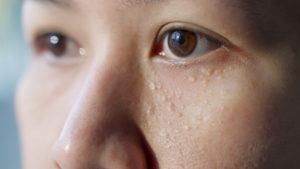
    Syringomas most often occur on the:Syringomas under the eyes
    • Upper cheeks
    • Lower eyelids
    • Armpits
    • Chest area
    • Stomach/abdomen
    • Forehead
    • Penis or vulva

    What do syringomas look like?

    Syringomas look like a flesh-coloured sometimes-yellowish bump, about 1-3mm in diameter. They occur in evenly-distributed clusters. Eruptive syringomas look like lesions that appear on the chest and abdomen.

    What are the different types of syringoma?

    According to the classification scheme proposed by Friedman and Butler, there are four recognised variants of syringoma:

    • Localised syringoma. This type refers to syringomas that appear in a specific, localised area, often around the lower eyelids or cheeks.
    • Down Syndrome-associated syringoma. This variant is found in individuals with Down syndrome. The presence of syringomas in these individuals is believed to be due to genetic factors related to this condition.
    • Generalised syringoma. This form is characterised by multiple syringomas that can emerge in various body parts, including an eruptive pattern where numerous syringomas appear suddenly.
    • Familial syringoma. This form of syringoma runs in families, appearing in multiple members across generations, indicating a genetic predisposition.

    What triggers syringoma?

    Syringomas have a cause that is not entirely understood, though several factors are believed to play a role. One of these is genetics, as some forms of syringomas, like familial syringomas, are known to run in families, suggesting a genetic predisposition.

    Another potential trigger is hormonal changes. The fact that syringomas often first appear during puberty suggests a possible link to hormonal changes. This theory is further supported by some studies that have reported an increase in syringomas during pregnancy.

    Certain medical conditions, such as Down Syndrome, are also associated with a higher incidence of syringomas. In addition, skin trauma or damage could stimulate the eccrine sweat glands, leading to syringoma formation in some cases.

    Lastly, age may be a factor, as syringomas typically appear during adolescence or early adulthood, which could be related to physiological changes during these stages.

    Do syringomas hurt or itch?

    No, syringomas don’t feel like anything much.

    Why do syringomas appear?

    Syringomas can appear quite suddenly (eruptive syringoma), particularly in those with darker skin. We’re not sure why.

    How do I get rid of the syringoma on my face?

    There are several treatment options available to you. A dermatologist is the best person to consult for syringoma treatment, as they can diagnose the condition correctly and guide you through the appropriate treatment options.

    What medicine is used for syringoma?

    There isn’t a specific medicine that can cure syringomas, as they are benign growths originating from sweat glands. However, topical treatments like retinoids or glycolic acid creams may help reduce their appearance. Discussing these options with a healthcare professional before starting any treatment is crucial to ensure they suit your specific case.

    What is the latest treatment for syringoma?

    Advances in medical technology have led to the development of various treatment methods for syringomas. Some of the latest treatments include laser therapy–such as CO2 and fractional lasers–and electrosurgery, which uses electrical current to remove the syringomas. There’s also cryotherapy, which involves freezing the lesions using liquid nitrogen, and excision, where the syringomas are surgically cut out. These treatments can be effective, but they may also carry risks such as scarring and changes in skin colour.

    What is the Best Treatment for Syringoma?

    The “best” treatment for syringoma largely depends on your specific circumstances, including the number, size, and location of the syringomas, as well as your overall health, skin type and personal preferences. Treatments that work well for some may be less effective for you. That being said, many dermatologists find that procedures like laser therapy or electrosurgery often provide good results.

    Can a Dermatologist Treat Syringoma?

    Yes, a dermatologist can definitely treat syringomas. Dermatologists are skin specialists trained in diagnosing and treating a wide range of skin conditions, including syringomas. They can evaluate your skin, provide a diagnosis, discuss potential treatments, and perform the procedures, if necessary. So we highly recommend consulting with a dermatologist if you’re considering treatment for syringomas to ensure you receive the most appropriate and effective care.

    Our dermatologists can help

    If you are concerned about the appearance of your syringomas, make an appointment with one of our specialist dermatologists, who can help guide you regarding treatment choices. Since this may happen to teenagers and young adults, parental assistance will likely be required. 

    Contact us today.

  • Is your hair-straightening cream giving you acne?

    Hair products are a cause of acne that is not always at front of mind in your dermatologist appointment. Anyone with frizzy hair knows the products all too well: they work like a charm, but leave an invisible greasy slime on your skin that causes blackheads, whiteheads, and sometimes chronic acne.

    Suspect hair products include serum, heat-styling wax, leave-in products, anti-frizz serums, heat protectants, and anything that adds shine and detangles hair by leaving a layer on the hair shaft. Hair-cuticle smoothing is the desired outcome of these products, which is achieved with grease. Acne from hair products affects men and women alike, though when women’s hair is longer, it can spread the grease further, onto the neck and around the cheeks.

    What is ‘pomade acne’?

    Pomade acne is a form of acne that became famous many years ago when hair products became more commonly applied. The acne appears on the forehead, temples and hairline due to the use of thick pore-clogging pomade, a type of hair product. Pomade is often made with mineral oils or petroleum jelly, which prevents your skin from being able to clean itself by blocking sebum inside hair follicles.

    What to do about this form of acne?

    • Use a water-based pomade
    • Stop using pomade
    • Avoid pomade contact with skin, applying to just the hair and not the hairline
    • Stop touching your hair, then your face
    • Wash your hair more frequently
    • Try not to sleep with greasy hair
    • Choose a hairstyle that keeps hair away from the face/hair-up styles, including while sleeping
    • Change pillowcase daily if a side or tummy sleeper
    • Shower and wash face at night
    • Style your hair before applying make-up, then wash hands before applying make-up
    • Cover your face before spraying styling sprays/hairspray
    • Cover your hair loosely at night if it’s not too hot (you don’t want a scalp break-out)

    Ingredients to avoid

    • PVP/DMAPA acrylates
    • Cyclopentasiloxane
    • Panthenol
    • Dimethicone
    • Silicone
    • Quaternium-70
    • Oils
    • Petrolatum (mineral oil, white oil)

    Got out of control acne?
    We can help.
    Contact us